USPTO Office Action Response: Deadlines, Strategy, and Next Steps
Don't Let a USPTO Office Action Put Your Trademark at Risk
Receiving a letter from the United States Patent and Trademark Office (USPTO) can be discouraging, especially if you expected your trademark application to move directly toward registration. A USPTO office action response is the formal reply you submit to address the issues an examining attorney raises during review of your trademark application. An Office Action does not necessarily mean your application has been denied. It means the USPTO requires additional information, clarification, or legal arguments before deciding whether your application may proceed.
For business owners and trademark applicants, a timely USPTO office action response is often the difference between keeping an application active and risking abandonment. This page explains what Office Actions mean, common refusal grounds such as likelihood of confusion and descriptiveness, how response deadlines work, when attorney representation can help, and how legal guidance can strengthen your reply and keep the registration process moving.
Masterly Trademarks helps business owners prepare thoughtful, attorney-guided responses designed to address USPTO concerns while protecting valuable trademark rights and avoiding unnecessary delay.
Why an Office Action Should Be Taken Seriously
Many trademark applications receive an Office Action during the examination process.
Some involve relatively straightforward administrative corrections, while others require detailed legal analysis and persuasive arguments. Responding appropriately helps preserve your application and keeps the registration process moving forward.
Professional legal guidance helps businesses:
- Understand the issues raised by the USPTO
- Protect valuable filing rights
- Meet important filing deadlines
- Present organized legal arguments
- Improve the quality of the response
- Continue working toward trademark registration
Early legal review often creates more opportunities to address the examining attorney's concerns.
USPTO Office Action Response Services
Every Office Action is different.
An effective USPTO office action response depends on understanding the specific issues identified by the USPTO and developing an appropriate legal strategy.
Masterly Trademarks assists clients with:
- Office Action review
- Trademark application analysis
- Legal response preparation
- Trademark strategy
- USPTO correspondence
- Response drafting
- Evidence evaluation
- Examiner communication
- Filing deadline management
- Ongoing trademark guidance
Each response is tailored to the facts of the application and the issues raised by the examining attorney.
Trademark Office Action Attorney Representation
Responding to an Office Action often requires more than completing forms.
An experienced trademark office action attorney carefully reviews the examining attorney's concerns, applicable trademark law, and available supporting evidence before preparing a response. Working with trademark attorneys can improve the likelihood of getting a mark approved compared with self-filed responses, and attorneys generally have higher approval rates than non-attorneys when seeking to get a trademark approved.
Our attorneys help clients understand:
- The legal issues involved
- Available response options
- Supporting documentation
- Strategic considerations
- Potential next steps
Every matter receives individualized legal analysis.
Understanding a Likelihood of Confusion Refusal
One of the most common reasons for an Office Action is a likelihood of confusion refusal.
The examining attorney may believe that the proposed trademark is too similar to an existing trademark, existing registered mark, or pending application, with similar marks creating the possibility that consumers could become confused about the source of goods or services.
Our attorneys carefully evaluate the cited trademarks, relevant legal standards, and available evidence when preparing an appropriate response.
Addressing a Descriptiveness Refusal
Another common issue involves a descriptiveness refusal.
The USPTO may determine that a proposed trademark merely describes the goods or services rather than functioning as a distinctive source identifier.
Whether a descriptiveness refusal can be addressed depends on the specific facts surrounding the application. Some office actions also involve specimen refusals when proof of trademark use is inadequate.
We help clients evaluate available legal options, including whether evidence from product packaging may support the response, whether the supplemental register is a strategic alternative, and whether acquired distinctiveness can be shown in appropriate cases while developing thoughtful response strategies.
Meeting Every Response Deadline
A missed response deadline can have significant consequences.
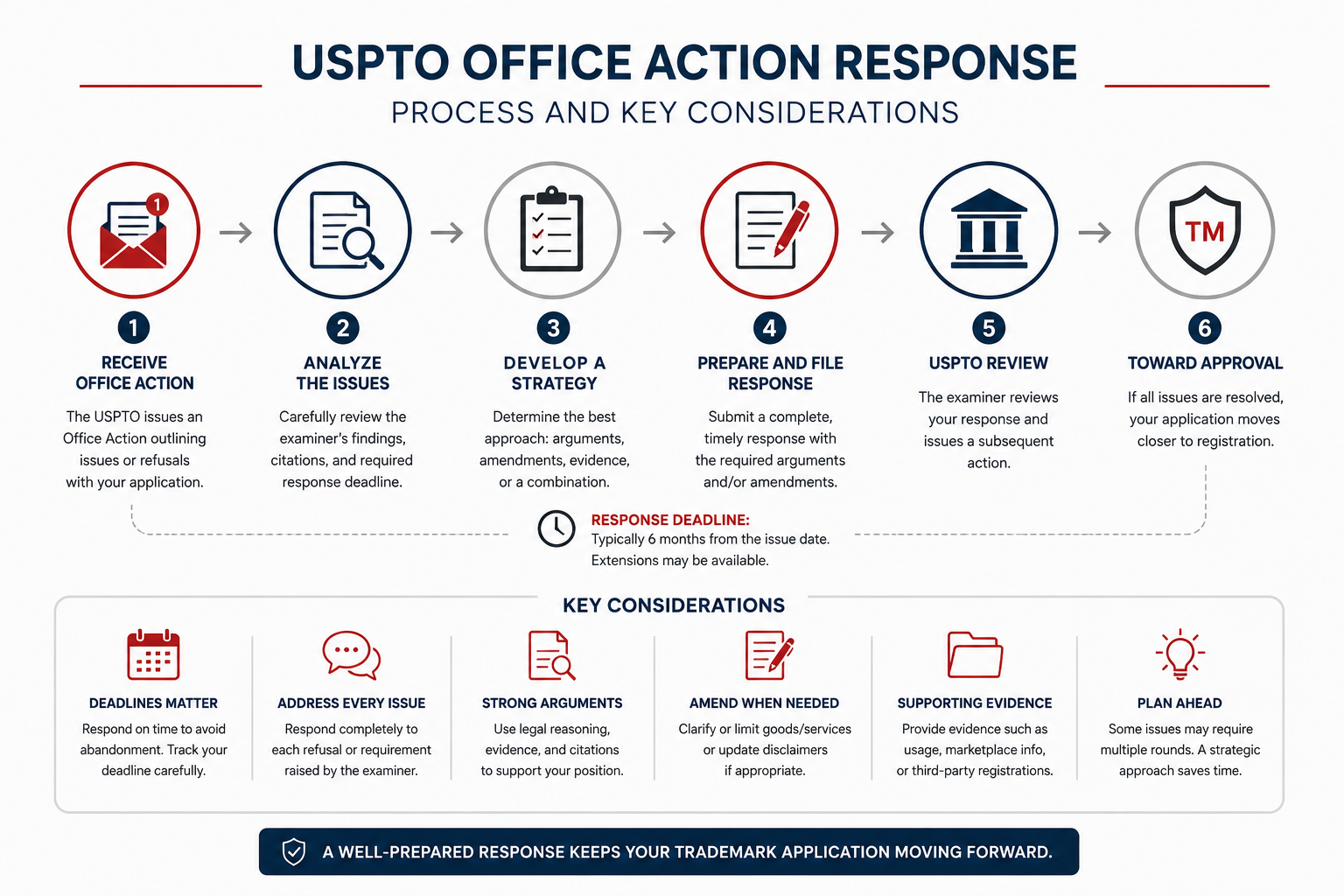
Failure to respond within the required timeframe may result in abandonment of the trademark application, requiring additional time and expense to restart the filing process if available. USPTO office actions typically require a response within three months to six months from the issue date of the USPTO notice. Many non-final office actions are due within three months, while some deadlines run up to six months depending on the notice issued. In some cases, a three month extension may be available, but it requires additional fees. No extension is available after the deadline passes, and failure to respond can lead to abandonment.
Masterly Trademarks carefully monitors filing deadlines and helps clients submit complete responses within the required time period.
Developing Strong Examiner Arguments
An effective response often depends on a clear response strategy supported by applicable law and relevant facts.
Rather than simply disagreeing with the examining attorney, a persuasive response uses persuasive legal arguments to explain why the application satisfies legal requirements based on the evidence available. It should remain professional, avoid emotional language, and be proofread for accuracy and completeness.
Our attorneys prepare a carefully structured proper response designed to address the specific concerns identified in the Office Action. The written response is then submitted electronically through TEAS or the USPTO filing system.
Trademark Office Action Response Attorney Guidance
Every Office Action presents different legal issues.
An experienced trademark office action response attorney evaluates each matter individually while developing strategies tailored to the client's trademark, broader trademark goals, business objectives, and filing history as part of the larger trademark registration process when an office action interrupts review.
Our trademark services are designed to help clients move the application process forward while protecting valuable intellectual property whenever possible.
Why Business Owners Choose Masterly Trademarks
Trademark applications often represent valuable business investments.
Clients choose Masterly Trademarks because we provide:
- Attorney-guided Office Action responses
- Careful legal analysis
- Practical trademark strategy
- Responsive communication
- Filing deadline management
- Customized legal guidance
- Long-term trademark support
- Protection focused on business objectives
Every engagement is centered on helping clients pursue stronger trademark protection through thoughtful legal representation.
Prompt Action Protects Your Trademark Application
Receiving an Office Action is not the end of the trademark process.
With timely legal guidance, many applicants successfully address USPTO concerns and continue working toward registration.
Responding promptly allows businesses to preserve valuable filing rights while reducing unnecessary delays.
A Strategic Approach to the Trademark Application Process
Every stage of the trademark application process requires careful attention to legal requirements established under the Trademark Act. When the USPTO issues an Office Action, applicants should respond completely to every issue identified by the examining attorney. An incomplete response may delay the application or place it at risk of abandonment. Masterly Trademarks develops a strategic approach tailored to the specific concerns raised, helping business owners move forward with greater confidence.
Managing Deadlines, Filing Fees, and Extension Requests
Meeting every USPTO deadline is essential. In limited situations, an extension request may be available for certain trademark filings, depending on the type of application and applicable USPTO rules. Applicants should also understand any required filing fee or additional application fees that may apply during different stages of the registration process. Careful planning helps businesses avoid unnecessary delays while keeping the application on track.
Addressing Conflicting Marks Through Practical Legal Solutions
When the USPTO identifies conflicting marks, legal analysis becomes especially important. Depending on the circumstances, consent agreements may provide one possible path toward resolving certain trademark conflicts. If that approach is not appropriate, our attorneys evaluate alternative strategies that align with the client's business goals while protecting valuable trademark rights. Every recommendation is based on the facts of the application and the long-term interests of the brand.
Frequently Asked Questions
What is a USPTO office action response?
A USPTO office action response is a formal reply submitted to the USPTO addressing issues raised by the examining attorney during the trademark application review process. USPTO office actions are official notices from the USPTO identifying legal or procedural issues in an application, and office actions require a formal reply from the applicant to keep the application moving forward.
When should I contact a trademark office action attorney?
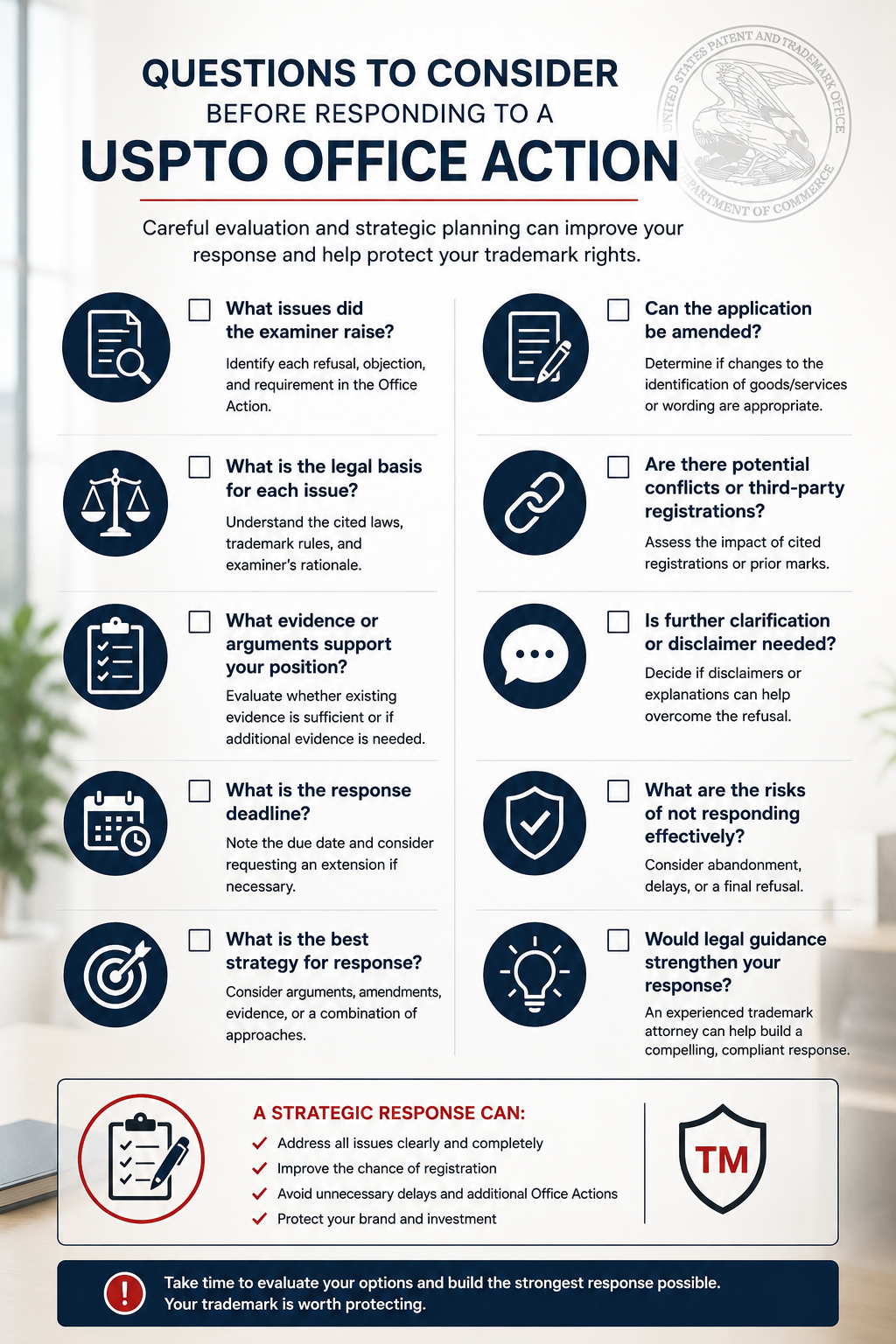
You should contact a trademark office action attorney as soon as you receive an Office Action so there is adequate time to evaluate the issues and prepare a complete response before the deadline. A free consultation can be a practical first step to understand the issues, costs, and response strategy.
What is a likelihood of confusion refusal?
A likelihood of confusion refusal occurs when the USPTO believes a proposed trademark may be too similar to another trademark, potentially causing consumer confusion.
What is a descriptiveness refusal?
A descriptiveness refusal means the USPTO believes the proposed trademark merely describes the goods or services rather than identifying their source.
Why is the response deadline important?
The response deadline is critical because failing to respond on time may result in abandonment of the trademark application.
What does a trademark office action response attorney do?
A trademark office action response attorney reviews the Office Action, develops legal arguments, prepares supporting documentation, and files the electronic response through TEAS or the appropriate USPTO online filing system. If the issue involves a final office action, the attorney may also assess next steps, including whether an appeal to the appeal board is appropriate or whether a trademark trial strategy should be considered.
Request a USPTO Office Action Consultation
A USPTO Office Action does not have to end your trademark application. After the issue date, applicants should respond promptly if they want to overcome refusals and keep the trademark registration process moving, whether the matter involves a likelihood of confusion refusal, descriptiveness refusal, filing deadline, or other examining attorney concerns, including an examining attorney's refusal and possible appeal options in final cases.
Visit https://www.masterlytrademarks.com/ or call (972) 236-5051 to request a free consultation and discuss your Office Action and the next steps for your trademark application.
You might also like