
Trademark Articles

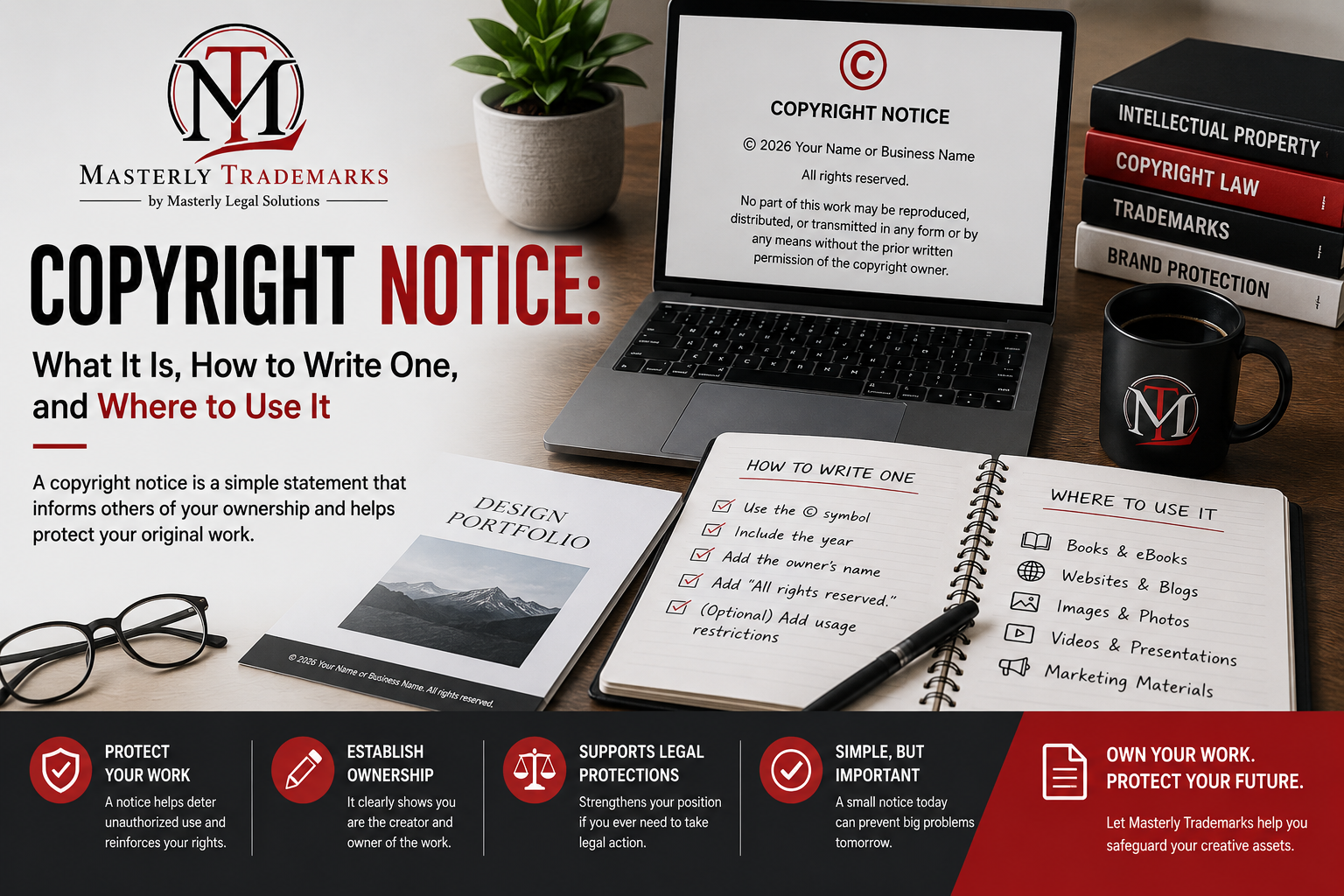
Copyright notice guidance for protecting original creative work.
By Amber Aniston August 14, 2026
A copyright notice is one of the simplest tools a business can use to protect original content, yet many creators skip it entirely. Here is how to write one, where to place it, and why it still matters. Why Copyright Notices Still Matter in 2026 Copyright protection is automatic upon creation of a work. The moment you write a blog post, design a logo, or record a video, that work is protected by copyright under US law. No filing, no fee, no stamp required. But "protected" and "easy to enforce" are two different things, and a visible copyright notice closes the gap between them. Consider a concrete scenario. A small consulting firm publishes a 3,000-word guide on its website in 2026. A competitor copies it verbatim and posts it on their own site. If the original page carries a clear notice in the website footer ("© 2022–2026 Horizon Analytics LLC. All Rights Reserved."), the firm has immediate evidence that the copyright infringer had notice of ownership. Under Section 401(d) of the Copyright Act, that notice blocks the "innocent infringement" defense, which could otherwise reduce damages. Without the notice, the competitor might argue they were unaware the content had an owner. A copyright notice is not the same as copyright registration with the US Copyright Office, and it is not a takedown request or a lawsuit. It is a signal and a piece of evidence, not a remedy. This article focuses on US copyright law after the Berne Convention implementation (March 1, 1989), while noting where international practice runs parallel. By the end, you will be able to write and place a professional copyright notice on your site, app, or publication. What Is a Copyright Notice? (And What It Is Not) A copyright notice is a short copyright statement placed on or near a work that informs users the work is protected and identifies who owns it. A complete copyright notice typically contains three core elements: the copyright symbol (©), the year of first publication, and the copyright owner's name. An optional rights statement like "All Rights Reserved" can follow. A notice is not copyright registration, not a license defining how others may reuse your work, and not a legal agreement. It informs the public of your ownership rights, but it does not substitute for the formal registration process or enforcement action. Copyright protection does not require the inclusion of a notice in the US after March 1, 1989, when the United States joined the Berne Convention. Before that date, omitting a notice on works published could push content into the public domain. Today, notice is optional. Yet businesses, publishers, and software companies worldwide still use notices on websites, mobile apps, books, and software because the practical benefits remain strong. Copyright Law Basics Behind a Copyright Notice To understand why notices carry weight, start with how copyright protection arises. Under US copyright law, protection begins automatically when an original work is fixed in a tangible form, whether that is a written page, a digital file, or a sound recording. Copyright protects original works like music and literature, covers artistic works including paintings and photographs, and extends to architectural works, literary works, and even sculptural work. Copyright does not protect ideas, only their expression. The copyright owner may be the individual author, a company (for works made for hire), or an assignee. The Copyright Act grants exclusive rights to reproduce, distribute, display, perform, and create derivative works. A notice helps signal these rights to the public and removes ambiguity about ownership. Copyright lasts for the author's life plus 70 years after the author's death. Works made for hire have copyright for 95 years from publication. Copyright for works created before 1978 varies in duration. Copyright law allows owners to enforce their rights against infringers, but enforcement requires monitoring, registration, and sometimes litigation. The US Copyright Office handles copyright registration and recordation, which is separate from simply adding a copyright symbol or statement. Key Elements of an Effective Copyright Notice Most modern copyright notices follow a simple pattern. A notice includes the © symbol, year, and owner's name. For example: "© 2026 Masterly Trademarks. All rights reserved." The sections below break down each element with specific formatting and examples for websites, documents, and other publications. Copyright Symbol or Word A copyright notice must include the copyright symbol ©. The symbol is universally recognized and recommended for use across all formats. Alternatively, the word "Copyright" or the abbreviation "Copr." satisfies the statute. Most practitioners use © because it is compact and one of the most familiar symbols in publishing. Typing tips: on Windows, press Alt+0169 on the numeric keypad. On macOS, press Option+G. The shorthand "(c)" (a letter c in parentheses) is not the same Unicode character and is not a legal substitute, though some software auto-replaces it. For sound recordings, use the ℗ symbol instead of ©. That symbol designates rights in the phonorecord itself, separate from any underlying musical composition, and is defined in Section 402 of the Copyright Act. Copyright Year (or Range of Years) The copyright date should only state the year of publication. The year of first publication indicates when the work was first published or made publicly available. For a website, this is typically the year the site or its key content went live. When to use a range: if your website or app receives continuous updates, a date range like "© 2018–2026" signals active maintenance. For static works (a printed report, a one-time PDF), the original publication year alone is sufficient. An inaccurate or obviously outdated year does not automatically forfeit copyright protection, but it can undermine professionalism and weaken deterrence. Copyright Owner's Name A copyright notice should include the copyright owner's name, specifically the legal name of the individual or entity that holds the rights. Use the full registered business name that appears in contracts and on invoices. Concrete examples: © 2026 Olivia Chen © 2022–2026 Horizon Analytics LLC © 2026 City of Dallas For joint authorship, list all owners. For works made for hire, the employer or commissioning party is the copyright owner, not the individual who created the work. Pen names are acceptable if they are reasonably connected to the real owner. Optional Rights Statement A copyright notice can include a statement of rights like "All Rights Reserved." Under US copyright law, all rights are reserved by default, even without the phrase, but including it reduces confusion about what is permitted. Variations by business goal: "All rights reserved. No part of this publication may be reproduced without prior written permission." "Some rights reserved; see license page." "Licensed under CC BY-NC 4.0." Avoid overbroad claims that conflict with fair use or other limitations in the Copyright Act. A rights statement that overreaches does not expand your legal rights and may invite scrutiny. How to Write a Copyright Notice Step by Step Follow this sequence: Identify the owner. Determine who legally owns the work. Use their full legal name. Pick the year. Use the year of first publication. For continuously updated content, use a range ending in the current year. Choose a rights statement. Decide whether to include "All Rights Reserved" or reference a specific license. Assemble. Place them in order: symbol, year, owner, rights statement.
Work for hire agreement outlining ownership of contractor creative work.
By Amber Aniston August 14, 2026
Protect your business by understanding work for hire agreements. Learn how to secure copyright ownership of contractor creative work, avoid common mistakes, and ensure your intellectual property rights before payment.
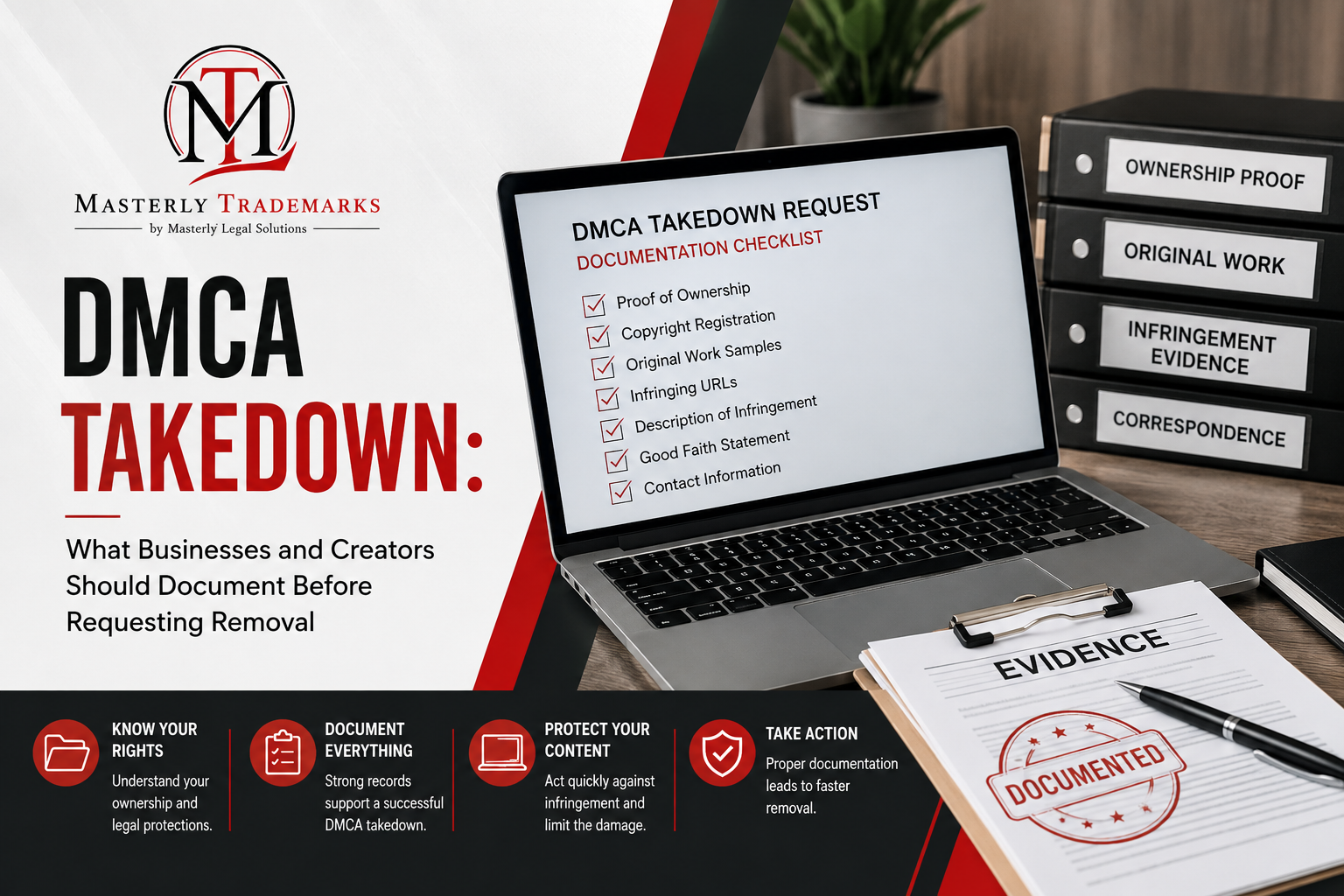
DMCA takedown documentation and evidence preparation for content removal.
By Amber Aniston August 13, 2026
Learn what businesses and creators should document before sending a DMCA takedown notice. Covers copyright ownership evidence, infringement documentation, platform rules, and when to get attorney-guided support.
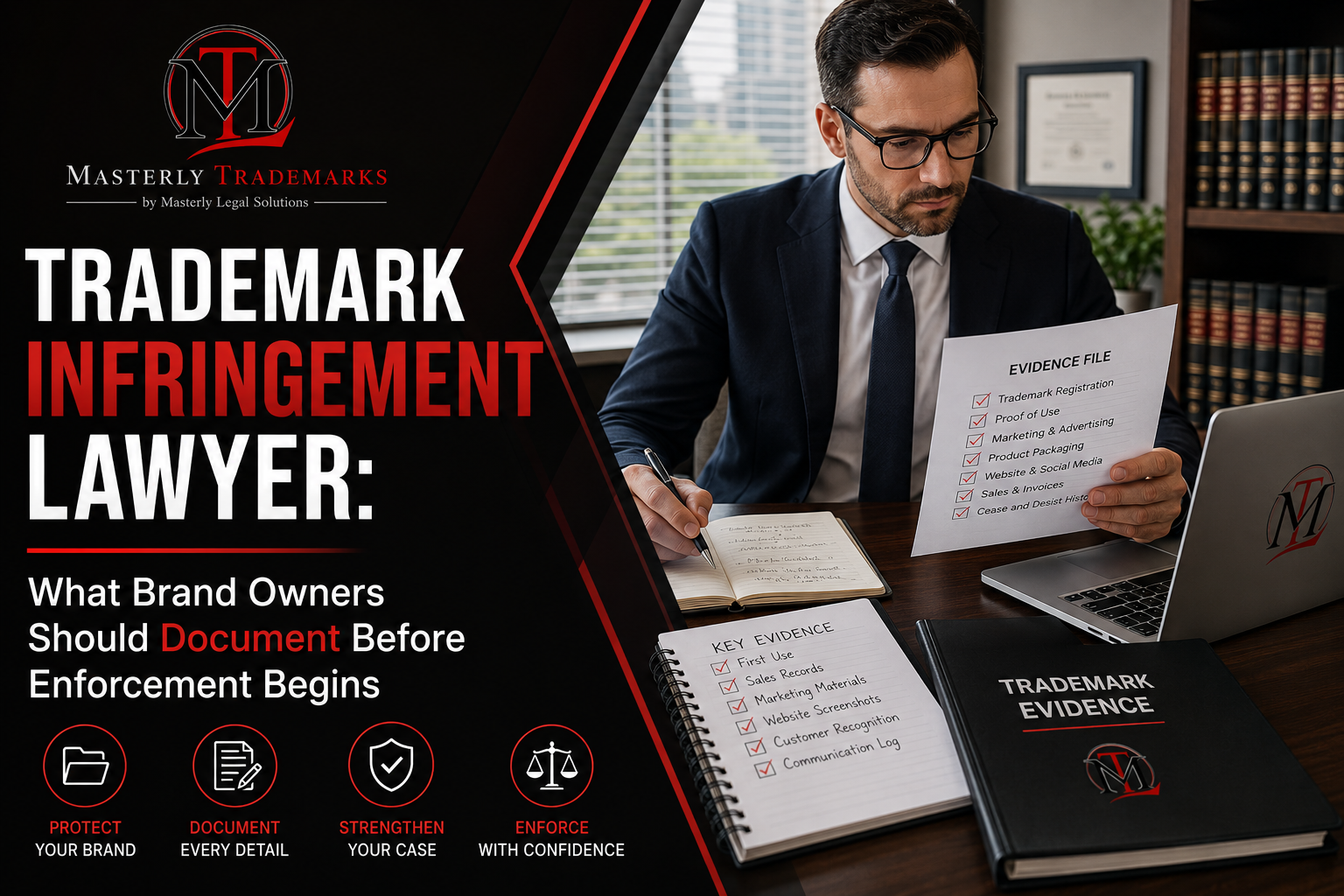
Trademark infringement lawyer reviewing evidence before brand enforcement.
By Amber Aniston August 11, 2026
Learn what brand owners should document before consulting a trademark infringement lawyer. Understand key evidence categories, ownership proof, market overlap, and how to prepare for effective brand enforcement and legal strategies.
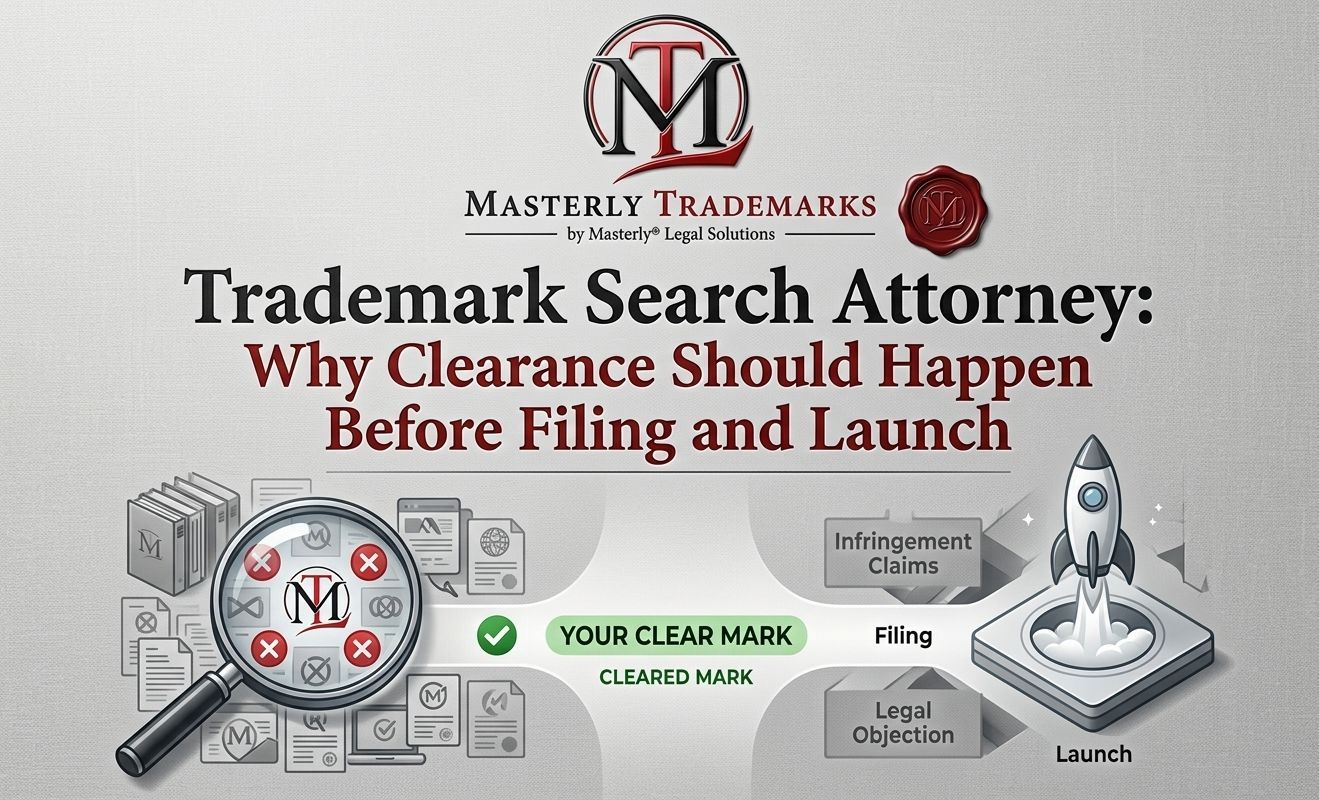
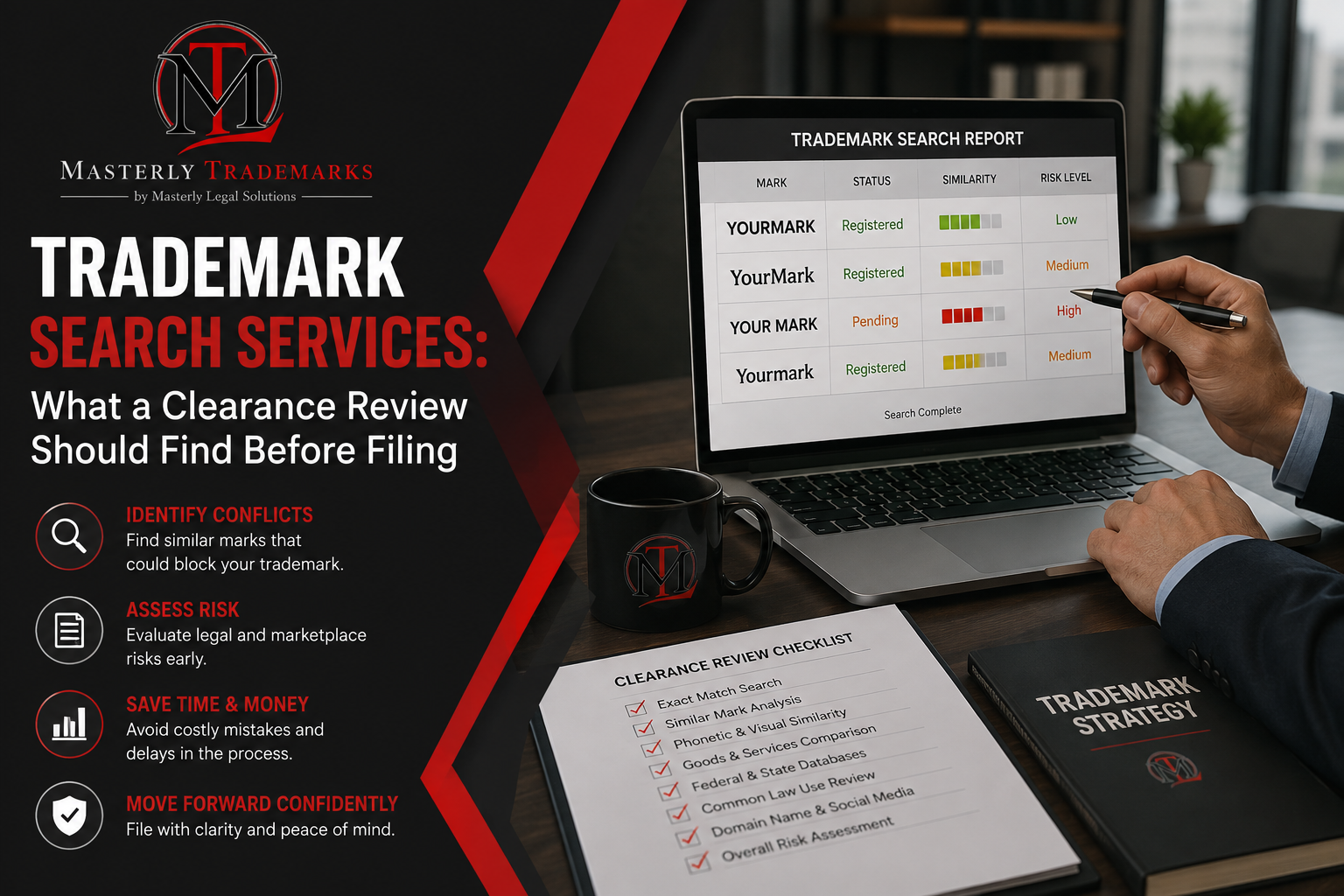
Trademark search services reviewing potential conflicts before filing.
By Amber Aniston August 11, 2026
Discover how professional trademark search services help identify potential conflicts before filing your trademark application. Learn about clearance searches, common law use, and federal records to protect your brand identity.
Intellectual property attorney advising a business
August 11, 2026
Work with an intellectual property attorney, IP lawyer, trademark attorney, copyright attorney, and brand protection attorney to build a strong IP strategy.

Trademark protection and brand monitoring services
August 11, 2026
Get brand protection services for trademark protection, brand monitoring, trademark ownership, enforcement planning, and intellectual property protection today.

Copyright lawyer reviewing copyright registration documents
August 10, 2026
Hire a copyright lawyer for registration, content ownership, work made for hire, copyright licensing, website protection, and other copyright legal matters.
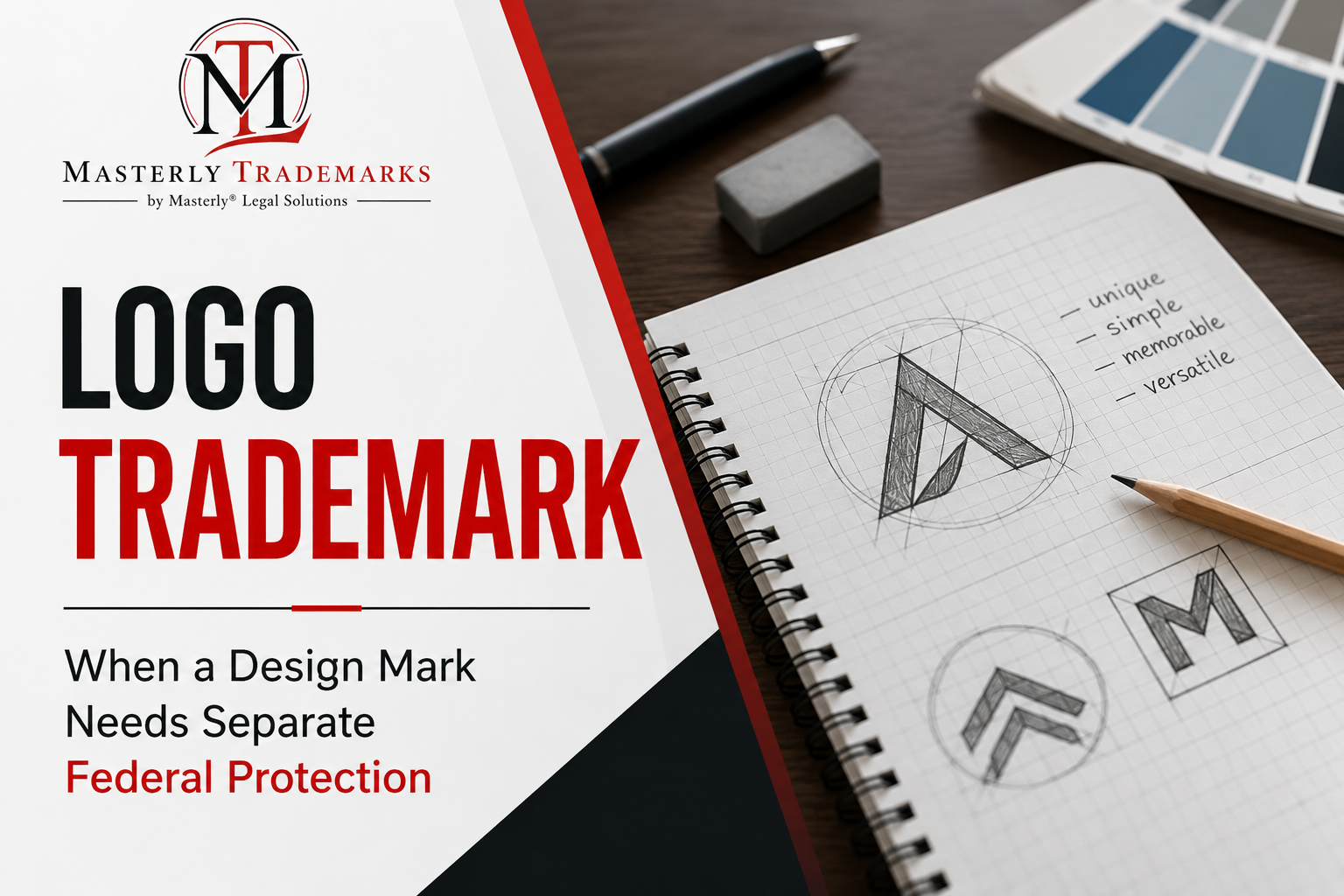
Trademark attorney reviewing logo trademark and word mark protection with a business owner
August 7, 2026
Need to protect a logo separately from your business name? Masterly Trademarks helps evaluate trademark searches, classes, specimens, and federal filing options.
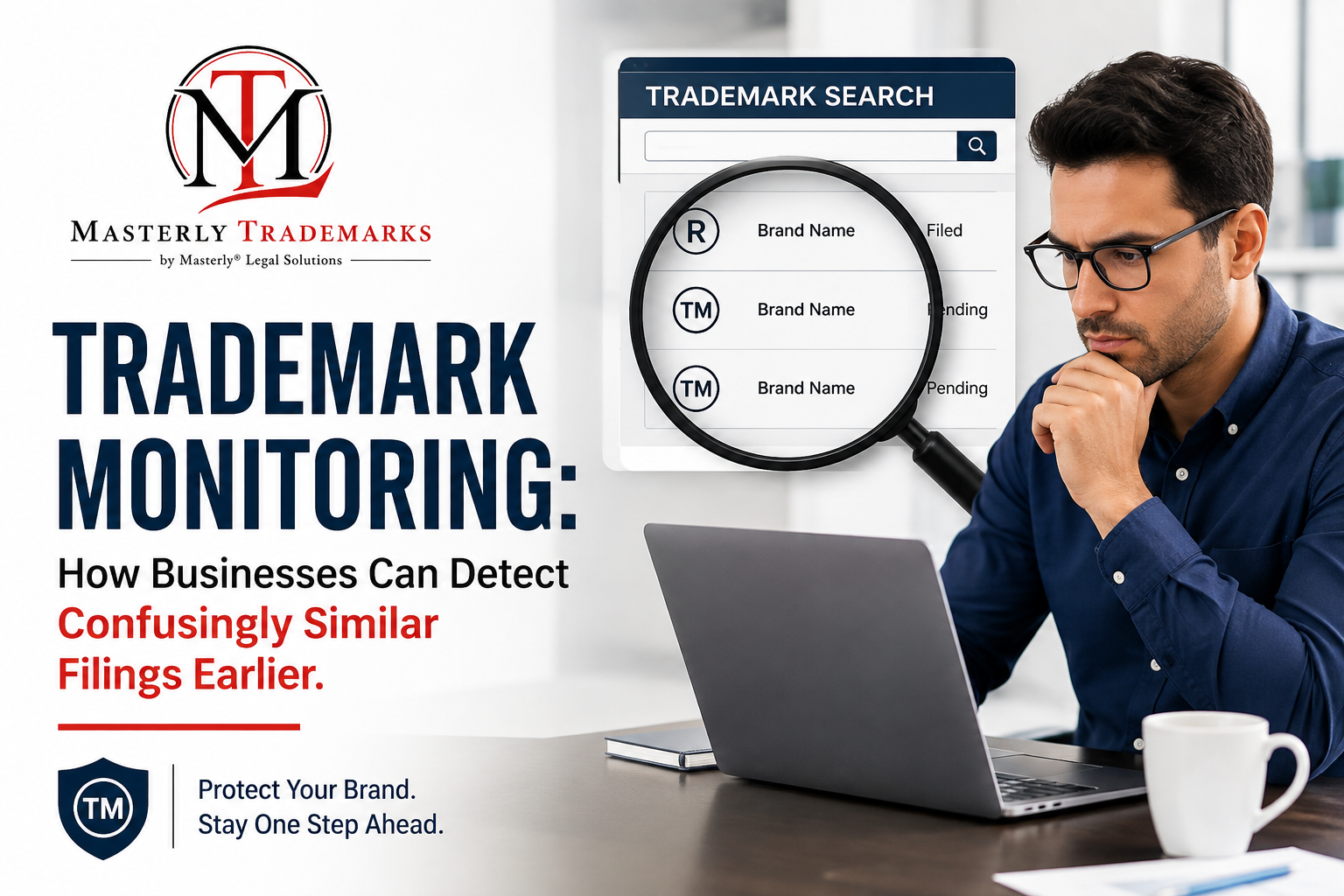
Trademark monitoring services for brand protection
August 7, 2026
Trademark monitoring helps identify conflicting filings early. Masterly Trademarks provides ongoing monitoring and brand protection for trademark owners nationwide.

Attorney reviewing website copyright registration documents
August 6, 2026
Protect your website with website copyright registration. Secure website content, images, and digital ownership with experienced copyright registration counsel.

Attorney reviewing trademark goods and services description
August 6, 2026
Choose the right trademark goods and services description using USPTO acceptable identification, proper trademark classes, and experienced trademark filing counsel.
Attorney reviewing a trademark declaration of incontestability
August 6, 2026
File a trademark declaration of incontestability with a Section 15 declaration after five years of continuous use to strengthen federal trademark rights today.
Business owner meeting with a trademark attorney to review a licensing agreement.
August 5, 2026
Trademark licensing quality control services for license agreements, brand standards enforcement, licensed trademark use, franchise protection, and consultations.
Startup founder meeting with a trademark attorney to review an intent-to-use extension.
August 5, 2026
Intent to use extension trademark services for statement of use extensions, notice of allowance deadlines, filing requests, and trademark deadline reviews.

Business owners reviewing a trademark assignment agreement with a trademark attorney.
August 5, 2026
Trademark assignment agreement services for legal ownership transfers, USPTO recordation, asset sales, mergers, chain of title, and trademark ownership review.
Trademark attorney reviewing trademark use evidence with business owners.
August 4, 2026
A trademark use audit helps verify registration evidence, trademark specimens, and compliance. Masterly Trademarks reviews your brand before maintenance filings.
Business owners meeting with a Madrid Protocol trademark attorney.
August 4, 2026
Work with a Madrid Protocol trademark attorney to protect your brand internationally through strategic filing, country selection, and trademark registration.

Trademark attorney reviewing a trademark portfolio audit with business owners.
August 4, 2026
A trademark portfolio audit helps identify ownership, renewal, and registration gaps. Masterly Trademarks reviews your brand assets before they become legal risks.
Trademark attorney reviewing trademark maintenance filing documents with business owners.
August 3, 2026
Protect your registration with a trademark maintenance filing. Masterly Trademarks helps businesses meet Section 8, Section 9, and renewal deadlines on time.
Copyright registration attorney reviewing creative works with a business owner.
August 3, 2026
Protect your original work with a copyright registration attorney. Masterly Trademarks helps secure copyright registration and protect valuable creative works.
Trademark attorney reviewing a trademark licensing agreement with business owners.
August 3, 2026
Protect your brand with a trademark licensing agreement. Masterly Trademarks helps businesses define licensing terms, protect trademark rights, and reduce disputes.

Trademark attorney reviewing trademark watch service reports with business owners.
August 3, 2026
Protect your brand with a trademark watch service. Masterly Trademarks monitors conflicting trademark applications and helps safeguard your registered trademarks.
Trademark attorney reviewing trademark portfolio management records.
July 31, 2026
Protect your brands with trademark portfolio management. Masterly Trademarks helps businesses manage registrations, renewals, ownership records, and monitoring.
Trademark attorney reviewing a trademark coexistence agreement
July 31, 2026
Resolve brand conflicts with a trademark coexistence agreement. Masterly Trademarks helps businesses negotiate clear boundaries and reduce future disputes.

Business owner reviewing Madrid Protocol trademark filing with attorney
July 30, 2026
Protect your brand worldwide with Madrid Protocol trademark filing. Masterly Trademarks helps businesses plan international trademark registration strategies.
Business owner reviewing a supplemental register trademark application with a trademark attorney.
July 30, 2026
Need guidance on a supplemental register trademark? Masterly Trademarks helps businesses evaluate registration options after USPTO descriptiveness concerns.
Business owner reviewing trademark disclaimer requirements with a trademark attorney after receiving
July 30, 2026
Need help with trademark disclaimer requirements? Masterly Trademarks helps businesses respond to USPTO disclaimer requests and protect their trademark applications.
Copyright registration for photographers consultation reviewing commercial photography portfolio
July 28, 2026
Protect your commercial images with copyright registration for photographers. Masterly Copyrights helps secure ownership, licensing value, and legal protection.
Trademark ownership transfer attorney reviewing trademark assignment documents with business owner
July 28, 2026
Need a trademark ownership transfer? Masterly Trademarks helps businesses document assignments, ownership changes, chain of title matters, and USPTO filing support.
Brand protection attorney reviewing trademark monitoring strategy with business owner
July 28, 2026
Work with a brand protection attorney for trademark monitoring, portfolio management, renewals, enforcement, and stronger long-term protection for your business.
Trademark statement of use attorney reviewing USPTO filing documents
July 27, 2026
Learn when a trademark statement of use filing becomes necessary, how attorney guidance can help meet USPTO deadlines, and strengthen your application strategy.
Trademark application attorney reviewing USPTO trademark filing
July 27, 2026
Learn when a trademark application attorney can help protect your brand, strengthen your USPTO filing, and reduce costly application mistakes before you file.
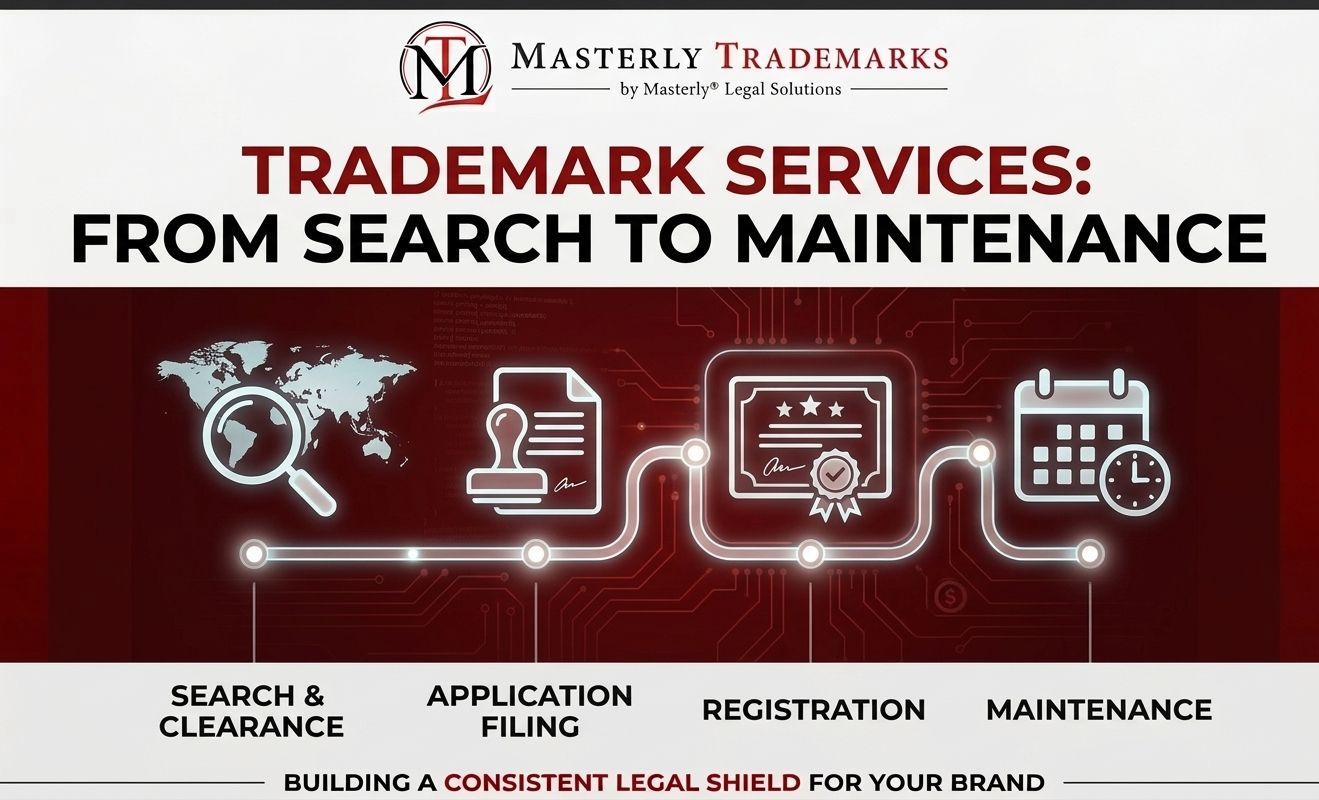
Trademark registration services attorney reviewing USPTO application
July 27, 2026
Learn when trademark registration services can protect your brand, strengthen your USPTO filing, reduce errors, and support a more effective application strategy.
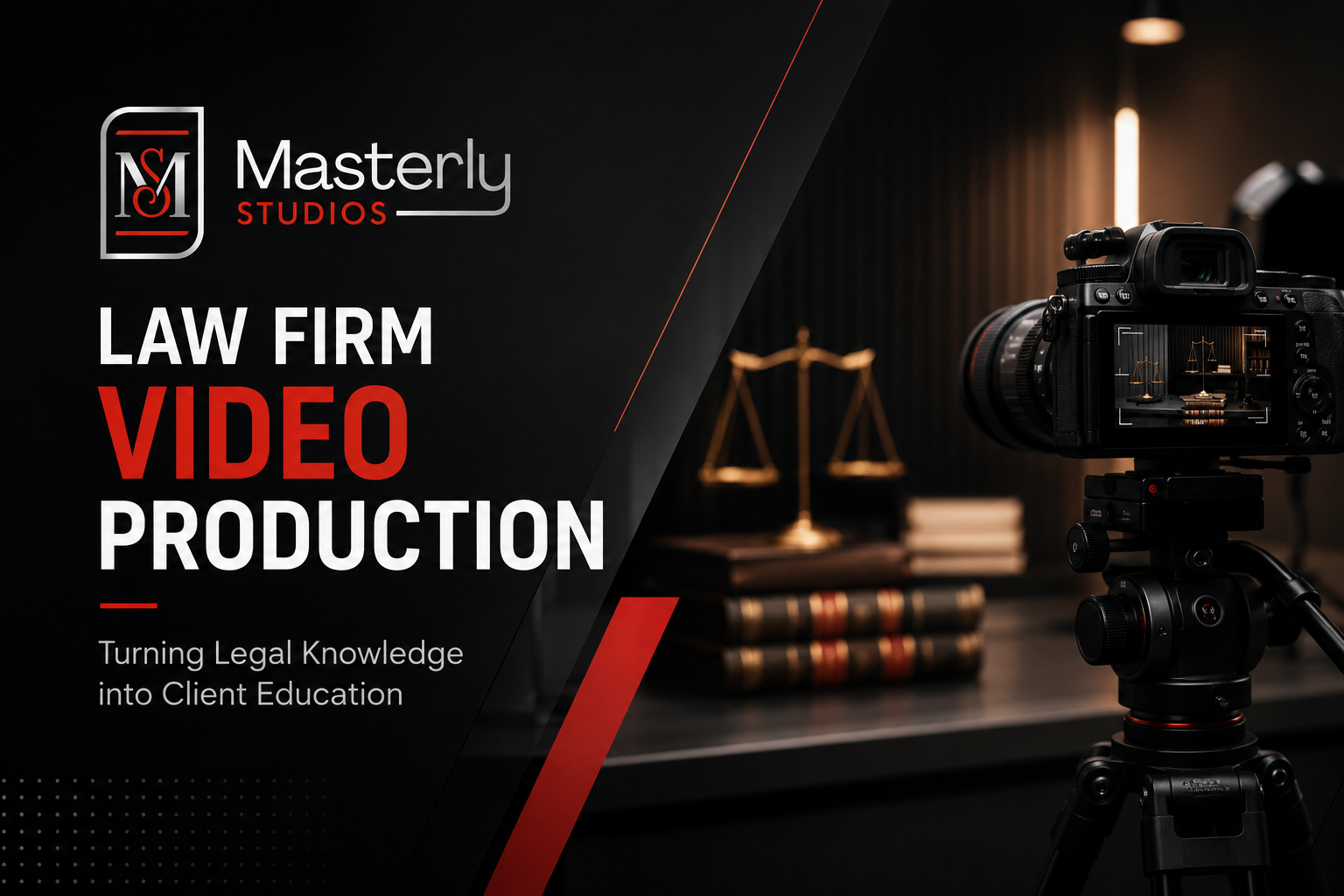
By Angelie Te July 24, 2026
Law firm video production is the process of turning attorney expertise into clear, trustworthy video content that educates clients and strengthens referral relationships. If you are a managing partner, marketing director, or solo attorney trying to figure out where video fits in your firm's growth plan, this article will walk you through what matters, what to produce first, and how to avoid common missteps.
Attorney reviewing trademark search results before filing a trademark application
July 24, 2026
Learn how a trademark search lawyer helps identify brand conflicts, reduce filing risks, and support informed trademark decisions before you invest in your brand.
Small business owner meeting with a trademark attorney before filing a trademark
July 24, 2026
Learn what trademark attorney for small business means, the risks and decisions involved, and when qualified professional support can protect stronger outcomes
Clothing brand trademark search and registration documents on a legal desk
July 24, 2026
Learn how a clothing brand trademark helps protect your brand identity, reduce legal risks, and support a stronger launch with strategic trademark protection.
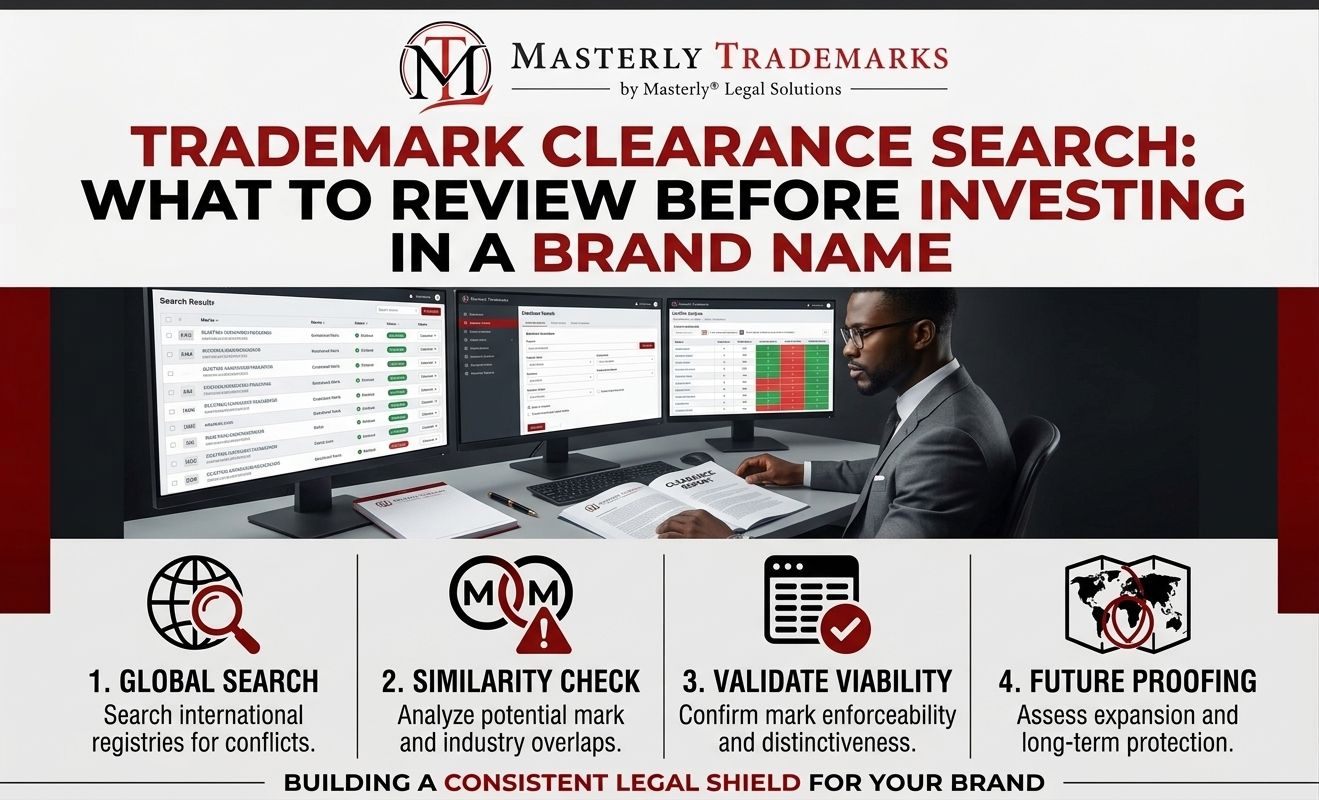
Trademark clearance search attorney reviewing a new business name before filing
July 24, 2026
Learn how a trademark clearance search helps identify potential conflicts, reduce filing risks, and support stronger trademark protection before you apply.
Brand protection lawyer reviewing trademark enforcement strategy
July 23, 2026
Learn how a brand protection lawyer helps businesses develop trademark enforcement strategies to protect intellectual property and strengthen brand rights.
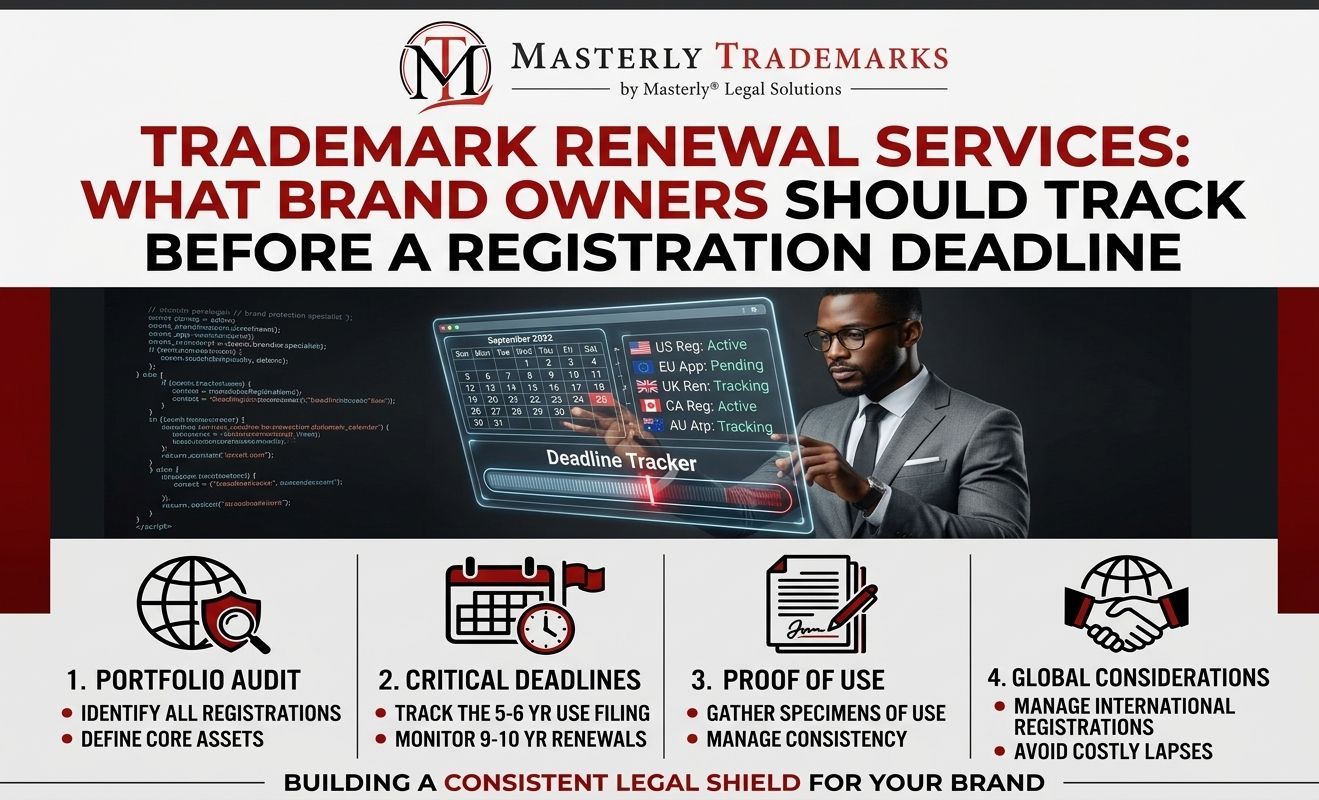
Trademark renewal service attorney reviewing renewal documents
July 23, 2026
Learn how a trademark renewal service helps companies complete trademark maintenance filing, Section 8 declarations, and renew registrations on time correctly.
TTAB cancellation lawyer advising a business owner
July 23, 2026
Learn how a trademark cancellation attorney can help protect or challenge a trademark registration during TTAB cancellation proceedings and related disputes.
Trademark infringement lawyer reviewing a demand letter
July 23, 2026
Learn how a trademark infringement lawyer helps businesses respond to demand letters, unauthorized trademark use, brand disputes, and trademark enforcement.
Brand licensing attorney advising a business owner on licensing terms
July 21, 2026
Learn how quality control, territory, term, royalties, termination, and enforcement provisions help protect a licensed trademark and its long-term value today.
Trademark attorney reviewing a USPTO office action refusal
July 21, 2026
Learn how legal strategy can help address likelihood-of-confusion, descriptiveness, specimen, and identification refusals to strengthen your trademark application.
Attorney preparing a response to a trademark opposition proceeding
July 21, 2026
Understand TTAB deadlines, pleadings, evidence, settlement options, and strategic choices after a trademark opposition is filed to protect your trademark rights.
Trademark attorney reviewing a trademark monitoring report
July 21, 2026
Learn how trademark monitoring services identify confusing applications, marketplace misuse, and critical deadlines before disputes become more costly to resolve.
Attorney preparing a trademark maintenance filing for a client
July 21, 2026
Trademark maintenance filings can fail because of specimens, ownership records, identification issues, or missed deadlines. Learn when legal review can reduce risk.
Show More