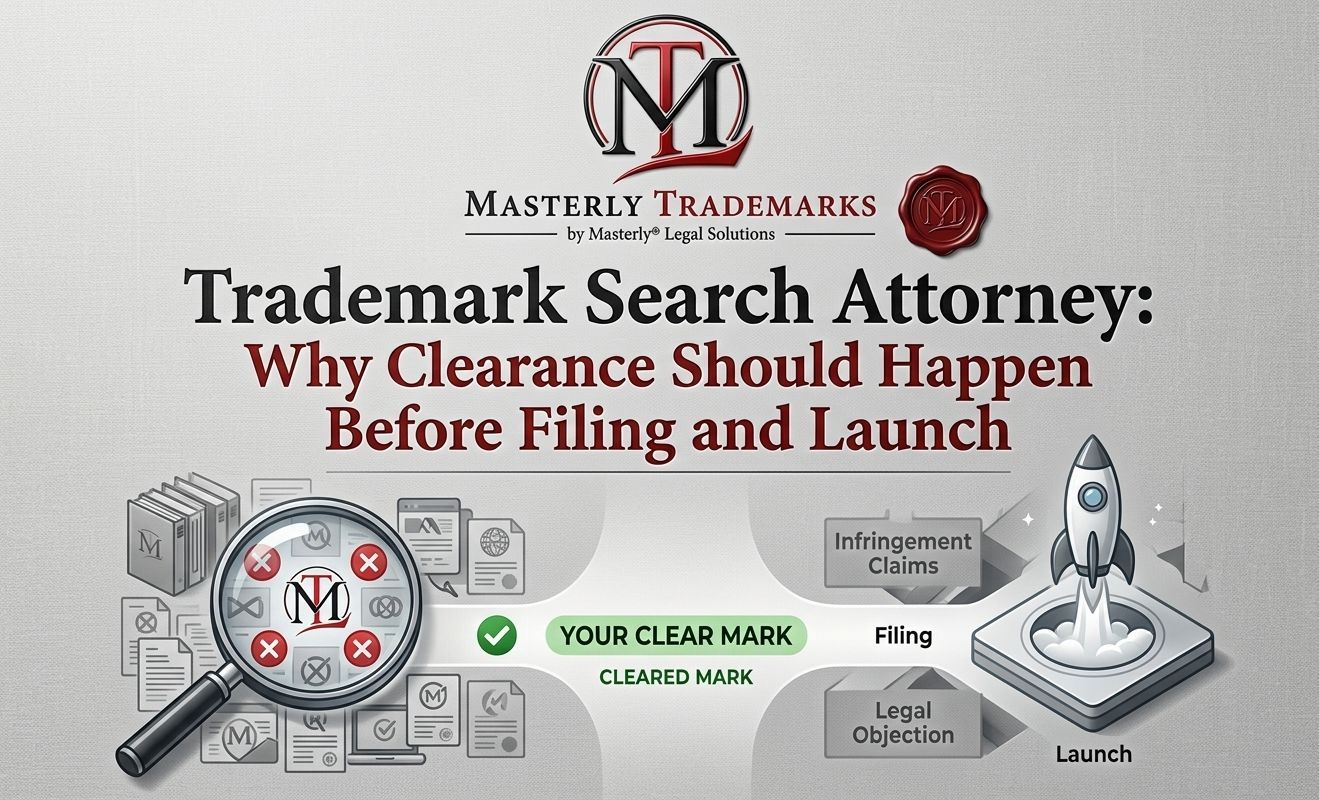
Should You Trademark Your Business Name Before Launching?
Your business name is the first thing customers remember and the last thing you want to fight over in court. If you're gearing up for a 2026 or 2027 launch, the question isn't whether trademark registration matters - it's whether you can afford to skip it. Here's what you need to know before you invest a dollar in branding.

Answer First: Do You Really Need to Trademark Before Launch?
Most serious brands should start a trademark strategy before launch, even if the federal registration certificate arrives months later. A trademark protects your business name nationally from similar businesses, and trademarking prevents others from using your business name in the same industry. Filing early with the United States Patent and Trademark Office gives you legal protection that common-law rights alone cannot match.
Here's what that looks like in practice:
- Common-law rights arise automatically when you use a name in commerce, but they offer limited, local protection with no public notice and no legal presumptions of ownership.
- Federal trademark registration through the USPTO gives you exclusive rights nationwide in the goods and services classes you register, plus a legal presumption of validity that holds up in litigation.
- Concrete example: Imagine launching an online fitness app called "FitFlow Studio" in late 2026. Without a clearance search, you might discover a gym chain already holds a registered "FitFlow" mark for fitness services. That company could send a cease-and-desist, forcing an expensive rebrand. Had the founder filed an intent-to-use application before launch, they'd have priority from the filing date and leverage to enforce or settle any dispute.
Three questions every founder should ask immediately:
- Is the name legally available - meaning no existing registered or commonly used marks conflict in your goods and services area?
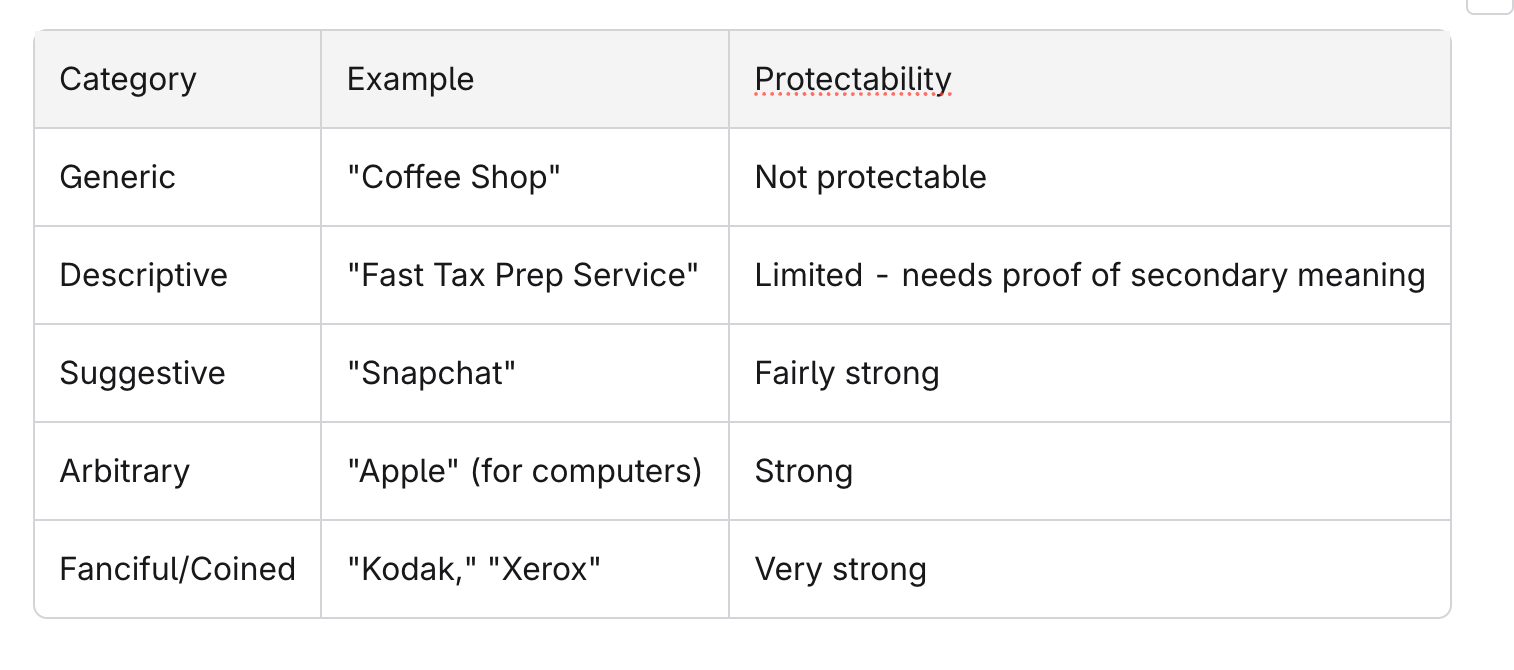
- Is it strong enough to protect? Where does it fall on the distinctiveness spectrum?
- Is it worth the investment? Weigh the filing cost against the potential cost of rebranding, legal exposure, and lost goodwill.
Start a brand protection review. It's the best next step before spending on signage, packaging, or a website.
What a Trademark on Your Business Name Actually Protects (and What It Doesn't)
A trademark protects how your business name is used on goods and services in the eyes of consumers - not the business entity itself. Your company's legal formation name and your brand identity are two different things, and they require different rules for protection.
- Entity name vs. trademark: "Springline Coffee LLC" is the entity name you register with your secretary of state. "SPRINGLINE®" is the trademark you register with the USPTO for specific goods and services. The entity name lets you operate; the trademark protects your brand assets.
- Entity name registration protects your business name at the state level, but it does not prevent other parties in different states or industries from using the same name.
- A DBA (doing business as) allows businesses to operate under a different name than their legal entity. DBA registration is often required for certain business structures, like sole proprietorships trading under a fictitious name.
- Federal vs. state trademark: A federal trademark from the trademark office gives nationwide rights in your registered classes. State-level trademark registration covers only that state and follows different rules for scope.
- Business name generators: Tools like Canva's business name generator provide instant name ideas, and using a business name generator can refresh your brainstorming process. However, these tools do not conduct a trademark search for conflicts, so they cannot substitute for legal clearance. A business name should reflect your brand identity, and no generator can determine whether that identity is legally safe.
Timing: When to File a Trademark Application in Your Launch Timeline
The trademark registration process takes time. The average USPTO application takes roughly 9.9 months from filing to final registration or abandonment, and straightforward cases often land in the 10–12 month range. That means timing matters.
- Realistic startup timeline: Early 2026 - brainstorm names, design logo, select domain. Mid 2026 - develop MVP, begin marketing. Late 2026 - full launch, raise capital.
- Intent-to-use applications: The USPTO allows trademark applications filed before you make your first sale. Under Section 1(b), you lock in your priority date the moment you file, even if you haven't started selling yet. You'll need to submit a Statement of Use later, but your filing date establishes your place in line.
- Risks of waiting: If you delay until after launch, you face potential infringement notices, rebranding costs (packaging, websites, signage), and lost customer recognition. Investors conducting due diligence routinely flag the absence of formal intellectual property protection.
- Practical milestones for filing: Once you've found the perfect name, use the US Trademark Electronic Search System (TESS) to check for existing trademarks. Verify the availability of domain names and social media usernames before committing. Secure domain names and social media handles that are available. Then contact a trademark registration attorney before you invest in public-facing brand assets.

Entity Name, Domain, Social Handle, and Trademark: How They Work Together
There are four ways to register a business name, and each serves a different purpose. Founders who confuse them often discover gaps in their legal protection too late.
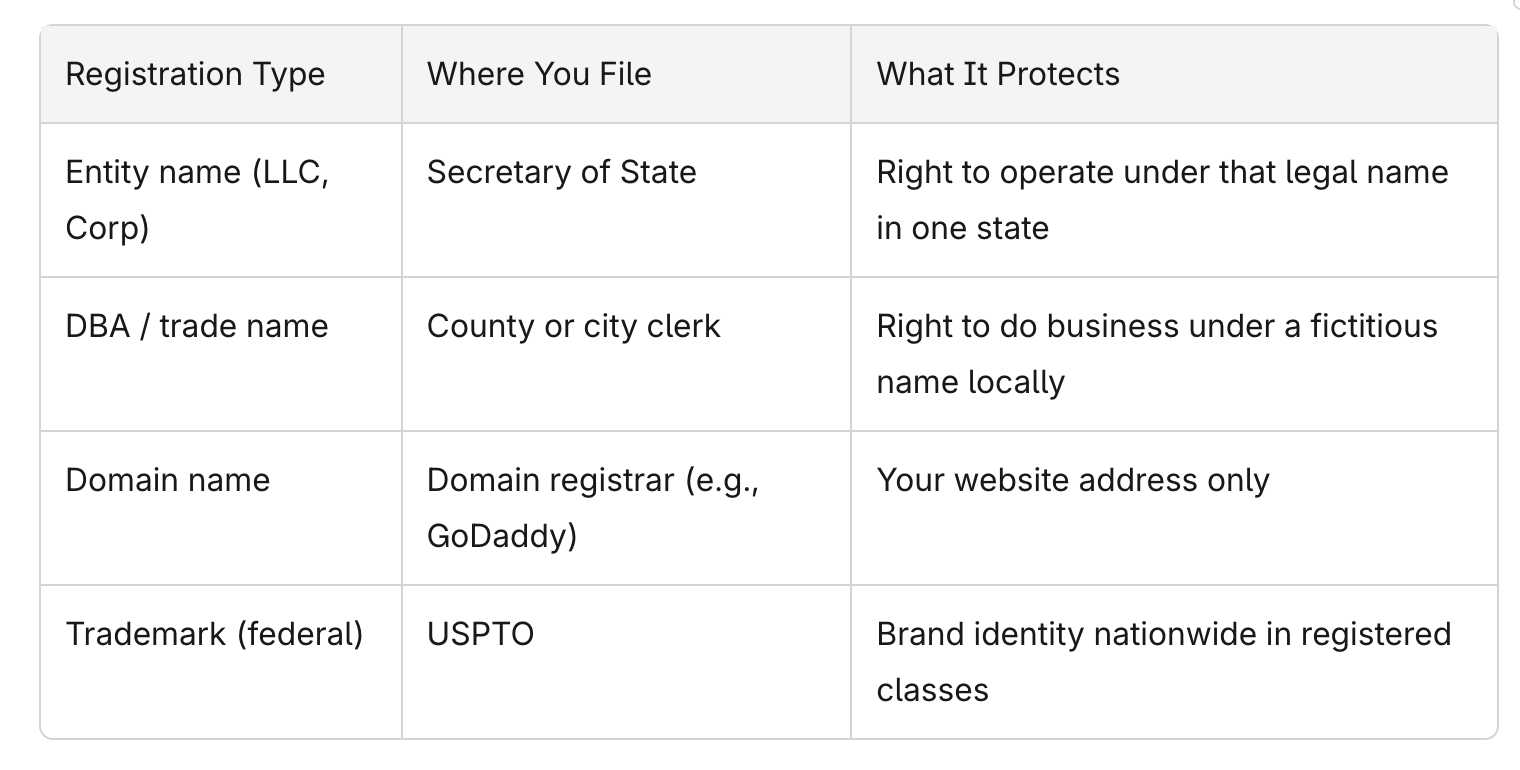
- Example: "Blue Harbor Media LLC" is formed in Delaware. The company trades as "HarborWave," secures harborwave.com, and registers HARBORWAVE® federally for media production services. Customers know the brand, not the legal entity behind it.
- Clearing a state name isn't enough. Check state business registries to ensure the name is not taken, but understand that a state filing does not protect you from federal trademark conflicts. Domain name registration prevents others from using your website address, but it does not establish trademark rights.
- Consistent naming across your website and social media increases brand recognition, so alignment matters. The trademark office - whether state or federal - focuses on likelihood of confusion among consumers, not just identical matches.
Suggested order of operations:
- Brainstorm names (team workshop or generator tool).
- Shortlist based on domain and social handle availability.
- Run a basic knock-out search via USPTO TESS and state registries.
- Speak with a trademark search attorney before filing formation documents.
How a Trademark Search Attorney Evaluates Your Business Name
Choosing an effective business name combines creativity with strategic research. A quick Google search or free TESS lookup can catch obvious conflicts, but trademark attorneys go deeper.
- Full clearance search: Attorneys use commercial databases, state registries, trade directories, and common-law sources to identify similar spellings, sound-alikes, foreign language equivalents, and marks in related industries. Organizations like the International Trademark Association publish guidelines on best practices for these searches.
- Likelihood of confusion analysis: The attorney will determine conflict risk based on similarity in sight, sound, and meaning; similarity of goods and services; overlap in trade channels; and the strength of existing marks.
- Example: "Northwind Analytics" vs. "NorthWind Data" - same root word, same industry, likely same customer base. A professional search would flag this before you file trademark applications.
- Free tools vs. legal services: Automated tools are fast but limited. Paid legal services from trademark attorneys include risk analysis, opinion letters, and strategic advice on classification. Such services save you from discovering conflicts after launch.
- Foreign founders: In 2026, foreign-domiciled applicants must work with a U.S.-licensed attorney authorized to practice law before the USPTO to file and manage their trademark applications filed with the agency. This page on the USPTO website outlines the requirement.
Pros and Cons of Trademarking Your Business Name Before Launch
Here's a balanced look at the decision. A strong business name should be memorable and work as the business grows - and trademark registration helps ensure no one takes it from you.
Advantages:
- Filing early locks in priority over later users nationwide, giving trademark owners a recognized legal presumption of ownership.
- Registered marks qualify for platform protections like Amazon Brand Registry, and make it easier to enforce rights against infringing social accounts or websites.
- Investors and partners increasingly expect to see at least a pending application. It signals that the company takes its brand seriously.
- A federal registration allows you to use the ® symbol, which deters copycats across the industry.
Drawbacks:
- Upfront cost: USPTO filing fees start at $350 per class, plus attorney fees. Budgeting $800–$1,500+ for search and filing is common at the early stage.
- Timeline: Registration often takes 9–18 months. An office action or opposition can extend that further.
- Refusal risk: If your name is descriptive or generic, the trademark office may refuse registration without evidence of acquired distinctiveness.
Myth-busting:
- "My business is local, I don't need a trademark." If you sell online, plan to expand, or want to raise funds, lack of registration is a liability. Even established local businesses face court disputes from trademark owners in other parties' territories.
- "I have the domain, so I'm safe." Domain registration does not establish trademark rights. Avoid names that limit future growth by being too specific - and don't assume a .com alone means you're clear.
A brand protection attorney can help you weigh the cost–benefit decision and settle on a strategy before you spend heavily on branding. As TechCrunch has reported, startups that skip this step often face rebranding costs in the hundreds of thousands.
Choosing a Strong, Protectable Business Name From the Start
Not every business name is equally protectable. The USPTO and lawyers evaluate marks on a spectrum of distinctiveness:
Naming tips that support both branding and protection:
- Brainstorm core concepts related to your brand's values and benefits. Choose a name that communicates your brand identity and purpose without being too literal.
- Creating multiple options before narrowing them down is essential in naming. Aim for a business name that is simple, unique, memorable, relevant, and adaptable.
- Blending unrelated words can lead to strong and memorable business names (e.g., "Cinderline Studio," "Lunara"). Use metaphorical names or storytelling to create richer and memorable brands.
- Utilizing literary devices like alliteration can make a name catchy. Reflect your brand's personality when choosing a name.
- A strong business name should be simple and memorable. Choose a name that is easy to spell and pronounce.
- Ensure the name gives an idea of the business without being too literal. The "crowded bar test" assesses if a name is memorable in noisy environments - if someone can't hear and remember it in a loud room, rethink it.
- Test the name with your audience to gather feedback before you commit.
Business name generator tools often produce descriptive or crowded names. Refine and legally vet any output before adoption.

Working With a Trademark Registration Attorney to Protect Your Brand
A trademark registration attorney represents your interests through the entire process - from clearance to filing to enforcement. Here's what a typical engagement looks like:
- Initial consultation: The attorney learns your business model, product list, target markets, and proposed names. They conduct a full clearance search across federal registrations, state marks, and common-law usage.
- Filing strategy: Based on the search, they advise on classification, filing basis (intent-to-use vs. use-in-commerce), and how to address potential conflicts with other parties.
- USPTO correspondence: Attorneys handle office actions, oppositions before the Trademark Trial and Appeal Board, and maintenance filings. Only lawyers licensed to practice law in the United States can represent clients before the USPTO on trademark matters - a standard the American Bar Association helps uphold. This protects business owners from unauthorized providers who cannot provide legal advice.
- Coordinated strategy: A brand protection attorney can align your entity name, trade name, domain, and trademark registration into one cohesive plan, reducing the chance you'll need to rebrand later.
Choosing the right professional:
- Look for experience in your industry (SaaS, food and beverage, consumer goods).
- Confirm transparent fee structures - flat fee vs. hourly.
- Ensure the attorney can address litigation, enforcement, and monitoring, not just the initial filing.
Next Steps: Start a Brand Protection Review Before You Launch
Do not invest heavily in marketing, packaging, signage, or advertising until your business name has been legally vetted. The cost of a complete clearance search and filing is a fraction of what a forced rebrand will cost you in 2027.
Your roadmap:
- Shortlist strong candidate names. Use a team workshop or generator tool to create options.
- Run initial checks - USPTO TESS, state registries, domain and social handle availability.
- Speak with a trademark search attorney for a full clearance search and legal opinion.
- File appropriate trademark applications with the USPTO and register your entity name concurrently.
- After launch, monitor for infringement, enforce your rights, and complete maintenance filings on schedule.
What to gather before your review: a detailed business plan, list of goods and services, target markets (geographic and online), projected launch dates, and any existing branding or competitor names.
Early attention to trademark protection is the difference between building on solid ground and rebuilding from scratch. Every day you operate without clarity on your name's legal standing is a day you're accumulating risk.
Start a brand protection review. Schedule a consultation with a qualified trademark registration attorney and get your business name evaluated before you go to market.
You might also like