Trademark Services: What Businesses Need From Search Through Registration and Maintenance
Protecting a brand takes more than picking a catchy name and slapping it on a product. From the first clearance search to renewals years down the road, trademark services keep your intellectual property secure and your business out of costly legal trouble. This guide breaks down every stage of the process so you can decide what your company actually needs.

Trademark services overview
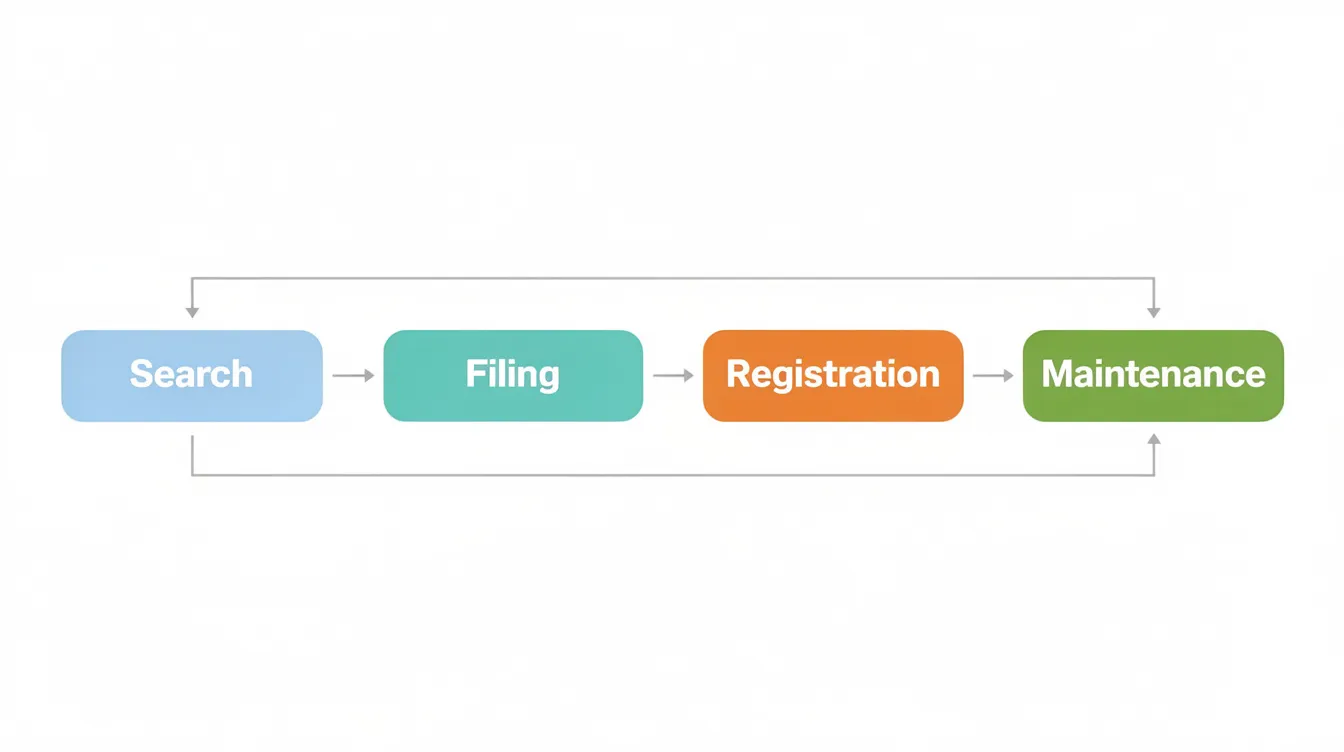
Trademark services cover the complete lifecycle of brand protection. In practical terms, that means everything from the initial search to long-term portfolio management. Here is what falls under the umbrella:
- Clearance and availability searches before you commit to a name or logo
- Application filing and registration with the United States Patent and Trademark Office or a state trademark office
- Responding to office actions and other examiner communications
- Ongoing monitoring for potential trademark infringement across marketplaces, domains, and new filings
- Renewals, maintenance filings, and record updates to keep registrations in good standing
- Licensing, assignments, and strategic expansion support
Trademark services protect brand identity and secure intellectual property rights at every stage. Trademark registration gives exclusive legal ownership to use the
mark for specified goods or services listed in the application - and only trademarks registered with the USPTO can display the ® symbol. Using the ® symbol provides constructive notice of trademark rights and prevents claims of innocent infringement by an infringing party.
For most businesses, the question isn't whether to register - it's where. Federal trademarks offer nationwide protection across all states, while state trademarks provide protection only within the specific state. A business owner operating locally may start with state registration, but any company with plans for national or online reach should prioritize federal filing.
This guide is for founders, creators, and multi-brand companies that want professional, efficient support rather than DIY guesswork.
Why businesses need professional trademark services (not DIY)
Filing a trademark application yourself might seem straightforward. In reality, most businesses that skip professional trademark attorney services run into problems that cost far more to fix than they would have cost to prevent.
Common DIY risks include:
- Running an incomplete clearance search that misses common-law marks, state registrations, or confusingly similar names
- Misclassifying goods or services under the wrong Nice Classification category, triggering refusals
- Missing strict response deadlines for office actions (three months for standard USPTO actions, six months for Madrid Protocol applications - with no extensions)
- Failing to enforce or monitor the mark after registration, which can lead to dilution or loss of trademark rights
Consider a few quick examples. A craft brewery names itself "Golden Barrel Brewing" without a thorough search, only to receive a cease-and-desist from "Golden Barrel Beers" in another state - forcing a full rebrand of labels, packaging, and signage. A SaaS startup calls its platform "DataBridge," gets a likelihood of confusion refusal because "Data Bridges" already covers related goods in the same class, and loses months amending or abandoning. An ecommerce brand selling on a major marketplace discovers a local company already owns a state mark for the same name, resulting in a lawsuit and product takedowns.
Trademark clearance searches can reveal conflicts before significant investment in branding. A coordinated service package - search, filing, monitoring, and renewals - generally costs a fraction of what a single rebranding or infringement dispute runs. That's the real value professional expertise delivers.
Trademark clearance search services
A trademark clearance search is not a quick Google query or a five-minute scan of the USPTO database. It is a structured investigation designed to surface conflicts you would otherwise miss until they become expensive.
A comprehensive search covers multiple scopes:
- Federal registered trademarks and pending applications at the USPTO
- State trademark office records across relevant jurisdictions
- Common-law uses - businesses using a mark in commerce without any registration
- Domain name registries for matching or similar URLs
- Social media platforms and online marketplace listings
Comprehensive trademark searches prevent conflicts with existing marks by going beyond identical matches. Attorneys analyze the likelihood of confusion using multi-factor tests like the DuPont factors, which consider similarity of appearance, sound, and meaning; relatedness of goods and services; channels of trade; and strength of the existing mark. Even marks that look different on paper can create confusion when they cover related goods in overlapping markets.
What you should expect from a professional search:
- A written report listing all potentially conflicting marks (registered, pending, and common law)
- A legal risk assessment rating the severity of each conflict
- Clear recommendations: proceed with filing, modify the mark, or rebrand entirely
Some firms now use AI tools to surface phonetic and visual similarities faster, but the legal analysis - evaluating trade channels, mark strength, and customer confusion - still requires attorney judgment.
Trademark filing services: preparing strong applications
Filing a trademark application is where strategy meets paperwork. Professional trademark filing services typically include:
- A strategy meeting to understand your business plans, product lines, and expansion goals
- Selecting the correct owner entity (individual, LLC, corporation) so the registration doesn't face assignment problems later
- Drafting a precise identification of goods and services - broad enough to protect your brand, specific enough to survive examination
- Choosing the right filing basis: use in commerce (Section 1(a)) if you are already selling, or intent to use (Section 1(b)) if launch is still ahead
- Preparing specimens that meet current USPTO guidelines for proof of use
Federal registration provides nationwide trademark protection, allows lawsuits in federal court, enables recovery of an infringer's profits, and helps prevent importation of infringing goods. Public notice of ownership is provided by federal registration, putting competitors on constructive notice.
Common filing problems that lead to refusal include vague descriptions (like "software" instead of "cloud-based data analytics software for healthcare providers"), incorrect owner names, and failure to anticipate examining attorney objections. Professional preparation addresses each of these before the application is submitted, reducing the likelihood of avoidable office actions and saving both time and money.
If international expansion is on your plans, your attorney can coordinate wording so the U.S. trademark application supports future Madrid Protocol filings without restrictive language.

Trademark registration services and working with the USPTO
Once your application is filed, the registration process moves through several stages. Here is what the timeline generally looks like:
- Filing and assignment: your application receives a serial number and enters the USPTO examination queue
- First office action: an examining attorney reviews the application; the current target for first action pendency is roughly five months from filing
- Publication for opposition: if the examiner approves, the mark is published in the Trademark Official Gazette; third parties have 30 days to oppose
- Notice of allowance (intent-to-use basis): the applicant has six months to file a Statement of Use, with possible extensions
- Registration certificate: for use-in-commerce applications, total pendency from filing to registration averages approximately 9 to 11 months
Federal registration provides public notice of trademark ownership. After five years of continuous use, incontestability status can be achieved, giving the registration a stronger legal presumption. Federal trademarks can become incontestable after five years of use, making them significantly harder to challenge.
Federal registration also allows lawsuits in federal court for trademark disputes and federal trademarks can prevent importation of infringing goods through U.S. Customs.
Professional trademark registration services manage every stage - tracking deadlines, preparing responses, and keeping clients updated without burying them in legal jargon. For a business owner starting locally but planning national growth, coordinating state and federal filings ensures consistent protection without conflicting registrations.
Responding to office actions and other trademark office communications
An office action is a formal letter from a USPTO examining attorney raising legal or procedural issues with your trademark application. Common types include:
- Likelihood of confusion refusals (Section 2(d)): another mark is too similar in appearance, sound, or meaning and covers related goods or services
- Merely descriptive refusals (Section 2(e)(1)): the mark describes a feature or quality of the goods rather than functioning as a brand identifier
- Technical defects: required disclaimers, specimen problems, incorrect classification, or inconsistent owner information
- Priority actions and suspension letters: signals that the application is waiting on another proceeding or needs immediate attention
The applicant must respond within three months for standard nonfinal and final office actions. Missing this deadline causes abandonment - losing the filing date and priority. For international Madrid Protocol applications, the deadline is six months with no extension available.
Professional services evaluate each office action and decide whether to fight the refusal with legal arguments and evidence, amend the description or mark, narrow the identification of goods, or in some cases abandon and refile with a stronger mark. This ability to respond strategically - not reactively - is where expertise pays for itself.
Trademark monitoring and enforcement support
Registration is not the finish line. Without ongoing monitoring, unauthorized use of your mark can erode its value and weaken your claim to exclusivity.
Trademark monitoring services identify potentially conflicting applications as they are filed at the USPTO, state registers, and across online platforms. A complete monitoring program typically includes:
- Watch notices for newly filed marks that are similar to yours
- Review of domain registrations, marketplace listings, and social media for infringing uses
- Investigation and evidence gathering when a potential conflict surfaces
- Cease-and-desist letters demanding that the infringing party stop using the mark
- Coexistence agreements or settlements that define boundaries without litigation
Trademark enforcement includes cease-and-desist letters and legal challenges, but the goal of monitoring is to catch problems early - before they become a lawsuit. For companies running multiple brands or product lines, centralized monitoring ensures no sub-brand slips through the cracks.
Clients should expect regular reporting - monthly or quarterly watch reports with severity ratings and recommended next steps. This is brand hygiene, not aggression. Consistent enforcement protects your reputation and keeps your registration defensible.
Trademark renewals, maintenance, and record updates
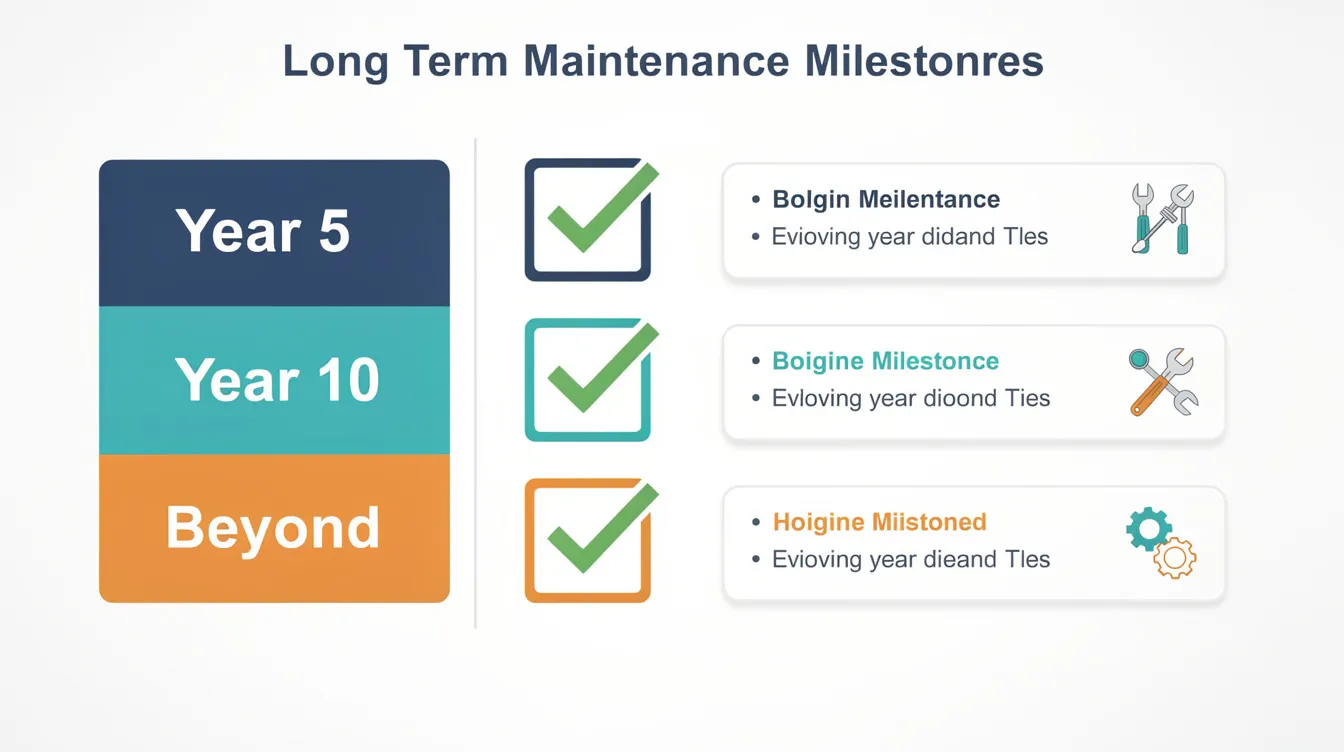
Trademark maintenance requires periodic filings to keep registration active. Miss one, and the USPTO can cancel your registration - permanently. Key U.S. maintenance deadlines include:
- Years 5–6: file a Section 8 Declaration of Use (and optionally a Section 15 Declaration for incontestability)
- Years 9–10: file a combined Section 8 Declaration and Section 9 Renewal Application
- Every 10 years after that: repeat the Section 8 + Section 9 filing
- Record updates: changes to ownership, address, or corporate form should be filed promptly via Section 7
Each filing window includes a six-month grace period (with an additional fee), but letting a registration lapse means starting the entire process over - losing your priority date and potentially your access to the mark.
State-level renewals follow different schedules. For example, Illinois trademark registration provides legal presumption of ownership, offers public notice of trademark claims, and helps deter potential infringers within the state. State registration also allows lawsuits in Illinois state court, and state trademarks can assist in federal registration processes by establishing prior use. A single service provider can manage a calendar across federal, state, and international jurisdictions so nothing falls through.
Licensing, assignments, and strategic brand expansion
As your brand grows, other people and companies may need permission to use your trademarks. That is where licensing and assignment services come in.
- Licensing: drafting agreements that let franchisees, co-branding partners, or white-label manufacturers use your mark under defined conditions - including quality control provisions, royalty structures, and territorial limits
- Assignments: formal transfer of ownership during acquisitions, reorganizations, or investor deals, recorded with the USPTO to preserve the chain of title
- International rollout: coordinating licenses and registrations across countries, often through local counsel or the Madrid Protocol
Registered trademarks enhance brand value and can be licensed or sold, making them a tangible business asset. However, "naked licensing" - letting someone use your mark without quality oversight - can result in abandonment of your trademark rights. Whether you run a restaurant chain, a consumer product line, or a software company, ongoing legal guidance is critical whenever others represent your brand to customers.
Managing multi-brand trademark portfolios
A trademark portfolio is the complete collection of marks a company owns: brand names, logos, taglines, sub-brands, and possibly registrations across multiple countries and goods/services classes.
Trademark portfolio management assists in organizing and tracking multiple trademarks. Professional portfolio services include:
- Auditing existing marks to identify which are active, which are unused, and which are vulnerable
- Ranking marks by business value and risk exposure - a flagship brand warrants more protection than a retired product name
- Mapping coverage across classes and territories to find gaps or redundancies
- Aligning the portfolio with corporate goals (e.g., a 2027–2030 expansion plan, new product launches, or planned rebrands)
Clients should expect portfolio summaries, gap analyses, renewal calendars, and strategic recommendations on what to file, maintain, or retire. A centralized trademark services hub simplifies decision-making for busy founders and legal teams, making it easier to conduct regular reviews and deliver clear action items.
Working with Masterly Trademarks for end-to-end trademark services
Masterly Trademarks provides a single-hub solution covering search, filing, registration, office actions, monitoring, renewals, licensing, and portfolio management.
- Startups launching a first brand get clearance, filing, and registration support from day one
- Fast-growing ecommerce businesses benefit from monitoring, enforcement, and international filing coordination
- Established companies managing multiple U.S. and international trademarks receive portfolio audits, renewal management, and strategic guidance
The typical engagement flow starts with an initial consultation to understand your business objectives, followed by a tailored service plan with transparent fees and ongoing support as your brand evolves. You gain a single point of contact for every trademark need.
Request a trademark consultation with Masterly Trademarks.

Trademark services FAQs
When should I start a clearance search? As early as possible - ideally before you invest in logo design, packaging, or a website. A professional search typically takes one to two weeks and can save you from discovering a conflict after you have already spent thousands on branding.
How long does USPTO registration usually take? For use-in-commerce applications, expect roughly 9 to 11 months from filing to registration. The first office action from an examining attorney generally arrives around five months after filing. Intent-to-use applications take longer because you must file a Statement of Use after receiving a notice of allowance.
Do I need federal or state registration first? It depends on your plans. If you operate only locally, state registration may be sufficient initially. But federal registration provides nationwide trademark protection, serves as the basis for international filings, and is generally more enforceable. A federal trademark registration allows international trademark applications through the Madrid System, which covers trademark protection in up to 130 countries.
What happens if I miss an office action deadline? Missing the deadline results in abandonment of your application. You lose your filing date, your claim to priority, and must refile - paying a new filing fee and starting the process from scratch. For Madrid Protocol applications, the six months deadline has no extension option.
Can I file internationally through the Madrid System? Yes. International trademark registration can protect trademarks in multiple countries through a single application. U.S. registration can simplify foreign trademark registration processes, and foreign applications can be filed within six months of U.S. filing to preserve your priority date. Note that international trademark rights are generally territorial in nature, meaning each designated country examines the mark under its own laws.
How are renewals and maintenance handled? Key filings fall between years 5–6 (Section 8), years 9–10 (Section 8 + Section 9 renewal), and every 10 years after. A six-month grace period exists, but with a surcharge. Professional services use docketing systems to track every deadline, prepare declarations, gather specimens, and handle any form or documentation updates so your registration stays in good standing.
What does trademark monitoring actually do? Monitoring services watch for newly filed applications, domain registrations, and marketplace uses that could conflict with your mark. When a potential issue surfaces, you receive a report with a risk rating and recommended action - whether that means sending a cease-and-desist, negotiating a coexistence agreement, or simply continuing to monitor.
Why does professional help matter for licensing? Licensing without quality control provisions can destroy your trademark protection entirely. A person granting a license needs enforceable terms covering how the mark is used, where, and to what standard. Professional assistance ensures the agreement holds up legally and preserves the brand value you have built.
You might also like