Trademark Renewal Services: What Brand Owners Should Track Before a Registration Deadline
A federal trademark registration does not last forever on autopilot. Missing a single maintenance deadline can cancel your registration, strip away your nationwide rights, and open the door for competitors to claim similar marks. This guide walks through the deadlines, documents, evidence, and common pitfalls that trademark owners need to track, and explains how trademark renewal services keep your portfolio protected.

1. Trademark Renewal Services at a Glance
Trademark renewal services, sometimes called trademark maintenance services, handle the filings and evidence required to keep a U.S. federal trademark registration alive. That includes Section 8 declarations of use, Section 9 renewal applications, Section 15 declarations of incontestability, and Section 71 filings for Madrid Protocol extensions. The work covers deadline tracking, specimen collection, ownership record updates, and responses to post registration office action requests from the USPTO.
The focus here is on registrations issued by the United States Patent and Trademark Office. If your trademark protection extends to the U.S. through the Madrid Protocol and the International Bureau, additional timing rules apply. Filing maintenance documents is required to keep a trademark active in the U.S., and trademark rights depend on staying in good standing with the USPTO by meeting renewal requirements.
What is actually at risk? If you miss a deadline, you lose the presumption of nationwide validity, the right to use the ® symbol, the ability to record with U.S. Customs, and enforceability in federal court. Failure to maintain a trademark can allow others to register confusingly similar marks. Renewing a trademark preserves exclusive rights and brand identity.
Many missed deadlines stem not from lack of trademark use but from confusion about which maintenance documents to file, how grace periods work, or stale ownership records. Attorney-guided trademark renewal services track these deadlines, prepare the required filings, and advise on evidence of use and excusable nonuse, so that a simple administrative gap does not destroy years of brand building.
Think of the process as a cycle: Registration → Use & Records → Maintenance Filing → Continued Protection. Break the cycle at any point, and the registration dies.
2. Key Maintenance Deadlines That Brand Owners Must Track
A U.S. trademark registration follows a defined lifecycle. The first maintenance window opens between the fifth and sixth year after the registration date. A combined renewal is due between years nine and ten, and then every ten year period after that. Madrid Protocol extensions follow a parallel path under Section 71. Keeping a renewal calendar is essential for portfolio tracking.
Here is a concrete example. Suppose your registration issued on March 10, 2020. Your first Section 8 is due between March 10, 2025, and March 10, 2026. If you miss that window, you have until September 10, 2026, to file during the grace period with the surcharge. Your combined Section 8 and 9 renewal is then due between March 10, 2029, and March 10, 2030, with a grace period running to September 10, 2030. Miss the grace period, and the registration is canceled.
USPTO courtesy reminder emails are helpful but not guaranteed. The responsibility to track and file remains with the owner. A digital docketing system, shared internal calendar, or attorney-maintained docket is the safest approach for any trademark registration renewal.
3. Understanding Required Maintenance Documents
Maintenance documents are the sworn filings and supporting evidence you must submit at prescribed times to confirm continued use and keep a registration alive. Each declaration is a sworn statement made to the trademark office, and misstatements or over-claims carry real consequences, including cancellation.
- Section 8 Declaration of Use or Excusable Nonuse: A Section 8 filing requires proof of continued trademark use on all listed goods or services. Due between the fifth and sixth year, then with every ten-year renewal.
- Section 9 Renewal Application: The renewal application extends the registration term. Filed every ten years, typically combined with Section 8.
- Combined Section 8 & 9: In the nine-to-ten-year window, these are filed together. You must submit a specimen showing trademark use with maintenance filings.
- Section 15 Declaration of Incontestability: Optional but valuable. You can file a Section 8 declaration with a Section 15 declaration. Combined filings for Section 8 and 15 can save costs.
- Section 71 Declaration: Required for Madrid Protocol extensions instead of Section 8, at the same intervals.
Each filing must match the mark as registered. You must delete unused goods from your registration promptly, or support nonuse with an excusable reason. Failure to file maintenance documents can cancel your registration entirely.
A trademark renewal service typically drafts these documents, assembles proof of use, and files through the TEAS system on behalf of the owner, reducing the risk of errors or missed requirements.
4. Keeping Your Registration Alive: Evidence of Use and Excusable Nonuse
Use in commerce is the foundation of U.S. trademark rights. Every maintenance filing tests whether the registration still reflects real-world trademark use. Without evidence, your registration dies regardless of how valuable the brand is.
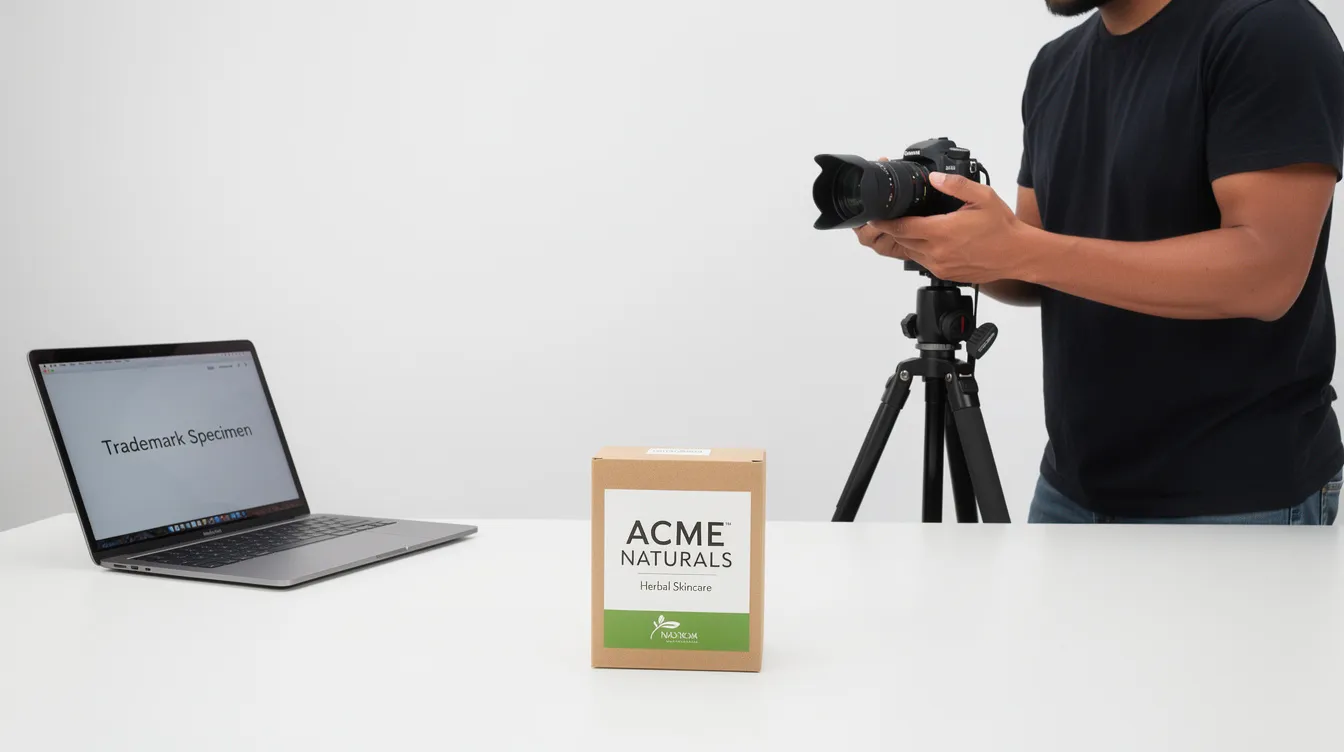
Acceptable use evidence varies by registration type:
- For goods: Product packaging, labels, hangtags, photographs of the product bearing the mark, or online product listings showing the mark with the item offered for sale.
- For services: Website pages displaying the mark in connection with the services, brochures, advertisements, invoices, or signage.
Evidence must connect the mark to specific goods or services named in the registration and reflect use during the relevant period. Dates matter. A specimen from three years ago may not satisfy a filing due today.
Excusable nonuse applies only in special circumstances beyond the owner's control. Examples include a trade embargo preventing export, a natural disaster shutting down operations, or a temporary plant closure for regulatory compliance. Strategic business decisions or decreased demand do not qualify. The owner must declare nonuse, explain the reason, and provide a timeline for resuming use.
Foreign-only use does not keep a U.S. registration alive. Domestic use in U.S. commerce is what matters for Section 8 or Section 71 filings. A renewal service can help analyze whether nonuse might be excusable and prepare detailed supporting documents.
5. Section 8, 9, 15, and 71: What Each Filing Actually Does
Consider this a plain-English guide to the alphabet soup of maintenance filings. Each provision serves a different purpose, and understanding them helps you file the right form at the right time.
- Section 8 is the declaration confirming continued use or qualifying excusable nonuse. It is due between the fifth and sixth year after your registration date and again with each ten-year renewal. Without it, the registration is canceled.
- Section 9 is the renewal application that extends the registration term for another ten years. It is filed in a combined form with Section 8 during the nine-to-ten-year window.
- Section 15 is the declaration of incontestability. A Declaration of Incontestability can be filed after five years of continuous use on the Principal Register, provided no adverse proceedings are pending. Filing a Section 15 Declaration strengthens trademark rights by limiting certain legal challenges. Incontestability declarations provide conclusive evidence of trademark validity. Section 15 declarations are optional but recommended for trademark owners.
- Section 71 is the Madrid Protocol counterpart to Section 8. It keeps a U.S. extension of an international registration alive, with timing tied to the U.S. extension certificate date.
For example, if your registration issued in March 2020, you might file a combined Section 8 and 15 between March 2025 and March 2026, then a combined Section 8 and 9 between March 2029 and March 2030.
6. Non-Madrid vs. Madrid Protocol Registrations: Different Renewal Paths
U.S. registrations obtained directly through Sections 1 or 44 follow one maintenance path. Registrations extended to the United States through the Madrid Protocol, identifiable by serial numbers starting with "79," follow another.
For non-Madrid registrations, the path is Section 8 at years five through six, combined Section 8 and 9 every ten years, and optional Section 15 after five years of continuous use.
For Madrid Protocol extensions, maintenance uses Section 71 declarations at years five through six and every ten years, combined Section 71 and 15 filings where timing aligns, and separate renewal of the underlying international registration with WIPO's International Bureau.
Missing a Section 71 deadline results in cancellation of the U.S. extension, even if the international registration remains renewed with WIPO. A trademark renewal service should confirm whether each registration number corresponds to a Madrid-based or non-Madrid filing before advising on deadlines, and should docket both USPTO and WIPO renewal dates.
7. Ownership, Goods or Services, and Records: Avoiding Common Renewal Errors
Many maintenance failures trace back to outdated ownership records or overbroad identifications of goods or services, not to problems with the filing form itself. Getting the records right before a deadline is just as important as the filing itself.
Ownership records:
- The current legal owner's name and address must match what the USPTO has on file.
- If ownership changed through a merger, acquisition, or name change, file appropriate assignment or name-change documents before submitting maintenance filings.
- Misaligned ownership can lead to refusal or make the registration vulnerable in enforcement disputes.
Goods or services:
- Deleting goods or services no longer in use is critical when filing maintenance documents. Trying to maintain coverage for unused items invites audit scrutiny.
- A Section 7 request can remove unused items between maintenance deadlines, avoiding extra deletion fees later.
- Using the mark on goods or services not listed in the registration does not save coverage for the original registered items.
Any material change to the mark's appearance disqualifies the filing. Robust portfolio tracking and accurate records, both internal and on the USPTO website, are central to a professional trademark renewal service.
8. Grace Periods, Fees, and What Happens If You Miss a Deadline
Grace periods offer a last chance to file a required maintenance document, not an extension of the registration term. They exist as a safety net, not a strategy.
The USPTO allows a 6-month grace period after renewal deadlines for an additional fee. A six-month grace period exists for late Section 8 filings as well. For example, if your Section 8 was due by March 10, 2026, the grace period runs until September 10, 2026, but you must pay an additional fee of roughly $100 per class on top of the standard government fees ($325 per class for Section 8, $650 per class for combined Section 8 and 9).
If no filing is made by the end of the grace period, the registration is automatically canceled. The trademark office removes it from the register. You lose the presumption of nationwide rights, the ability to rely on the registration in enforcement or customs recordation, and must file a brand-new application facing fresh examination, publication, and potential refusals.

Attorney-guided renewal services identify upcoming deadlines early enough to avoid relying on the grace period and can quickly triage late-stage situations where a grace period is already running.
9. Protecting Yourself From Misleading "Trademark Renewal Service" Solicitations
Shortly after a registration issues, and at regular intervals before each renewal window, many trademark owners receive official-looking mailers or emails from private companies. Some solicitations are sent a year before renewal is actually due. Many unsolicited notices appear official but are fraudulent.
These solicitations use publicly available trademark registration information, including registration numbers, owner names, and deadlines, to create the appearance of legitimacy. Red flags include requests for payment far in advance, incorrect dates, vague terms like "registration listing," and no clear law firm identity. Misleading solicitations may contain inaccurate registration dates or sixth anniversary date references that do not match the actual record.
Official USPTO communications come only from domains ending in "@uspto.gov." The USPTO does not send invoices demanding fees through private companies.
If you receive a suspicious notice, confirm your registration status and deadlines directly in TSDR, check with your trademark attorney or renewal service before paying, and report misleading solicitations. A professional trademark renewal service maintains the renewal calendar, verifies dates directly with the patent and trademark office, and communicates clearly about real deadlines and fees.
10. How Attorney-Guided Trademark Renewal Services Support Your Portfolio
Trademark renewal services do more than fill out forms. They fit into broader portfolio tracking and brand strategy, ensuring that every registration aligns with how your business actually operates today. Trademark renewal services can alleviate administrative burdens for business owners. Trademark renewal services help businesses maintain active federal trademark registrations. Trademark renewal involves tracking deadlines and preparing required paperwork for the USPTO.
A comprehensive renewal engagement typically includes:
- Building and maintaining a renewal calendar across all registrations, including applicants with multiple marks.
- Monitoring ownership records and updating the states patent and trademark office where needed.
- Reviewing actual trademark use, gathering specimens, and advising on deletions or excusable nonuse claims.
- Coordinating U.S. and Madrid Protocol deadlines for multinational portfolios, so that registrants never face a surprise cancellation.
Beyond administration, there is strategic value: advising on when to file a declaration of incontestability, identifying registrations that no longer align with current business decisions and should be adjusted or allowed to lapse, and keeping the public register accurate so enforcement and licensing remain strong. According to USPTO audit program statistics, nearly half of audited registrations required deletion of goods or services, and over 5,100 registrations were fully canceled between 2017 and 2025.
A typical engagement starts with an initial audit of your registrations, identification of upcoming deadlines in the next 12 to 24 months, prioritization of filings, and ongoing reminders and status reporting. The benefits extend well beyond compliance: you protect the proof of rights you have already invested in building.
Request a trademark maintenance and renewal consultation with Masterly Trademarks to review your deadlines, ownership records, and use evidence before rights are at risk.
You might also like