Trademark Specimen Refusals: Why the USPTO May Reject Proof of Use
A Trademark Specimen Refusal Can Delay Registration and Put Your Brand at Risk
A trademark specimen refusal occurs when the United States Patent and Trademark Office determines that the specimen you submitted does not adequately show trademark use for the goods or services in your application, which can stop the progress of registration even when you believe your brand is already being used properly. Many applicants are surprised to learn that a refusal can turn on how that use is presented, not just whether the mark exists in the marketplace.
A refusal does not automatically mean your trademark cannot be registered. However, responding without a clear understanding of the issues may lead to additional delays, unnecessary costs, and the loss of valuable trademark rights—problems that can affect licensing, enforcement, and brand growth as your business expands.
Masterly Trademarks helps businesses, entrepreneurs, founders, and growing brands understand why specimen refusals happen, evaluate website, goods-display, and services specimens, avoid common filing mistakes, and respond strategically when the USPTO raises an objection. Our goal is to help clients move forward with confidence while protecting the value of their brands.
Why the Right Response Matters for Overcoming a Specimen Refusal
A trademark often becomes one of a company's most valuable business assets.
When a specimen issue delays registration, it can affect future licensing, investment opportunities, enforcement efforts, and overall brand growth. The longer questions remain unresolved, the greater the uncertainty surrounding the application.
Careful legal review helps identify the reason for the refusal and develop an appropriate response that supports the application while protecting long-term trademark rights.
Understanding a Trademark Specimen Refusal
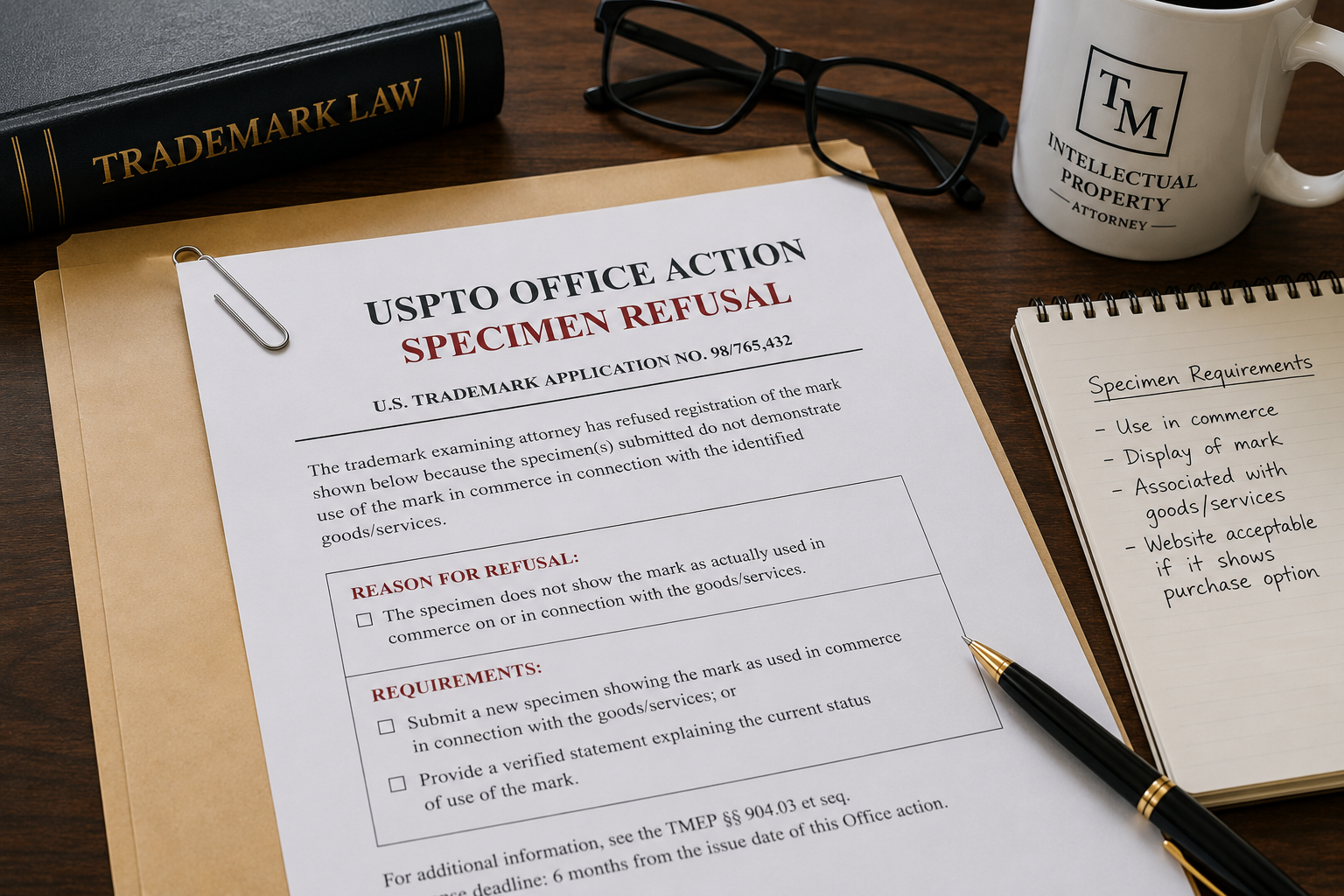
A trademark specimen refusal generally means the USPTO determined that the specimen submitted does not properly demonstrate how the trademark is being used in commerce for the identified goods or services. The specimen of use must show use for the listed goods or services in each International Class, and each class of goods or services requires a separate specimen.
Every application is evaluated based on its own facts, including the trademark, the products or services involved, and the materials submitted to support the filing.
Receiving a refusal does not necessarily prevent registration, but it does require careful legal evaluation before moving forward.
What Is a USPTO Specimen Refusal?
A USPTO specimen refusal occurs when the examining attorney concludes that the submitted specimen does not satisfy the legal requirements for demonstrating trademark use.
Depending on the circumstances, the reviewing attorney may determine that:
- The submitted materials do not qualify as an acceptable specimen. To be among acceptable specimens, it must be a real example of actual use, not a mock-up, printer's proof, or digitally altered image, because those do not meet USPTO requirements for trademark evidence.
- The specimen does not show use of the mark in commerce. A specimen shows use when the mark appears in a bold manner as a source identifier in close proximity to the goods or services, rather than as merely decorative text or informational matter.
- The specimen does not match the identified goods or services.
- Additional clarification or evidence is necessary.
These are general rules a trademark examining attorney applies when reviewing a specimen refusal.
Understanding the reason for the refusal is the first step toward preparing an informed response.
Trademark Proof of Use and Acceptable Specimens Must Support the Application
A successful application depends on providing appropriate trademark proof of use for the goods or services listed in the application.
The evidence submitted should accurately reflect how consumers encounter the trademark in connection with the business.
Questions about proof of use frequently arise when the submitted materials do not clearly demonstrate the required commercial use or when the evidence does not correspond with the application itself.
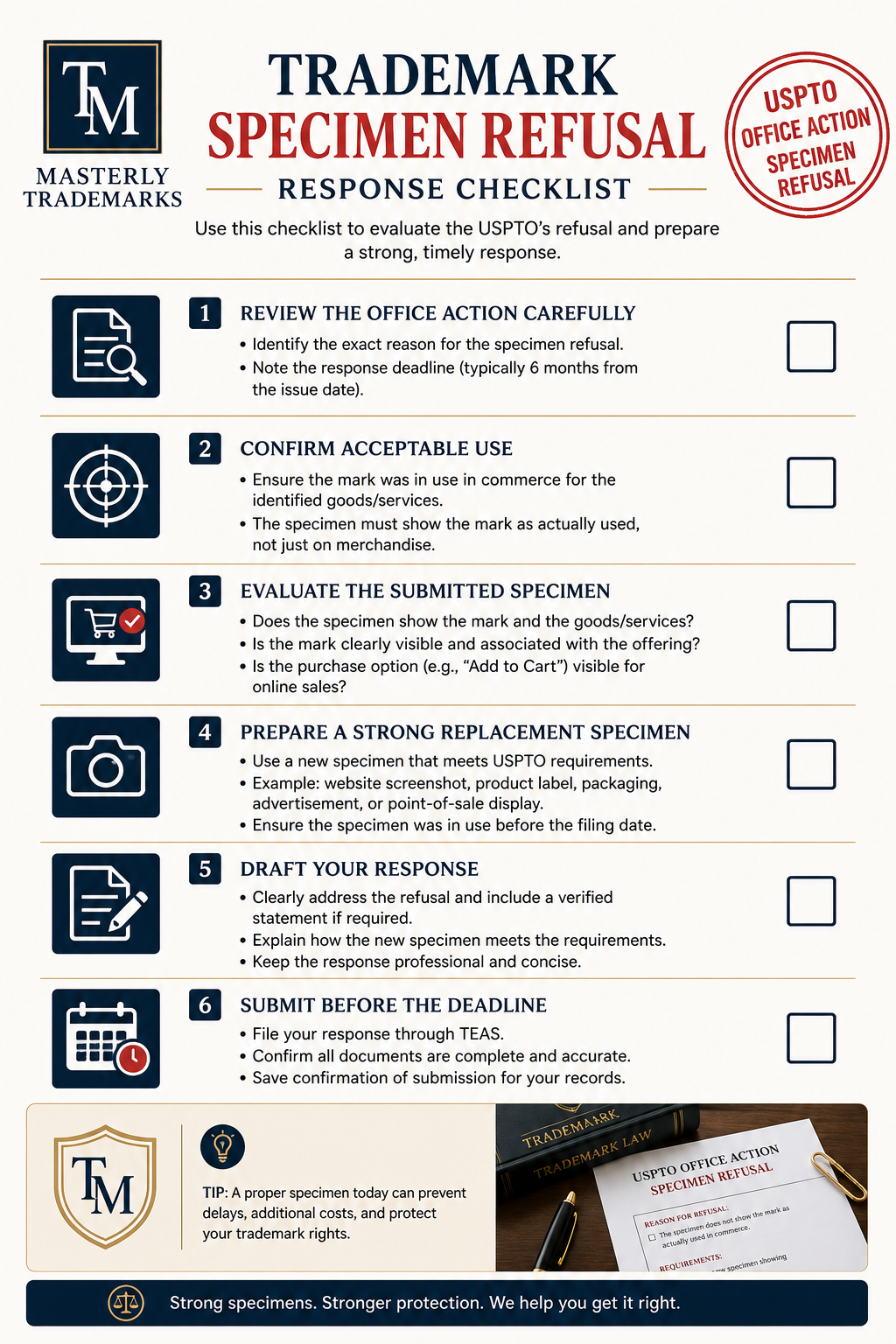
If a specimen of use is rejected, the response may involve arguing that the specimen submitted was proper or providing a verified substitute specimen that matches the specified goods or services.
Website Specimen Issues Are Common
A website specimen may be appropriate in certain circumstances, but not every webpage satisfies USPTO requirements.
Reviewing webpage specimens often involves evaluating whether a webpage showing the mark clearly presents the identified goods or services and, when submitted, includes the URL and access date.
Because every application differs, website materials should be evaluated carefully before submission.
Display Associated With Goods Must Meet USPTO Standards
Applications involving physical products often require a display associated with goods that demonstrates the trademark as consumers encounter it in the marketplace.
The USPTO reviews whether the submitted materials appropriately connect the trademark with the goods identified in the application. Acceptable specimens for goods can include labels, tags, packaging, or mailing labels, and labels with informational matter such as upc bar codes may work when they show the mark in close proximity to the particular goods.
One specimen may be enough for a class if it clearly demonstrates trademark use for those goods.
Incomplete or unclear product displays may result in additional questions or specimen refusals that delay registration.
Services Specimen Requirements
Trademark applications covering services require a services specimen that demonstrates how the trademark is used in connection with those services.
For service marks, acceptable specimens often include advertising materials, marketing materials, and an online presence that create a direct association between the mark and the identified services.
Selecting the proper specimen before filing may help reduce the likelihood of receiving an office action related to proof of use.
The same rule applies to distributorship services and other identified services, where the specimen must connect the mark to the services listed.
Preventing Specimen Problems Before Filing
Many specimen issues can be identified before an application is submitted.
Attorney review before filing may help businesses:
- Evaluate available specimens.
- For each International Class, submit specimens that reflect actual marketplace use rather than mockups, drafts, or other proposed materials, and be prepared to offer new specimens if the first evidence is not acceptable.
- Confirm consistency between the application and supporting evidence.
- Identify potential proof-of-use concerns.
- In an intent to use filing, applicants must later submit specimens with a statement of use or an amendment to allege use, and extensions may be available to submit new specimens if use has not begun or the evidence is deficient.
- Review website materials.
- Assess product displays.
- Strengthen supporting documentation.
Careful preparation often reduces unnecessary delays during the examination process.

Why Businesses Choose Masterly Trademarks
Masterly Trademarks provides attorney-guided trademark services for businesses, entrepreneurs, founders, and organizations throughout the United States.
We understand that a specimen refusal may affect important business goals, including product launches, licensing opportunities, financing, and brand expansion.
Our services include:
- Reviewing office actions.
- Evaluating specimen refusals.
- Assessing proof-of-use evidence.
- Reviewing website specimens.
- Evaluating displays associated with goods.
- Reviewing services specimens.
- Preparing strategic responses to USPTO concerns.
Every trademark matter receives individualized legal attention based on the client's business objectives and filing circumstances.
Building a Stronger Trademark Application With the Right Specimen
Every trademark application should be supported by evidence that accurately reflects how the mark is used in commerce. For online retail store services, the specimen should demonstrate the mark as customers encounter it in connection with the relevant services offered through the online retail store. The USPTO reviews whether the same mark shown in the application appears on the submitted materials and whether it matches the applied for mark identified in the filing. Depending on the filing basis under the Trademark Act, applicants may need to attach specimen materials through the Trademark Electronic Application System, upload the correct specimen file, and ensure the evidence reflects proper use of the mark before the applicable filing deadline.
For applications involving actual goods, acceptable evidence may include product labels, packaging, point of sale displays, packing slips, or instruction manuals, provided they show the trademark being used when selling goods in commerce prior to the required filing date. Materials such as business documents or press releases generally do not establish trademark use if they fail to demonstrate the required commercial connection.
When preparing trademark filings, applicants should carefully review whether specimens reflect the correct use of the mark on products, computer programs, or services, especially when documents contain different dates or inconsistent information. If the USPTO issues an office action, understanding the available response options, including submitting a new statement when appropriate, may help resolve specimen issues while supporting continued examination of the
Frequently Asked Questions
What is a trademark specimen refusal?
A trademark specimen refusal occurs when the USPTO determines that the specimen submitted does not adequately show actual use of the mark in commerce for the identified goods or services.
What is a USPTO specimen refusal?
A USPTO specimen refusal is an office action explaining that the evidence submitted with the trademark application does not satisfy federal specimen requirements. The examining attorney reviews whether the specimen of use meets USPTO requirements and qualifies as one of the acceptable specimens for the application.
What is trademark proof of use?
Trademark proof of use is the evidence submitted to demonstrate that a trademark is being used in commerce in connection with the goods or services identified in the application; this specimen of use shows actual use of the mark on the specified goods or in connection with the services listed.
Can a website specimen be accepted?
A website specimen may be accepted if it satisfies applicable USPTO requirements for the particular goods or services involved and properly demonstrates trademark use. For webpage specimens, that means showing the mark in connection with the goods or services and including the webpage URL and access date.
What is a display associated with goods?
A display associated with goods refers to qualifying materials that present the trademark together with the goods in a manner that supports trademark use under USPTO requirements. Qualifying specimens for goods can include packaging, tags, or mailing labels when the mark appears in close proximity to the particular goods.
What is a services specimen?
A services specimen is evidence demonstrating how a trademark is used in connection with the services identified in a trademark application. These often consist of advertising materials or online content that create a direct association between the mark and the services identified.
Request a Specimen and Office-Action Review
If you have received a trademark specimen refusal or want to strengthen your filing before submission, experienced legal guidance can help you evaluate your evidence and respond strategically to USPTO concerns.
In overcoming a specimen refusal, the right response depends on the filing stage and may include the following statement or other arguments, submitting new specimens, or requesting extensions of time to file a statement of use in an intent to use application.
Masterly Trademarks assists businesses with USPTO specimen refusal matters, reviews trademark proof of use, evaluates every website specimen, assesses each display associated with goods, and analyzes every services specimen to help protect valuable trademark rights.
Proper trademark registration and maintenance may also require specimen filings after the registration date.
Masterly Trademarks
Website: https://www.masterlytrademarks.com/
Phone: (972) 236-5051
You might also like