Trademark Assignment Agreements: Transferring Ownership Without Creating Gaps
A Trademark Assignment Agreement Can Protect Your Brand During an Ownership Transfer
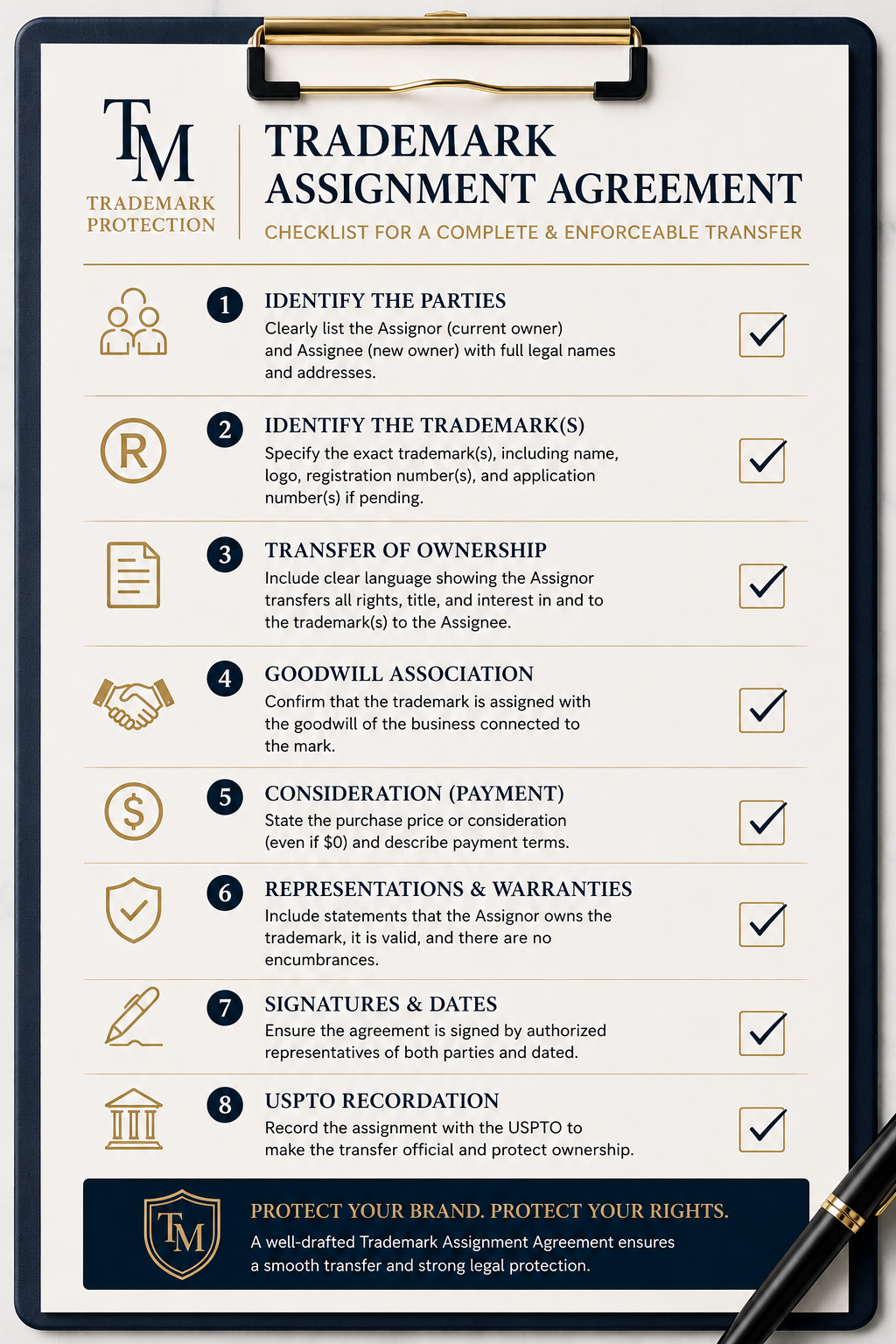
A trademark assignment agreement is the legal document that transfers ownership of a registered trademark or pending trademark application from one party to another, and the terms of that transfer affect whether ownership is clear and enforceable later. Whether your business is selling a brand, acquiring intellectual property, restructuring ownership, or completing a merger, mistakes made during the transfer process can create uncertainty over title, enforcement, licensing, and future transactions.
Many business owners assume signing a simple contract completes the transfer. In reality, an incomplete agreement, a transfer made without goodwill, or an incorrect USPTO filing can create problems that affect the value of the trademark long after the transaction closes—and transferring a trademark without goodwill may invalidate the assignment.
Masterly Trademarks helps businesses, founders, investors, buyers, and entrepreneurs prepare and review trademark assignment agreement documents designed to support a clear ownership transfer and protect valuable intellectual property. This page explains when an assignment is needed, how drafting works, why goodwill and USPTO recordation matter, and how to maintain a clean chain of title.
Why Proper Trademark Transfers Matter
A trademark often represents years of customer trust, marketing investment, and brand recognition.
When ownership changes, the transfer should clearly identify who owns the trademark rights going forward. If the transfer is incomplete or improperly documented, future licensing, enforcement, financing, or business sales may become more complicated.
Addressing ownership issues correctly from the beginning helps reduce future disputes and strengthens confidence in the business transaction.
What Is a Trademark Assignment Agreement?
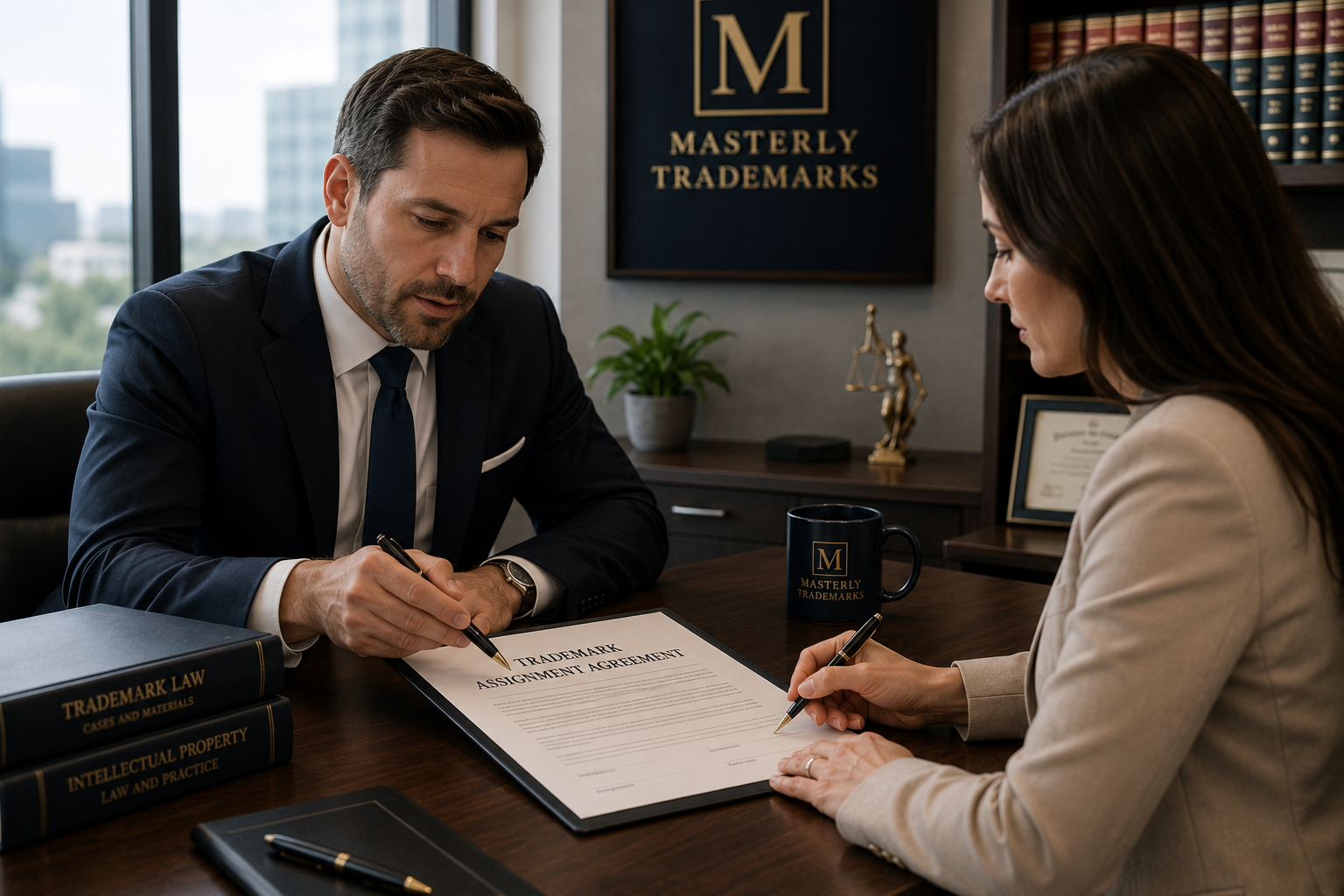
A trademark assignment agreement is a legal document in writing that transfers ownership of a registered trademark or a pending trademark application from one party to another, and the written agreement should clearly identify the assignor and assignee as the parties involved.
These agreements are commonly used during:
- Business acquisitions
- Company sales
- Asset purchases
- Corporate reorganizations
- Brand acquisitions
- Investor transactions
- Internal ownership restructuring
- Succession planning
The agreement must also include a description of the trademark being transferred.
Each transaction should be evaluated individually because every trademark portfolio and business structure is different.

A Trademark Transfer Agreement Should Reflect the Entire Transaction
A properly prepared trademark transfer agreement should accurately reflect the transaction between the parties.
Depending on the circumstances, the agreement may address:
- Ownership being transferred
- Identification of the trademarks involved
- Related intellectual property rights
- The effective date
- Business assets connected to the brand
- Representations regarding ownership
- The parties agree to any other provisions and remaining provisions that govern the agreement
- Supporting documents
Careful drafting helps reduce uncertainty and supports a smoother transition after closing.
Assign Trademark Ownership Without Creating Future Problems
When businesses assign trademark ownership, these trademark ownership transfers move ownership rights from the current owner to another party and often involve significant business assets.
Ownership transfers may occur because of:
- Business sales
- Partner buyouts
- Corporate mergers
- Estate planning
- Internal restructuring
- Investment transactions
- Intellectual property acquisitions
Each situation presents different legal considerations, making experienced legal review important before finalizing the transfer. The trademark assignment process should confirm legal requirements and the assignor’s consent before transferring ownership rights, and assigning a mark should include goodwill to avoid invalidity, whether it is a full assignment of all associated rights and interests, including the right to sell the trademark.
Goodwill Transfer Is Often a Critical Part of the Assignment
One of the most important parts of many trademark transfers involves the goodwill transfer connected to the brand.
Trademark rights are generally tied to the reputation and customer recognition associated with the goods or services offered under the mark.
When goodwill is properly addressed during the assignment process, the transfer better reflects the ongoing value of the trademark and helps preserve the strength of the brand.
USPTO Recordation Helps Maintain Accurate Ownership Records
After the parties transfer ownership, USPTO recordation may help update the public record to reflect the new owner, and the assignee should file the required materials through the Assignment Center.
The USPTO requires a trademark assignment application or similar filing form, together with supporting materials and fees, to update registration records.
Accurate records can become important when:
- Enforcing trademark rights
- Licensing intellectual property
- Conducting due diligence
- Completing future business transactions
- Responding to legal questions about ownership
Once recorded, the assignee becomes the new owner and assumes responsibility for trademark management in compliance with applicable law and regulations.
Recording ownership changes promptly helps establish a more complete public ownership history.
Maintaining a Clear Chain of Title
A complete chain of title documents the history of trademark ownership over time.
Future buyers, investors, lenders, and business partners often review ownership records before completing significant transactions.
Questions about prior ownership transfers may delay transactions or require additional legal review if documentation is incomplete, leaving ownership subject to legal disputes.
Maintaining a clear chain of title helps demonstrate that trademark rights have been transferred through the proper legal channels and with the necessary authority so rights pass properly from one entity to the next without later challenge.
Common Situations That Require Trademark Assignment Services
Businesses frequently need trademark assignment services when:
- Purchasing another company
- Selling intellectual property assets
- Acquiring a brand portfolio
- Reorganizing affiliated companies
- Transferring ownership between related entities
- Completing mergers or acquisitions
- Moving trademarks into holding companies
- Planning long-term business succession
Each transaction should be reviewed carefully to ensure the documentation supports the intended ownership structure.
Why Businesses Choose Masterly Trademarks
Masterly Trademarks supports trademark ownership transfers through proper legal channels for businesses, founders, entrepreneurs, investors, and organizations throughout the United States.
We understand that intellectual property often represents one of a company's most valuable business assets. Our goal is to help clients complete ownership transfers with documentation that supports long-term protection and business growth.
Our services include:
- Preparing trademark assignment documents, including confirming the assignor agrees to the transfer, reviewing the assignor's authority, and assessing the client's obligations under the agreement
- Reviewing existing transfer agreements
- Evaluating ownership history
- Supporting goodwill transfer documentation
- Assisting with USPTO recordation
- Reviewing chain of title issues
- Helping businesses complete ownership transitions with confidence
Every transaction receives careful legal attention based on the client's specific business objectives.
Trademark Owners Should Structure Ownership Transfers Carefully
Trademark owners transfer valuable intellectual property for many reasons, including business sales, estate planning, company restructuring, or transfers to a limited liability company or corporation. Some assignments involve transferring ownership to a family member, while others are completed as part of a larger business transaction that includes payment for the trademark rights. In some situations, businesses may also have an existing license agreement that should be reviewed to ensure it remains consistent with the new ownership structure. Completing the assignment in accordance with applicable legal requirements and maintaining accurate documentation helps support a clear transfer of ownership while reducing the risk of future disputes over trademark rights.
Frequently Asked Questions
What is a trademark assignment agreement?
A trademark assignment agreement is a written legal document that transfers ownership of a registered trademark or pending trademark application from one owner to another, identifies the assignor and assignee, and states that the assignor agrees to the transfer.
What is a trademark transfer agreement?
A trademark transfer agreement documents the legal transfer of trademark rights between parties. In a full assignment, it can transfer all ownership rights and interests to the new owner.
What does it mean to assign trademark ownership?
To assign trademark ownership means transferring legal ownership of trademark rights from one individual or business to another through a properly documented agreement. In practice, assigning a mark transfers its associated rights and may allow the new owner to sell or license the mark.
Why is goodwill transfer important?
A goodwill transfer helps connect the trademark with the business reputation and customer recognition associated with the mark, supporting a more complete ownership transfer.
What is USPTO recordation?
USPTO recordation is the process of recording trademark ownership changes with the United States Patent and Trademark Office so public records reflect the current owner. The new owner may need to file the appropriate USPTO form through the Assignment Center to update registration records.
What is a chain of title?
A chain of title is the documented history of trademark ownership from one owner to the next. A clear ownership history helps support future business transactions and intellectual property enforcement.
Schedule a Trademark Ownership-Transfer Review
If your business needs a trademark assignment agreement to transfer ownership of a trademark through a properly prepared written agreement, is buying intellectual property, selling a brand, or restructuring ownership, careful legal guidance can help protect the value of your trademark assets and reduce future ownership disputes.
Masterly Trademarks assists businesses with trademark transfer agreement preparation, helping clients assign trademark ownership, document goodwill transfer, complete USPTO recordation, navigate the trademark assignment process, and maintain compliance and a clear chain of title for valuable intellectual property.
Masterly Trademarks
Website: https://www.masterlytrademarks.com/
Phone: (972) 236-5051
You might also like