Amazon Brand Registry: What Sellers Need Before Applying
If you sell products under your own brand on Amazon, Amazon Brand Registry is the single most important step you can take to protect your listings, unlock growth tools, and gain control over how customers interact with your brand. This free program lets brand owners link an active registered trademark - or an eligible pending trademark application - to their Amazon presence, granting access to powerful tools that standard sellers simply cannot use.
Who needs it: private-label brands, manufacturers, licensors, and aggregators who own intellectual property. Who probably doesn't: casual resellers or retail-arbitrage sellers without their own brand trademark. Is it free? Yes - Amazon Brand Registry is a free program for brand owners. Do you need a trademark? Yes - either a registered or pending trademark filed with a recognized trademark office.
The three biggest reasons to enroll:
- Brand protection: Automated monitoring and enforcement tools that have reduced infringement by 99%, plus programs like Project Zero and Transparency to detect and remove counterfeit products.
- Content & advertising access: Unlock A+ Content, Brand Stores, Sponsored Brands, Amazon Posts, and other exclusive tools unavailable to unregistered sellers.
- Analytics & insights: Brand Analytics offers performance insights for registered brands - including search catalog performance, market basket analysis, and purchase behavior data.
What Is Amazon Brand Registry in 2026?
Amazon Brand Registry is a verification and control system run by Amazon Brand Services that ties a specific brand trademark to product listings across one or more Amazon marketplaces. It is separate from having a selling account on Seller Central or a vendor central account - you can sell without it, but you cannot access the brand registry program's tools without meeting its criteria.
Brand Registry is also distinct from Amazon's general "brand approval" process. When your brand is enrolled, Amazon verifies legal ownership of the trademark and links it to your brand name, activating a suite of protections and creative capabilities across whichever marketplace your trademark covers (e.g., Amazon.com for a USPTO mark, Amazon.de for an EUIPO mark).
Key components of a fully enrolled brand:
- Verification: Amazon validates your trademark record, confirms ownership, and matches the exact brand name to your products.
- Brand protection tools: Report a Violation dashboard, automated counterfeit detection, eligibility for Transparency, Project Zero, and the Counterfeit Crimes Unit.
- Creative and marketing tools: Enhanced brand content through A+ Content, Brand Stores, Sponsored Brands, Amazon Posts, Virtual Bundles, and Amazon Live.
- Analytics: Brand Analytics dashboards covering top search terms, repeat purchases, customer loyalty, demographics, and more.
Businesses that can enroll include:
- Direct-to-consumer (DTC) brands with their own IP
- Manufacturers producing under their own brand name
- Licensors or agents who are legal rights-holders
- Aggregators that have acquired brands or trademark rights
Why Amazon Brand Registry Matters for Serious Sellers
Brand Registry is the gateway between simply listing products on Amazon and building a defensible, scalable brand. Without it, your product listings are vulnerable to hijackers, counterfeiters, and unauthorized changes that erode your margins, tank your search rankings, and damage customer trust. Counterfeit products make up 3.3% of global trade, and Amazon is not immune to that pressure.
Consider the contrast:
- Without Brand Registry: Generic product detail pages, no control over brand story, competing sellers under your ASINs with inaccurate images or claims, no access to Sponsored Brand ads or Brand Analytics, and limited ability to fight infringement.
- With Brand Registry: Rich A+ Content and brand store pages, Sponsored Brands ads driving qualified traffic, detailed analytics on how customers interact with your brand's products, and automated protections that block the vast majority of infringing listings before you even see them.
What this translates to in outcomes sellers care about:
- Higher conversion rates from enhanced brand content and reduced listing hijacking
- Lower PPC costs because traffic is more qualified and less wasted to unauthorized competitors
- Stronger customer lifetime value through repeat purchase insights and brand loyalty analytics
- Better exit valuation because clean IP, registered trademarks, and brand registered status are baseline due diligence for acquirers
Eligibility Requirements for Amazon Brand Registry (2026)
Amazon updates its eligibility rules periodically, but the core amazon brand registry requirements in 2026 are consistent. Selling on Amazon and joining Brand Registry are different tracks - you can sell without Brand Registry, but you cannot access its advanced brand tools without meeting these criteria.
1. Trademark Requirements
An eligible business generally needs an active registered trademark to enroll - or an eligible pending trademark application filed with a government IP office Amazon recognizes. The trademark must be either a word mark (text only, protecting the brand name regardless of font or style) or a design mark / image based mark that contains words, letters, or numbers. Pure logo marks without any text are generally not accepted.
The trademark must exactly match the brand name you provide during brand registry enrollment - including spelling, spacing, symbols, and punctuation. Minor capitalization differences are typically tolerated. Recognized trademark offices include the USPTO (United States), EUIPO (European Union), UKIPO (United Kingdom), JPO (Japan), and others.
2. Proof of Brand Use on Product or Packaging
Brand owners need proof of permanent branding on their products for enrollment. Amazon requires permanently affixed brand names on products or packaging - meaning printing, engraving, embossing, sewing, laser etching, or molding.
What Amazon does not accept: stickers, removable labels, hang tags, stamps, mockups, Photoshop overlays, or digitally altered images.
Concrete examples:
- Acceptable: Brand name printed directly on a cosmetics bottle, or sewn into a clothing collar label.
- Not acceptable: Brand name only on a cardboard hang tag, on a removable shipping label, or digitally added to a product render.
3. Trademark Ownership & Account Control
Brand Registry applications must be submitted by the trademark owner - the individual or legal entity listed on the public trademark record. Agencies, distributors, or employees cannot independently enroll on behalf of the rights owner. After the trademark owner completes enrollment, they can designate additional users (employees, agencies) with appropriate roles through the Brand Registry dashboard.
The Amazon account used for the initial application must be controlled by the trademark owner.
4. Product Categories, Regions & Other Criteria
Most product categories are eligible for enrollment - apparel, beauty, electronics, home, sporting goods, and many more. Restricted or regulated categories (medical devices, certain food products) may require additional compliance documentation.
Eligibility is marketplace-specific: a USPTO trademark registration covers Amazon.com, an EUIPO mark covers Amazon's European stores, and so on. Handmade or custom products can enroll but may face additional scrutiny because proving permanent branding on one-of-a-kind items can be trickier.
Trademark Options for Amazon Brand Registry
Choosing the right trademark type and filing route directly affects how quickly and broadly you can join Brand Registry. Here's what to consider.
Word Mark vs. Design (Logo) Mark
A word mark protects the brand name as text - regardless of font, color, or layout. For example, a word mark for "BrightLeaf Naturals" means the exact characters are protected, no matter how you style them visually. Advantages for Amazon sellers:
- More flexible if you update your logo or packaging design later
- Easier matching between the trademark text and your product listings and application fields
A design mark (or image based mark) protects a stylized logo that includes the brand name plus graphics. This makes sense when your brand identity relies heavily on a distinctive visual logo used consistently across all packaging and products.
Best practice: Many brands pursue a word mark first for maximum flexibility, then add a design mark for extra protection once their visual identity is established.
Registered vs. Pending Trademarks
Fully registered trademarks are always accepted if they meet Amazon's format and jurisdiction rules. However, pending trademark applications can also qualify for enrollment - particularly those filed through Amazon-recognized programs.
Pros of enrolling with a pending trademark:
- Faster route into Brand Registry, often months before full registration
- Lets you start using A+ Content, Stores, and protection tools while your trademark office review is ongoing
The risk: a pending trademark application may still be refused by the IP office, which could affect your long-term Brand Registry status if not resolved.
Amazon IP Accelerator in 2026
The IP Accelerator program connects sellers with vetted trademark law firms across various countries. The main benefit: sellers can access brand registry benefits sooner, including Brand Registry protections, using an eligible pending trademark application filed through participating firms.
Filing fees and attorney fees still apply - Brand Registry itself remains free. The IP Accelerator is particularly useful for:
- Time-sensitive product launches (seasonal products, crowdfunding fulfillment)
- Entering highly competitive product categories with a high risk of copycats
What You Need Before You Apply
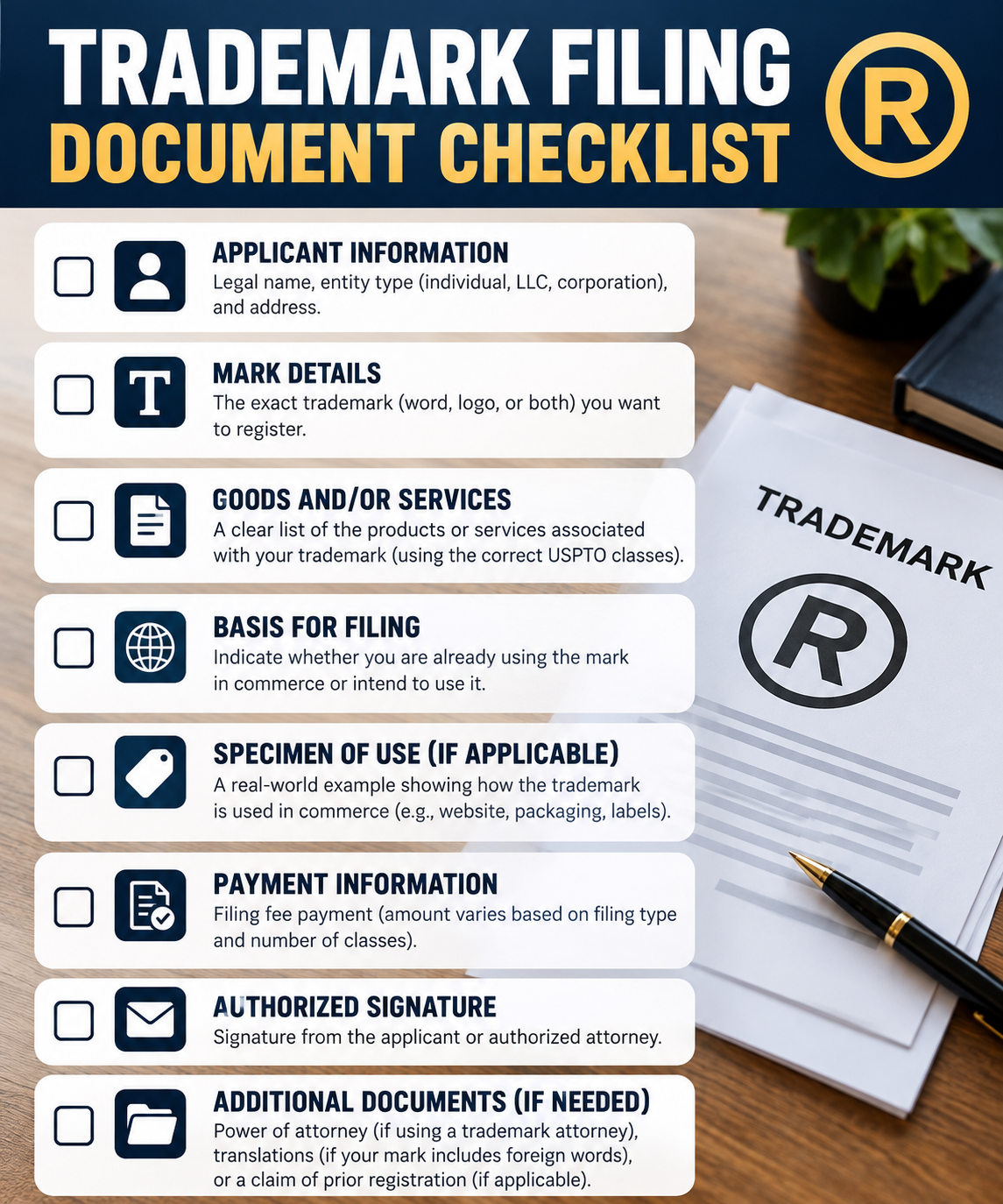
Preparing the right documents and details before you start reduces rejection risk and speeds your amazon brand registry approval. Treat this as your pre-application checklist.
Core Information & Documents Checklist
- Trademark registration number or application/serial number, plus the exact IP office name (e.g., USPTO, EUIPO)
- High-quality photos showing permanent branding on product and/or retail packaging from multiple angles - provide images showing your brand on products or packaging
- List of product categories where the brand is sold or will be sold (e.g., "Beauty & Personal Care," "Home & Kitchen")
- Links to brand website and/or social media presence showing consistent use of the brand name
- Legal entity details: company name, address, and contact information that match the trademark record where possible
Avoiding Common Prep Mistakes
- Stress-check exact brand spelling: Your brand name must match your trademark application exactly - no inconsistencies between trademark, packaging, listings, and website
- Use real product photos: Ensure images show the actual product, not 3D renders or mockups
- Confirm trademark status: Verify that you're using the correct trademark number (registration vs. application) and that it's active or pending - not abandoned or expired
- Clarify internal roles: Know who owns the Amazon account, who will receive the verification code email, and who will manage the brand registry account afterward
Step-by-Step: How to Enroll in Amazon Brand Registry
The amazon brand registry process is completed through the Brand Registry portal and involves coordination between Amazon and the contact listed on your trademark record. Each amazon brand registry step follows a clear sequence.
Step 1: Sign In and Create Your Brand Registry Account
Sign in using an existing Amazon account (Seller Central, vendor central account, or separate account) controlled by the trademark owner. Navigate to the Brand Registry portal and select "Enroll a new brand." You can enroll even before you list products on Amazon, though certain tools that rely on live product data may remain limited until you begin selling. This is separate from opening an Amazon store or selling products through Amazon.
Step 2: Submit Trademark & Brand Details
Amazon asks for several key fields during this step:
- Exact brand name as shown on the trademark - your application details must match the trademark record for approval
- Trademark office and trademark registration number or application number
- Type of mark (word mark or design mark with text)
- Countries/regions where the trademark is valid
Matching spelling, punctuation, and spacing exactly is critical. Even small differences between your trademark and brand details and the application can trigger rejection.
Step 3: Upload Product & Packaging Images
Upload multiple real photos showing:
- Brand name permanently affixed to the product or packaging
- Different SKUs where relevant - not just one prototype
- Clear, well-lit images where the brand text is fully readable
Avoid studio white backgrounds or lighting that obscures the permanently affixed branding. Consistency between what appears in photos, on the trademark certificate, and in your listings matters.
Step 4: Provide Additional Brand Information
Amazon may request supporting information:
- Product categories where the brand is active
- Manufacturing or distribution information
- Link to official website or social channels
- Legal entity details matching the trademark record
Providing accurate, complete information reduces back-and-forth and speeds verification.
Step 5: Verification via Trademark Contact
Amazon sends a verification code to the contact listed on the public trademark record (typically the attorney or trademark owner). The brand owner must retrieve this code and submit it through the brand registry portal, usually within a set time window (often around 7 days).
Notify your trademark correspondent after submitting your application. Many delayed applications stall at this step because the attorney or IP representative doesn't recognize Amazon's email.
Step 6: Approval Timeline & Next Steps
Amazon may take around two weeks to approve your application when documents are correct. Complex cases - international marks, legal entity questions, or manual review - can take longer.
After approval:
- Your brand appears in the Brand Registry dashboard, where you can access tools
- You can start creating A+ Content, building your brand store, and running sponsored brands campaigns
- The trademark owner can add other users (employees, agencies) with appropriate roles and permissions
How Amazon Brand Registry Protects Your Brand
Amazon Brand Registry helps businesses protect their intellectual property through layered enforcement - from automated detection to self-service takedowns to law-enforcement collaboration.
Automated Monitoring & Violation Detection
Amazon provides automated protections against counterfeit and infringement using machine learning that combines text, image, pricing, and account behavior signals. According to Amazon's 2024 Brand Protection Report, Amazon Brand Registry has reduced infringement by 99% - more than 99% of suspected infringing listings are blocked proactively before rights owners need to report them. Since 2021, brands have seen a more than 35% reduction in total valid notices of infringement submitted, driven by this increased proactive detection.
Report a Violation & Case Management
For enrolled brands, the "Report a Violation" dashboard lets you search the catalog by text, image search, or ASIN for potential violations. You can submit cases covering:
- Counterfeit listings
- Trademark misuse (brand name used in titles for unrelated products)
- Copyright or design infringement
Each report feeds Amazon's detection models, improving automated protections over time. However, Brand Registry does not guarantee removal of all infringing listings - it significantly improves your ability to identify and address them.
Advanced Programs: Transparency, Project Zero & CCU
- Transparency: Amazon's Transparency program uses unique codes on each unit, scanned before fulfillment to verify product authenticity and block counterfeits in shipments.
- Project Zero: Project Zero allows brands to remove counterfeit listings directly through self-service takedowns, plus automated protections. Over 25,000 brands have enrolled in Project Zero as of 2026.
- Counterfeit Crimes Unit (CCU): Amazon's internal team working with brands and law enforcement to pursue counterfeit sellers criminally.
Access to these advanced programs requires additional enrollment and eligibility checks beyond Brand Registry itself.
Growth & Marketing Benefits of Amazon Brand Registry
Once your brand is protected, Brand Registry transforms into a growth platform - giving you creative control, advertising capabilities, and data that unregistered sellers cannot access.
A+ Content & Rich Product Pages
Enrolled brands can optimize product detail pages with A+ Content - enhanced descriptions featuring comparison charts, lifestyle images, brand story modules, FAQ blocks, and more. Brand-registered sellers can access A+ Content tools that typically drive higher conversion rates, reduced return rates, and stronger differentiation from generic competitors. Well-implemented enhanced brand content makes the difference between a forgettable listing and one that tells a compelling brand story.
Brand Stores & On-Amazon Merchandising
Amazon Brand Registry provides access to Brand Stores - multi-page, brand-dedicated microsites within Amazon. Brands can create custom storefronts on Amazon through Brand Registry using drag-and-drop templates.
Brand Stores let you:
- Group multiple products by collection, use case, or season - showcasing your entire product line in one place
- Provide a dedicated landing page for sponsored brand ads and external traffic
- Tell your brand story visually with curated layouts
According to Amazon, shoppers who visit a Store purchase 53.9% more frequently and have 71.3% higher average order value compared to those who don't visit.
Sponsored Brands, Amazon Live & Other Brand Tools
Sponsored Brands ads are exclusive to brand-registered sellers - these headline ads feature your logo, custom copy, and multiple products at the top of search results. Only registered brands can access these, along with Sponsored Display, DSP audiences, and other advanced brand tools.
Amazon Posts allows brands to create engaging content for visibility - social-style content that appears on product detail pages and feeds. Amazon Live enables livestream selling and brand storytelling. Additional features include Virtual Bundles and Manage Your Experiments for A/B testing content changes.
Brand Analytics & Insights
Amazon Brand Analytics offers insights into customer behavior and product performance. Dashboards include:
- Top Search Terms & Search Query Performance: See which search terms drive visibility and click share
- Search catalog performance: Understand where conversion drops off
- Market basket analysis: Discover what else buyers purchase alongside your brand's products
- Repeat purchase behavior: Track how often customers come back and identify patterns in repeat purchases
Brands use this data to improve keyword targeting and PPC strategy, plan new products and bundles, and identify cross-sell opportunities - turning raw data into revenue.
Costs of Amazon Brand Registry (Direct & Indirect)
Enrollment in Amazon Brand Registry is free, but trademark registration may involve costs. Here's a realistic breakdown.
Direct Costs: Trademarks & Legal Fees
While the brand registry program itself is a free program, obtaining a brand trademark involves government filing fees that vary by jurisdiction and number of classes. USPTO fees for a single class typically run a few hundred dollars; EUIPO and other offices have their own fee schedules. Legal or attorney costs for trademark filing, searching, and ensuring accuracy add to the total.
If you use the IP Accelerator program, you pay normal trademark-application fees plus the participating firm's legal fees - but you gain expedited access to Brand Registry. Each additional country usually requires separate filings and fees.
As a reference point, USPTO average processing time (disposal pendency) was approximately 10.03 months in early FY 2026, down from roughly 11.7 months previously. First office action pendency is around 4.45 months.
Indirect Costs: Time, Operations & Maintenance
Winning brand registration is step one. Ongoing tasks include:
- Monitoring for infringements and filing violation reports
- Keeping A+ Content and brand store updated as products evolve
- Managing user roles and permissions as teams change
- Adjusting advertising strategy based on brand analytics data
- Maintaining legal compliance across different markets
Larger brands may dedicate part of a role - or an entire position - to Amazon brand protection and content management.
Common Reasons Brand Registry Applications Are Delayed or Rejected
Many denials are avoidable and stem from inconsistencies that can be fixed before applying. Here are the most frequent problems.
Brand Name & Trademark Don't Match
Even small differences can cause rejection. Examples:
- Trademark says "Acme Labs" but packaging shows "Acme Lab Co."
- Trademark includes a hyphen ("Bright-Leaf") that's missing in the brand registry application ("BrightLeaf")
- Application adds "Inc." or "LLC" to the brand name when the trademark record doesn't include it
Your exact brand name in the application, on your trademark, and on your product must align.
Wrong Trademark Type or Office
Common issues include:
- Using a design mark with no text where Amazon requires text-based or image based marks containing words
- Submitting a mark from a country not recognized for the target marketplace
- Using a dead, abandoned, or expired trademark registration number
Unacceptable Product Images
Photo problems are among the most common rejection triggers:
- Logos only on removable stickers, tags, or inserts - not permanently affixed
- Heavily edited or obviously digital mockups
- Blurry photos where the brand name cannot be clearly read
- Stock photos or renders rather than real product shots
Take fresh, high-resolution photos specifically for your brand registry application if your existing images don't meet the standard.
Application Submitted by the Wrong Party
Submit your application as the trademark owner. If an agency, distributor, or other seller tries to enroll without being the rights owner, Amazon will reject the application. Applications for Brand Registry can be submitted by the trademark owner or an authorized agent - but the trademark owner must initiate enrollment first, then delegate access to partners afterward.
What to Do if Your Amazon Brand Registry Application Is Rejected
Rejection is common and usually fixable. Most brands that reapply after addressing the specific issue get brand approved on the second attempt.
Step 1: Understand Amazon's Rejection Reason
Amazon typically provides at least one specific reason - name mismatch, image quality, trademark issues, or ownership concerns. Copy the exact wording of the rejection message and compare it against your trademark record, your photos, and the application entries you submitted.
Step 2: Fix the Underlying Issue
- Name mismatch: Update product packaging or adjust listings to align with the trademark, then retake photos showing the corrected branding.
- Image issues: Reshoot images showing permanently affixed branding more clearly, from multiple perspectives, using real products.
- Trademark issues: Correct the trademark filing, add a new application, or consult a trademark attorney about next steps.
- Ownership issues: Provide invoices, license agreements, or ensure legal entity names match the trademark record.
Step 3: Reapply When Ready
Wait until all corrections are live - packaging printed, listings updated, new photos taken - before reapplying. Document your changes (dates, new photos, updated records) so they can be referenced in any follow-up with brand registry support. Some accounts may require a waiting period before reapplication.
Is Amazon Brand Registry Right for Your Business?
The answer depends on where you are in your Amazon journey. Here's a practical framework.
New Sellers (0–6 Months on Amazon)
If you're still testing product ideas and haven't committed to a brand name, trademark filing may be premature. But if you're building a long-term private-label brand, starting the trademark and Brand Registry process early is strategic - it prevents problems with hijackers and other sellers before they start.
Growing Brands (6–24 Months)
With an established catalog and consistent sales, Brand Registry becomes almost mandatory. The brand building features - better content control, sponsored brands access, brand analytics data - justify the trademark costs many times over. Delays at this stage cost real opportunity.
Scaling & Exit-Focused Brands (2+ Years)
For brands planning acquisition, global expansion, or fundraising, having trademarks in key markets and Brand Registry status is viewed as baseline due diligence. 130,000 brands have adopted Amazon Brand Registry - acquirers and aggregators expect serious Amazon brands to be among them.
Frequently Asked Questions about Amazon Brand Registry
These are the real pre-enrollment questions that delay decisions. Here are direct answers.
Do I need Amazon Brand Registry to sell on Amazon?
You do not need Amazon Brand Registry to sell in the Amazon store as a standard seller. However, without enrollment, you won't have access to brand protection tools, A+ Content, Brand Stores, Sponsored Brands, Brand Analytics, or other exclusive tools. For any seller with their own brand, the question isn't whether Amazon Brand Registry is worth it - it's when to enroll.
Is Amazon Brand Registry really free?
Yes. Amazon does not charge for enrolling in Brand Registry or using its tools. The costs come from trademark registration and any legal fees you choose to pay. The program itself is entirely free.
Can I join Brand Registry with a pending trademark?
Yes, in many cases. Pending trademark applications can qualify for enrollment, especially those filed through Amazon's IP Accelerator or recognized IP offices. Rules may differ by country and mark status, and a pending trademark that is later rejected could affect your enrollment.
Does Brand Registry stop other sellers from listing my products?
Brand Registry gives you stronger legal and technical tools to remove infringing or counterfeit listings, but it does not automatically block all other sellers from listing your products. Authorized resellers can still list under certain conditions. You gain the ability to act - not an automatic wall.
Do I need a separate Brand Registry for each country?
Yes. Brand Registry is marketplace-specific and usually tied to country-specific trademarks. A U.S. registration protects your Amazon.com presence; an EUIPO mark covers European Amazon stores. Enrolling in one region doesn't automatically cover all others.
How long does Amazon Brand Registry approval take?
When documentation is complete and everything matches, approval often takes about 1–2 weeks. Complex cases involving international trademarks, manual review, or legal entity questions may take longer. Having your trademark details and verification contact ready before you apply speeds the process significantly.
How to Get Started with Amazon Brand Registry
Amazon Brand Registry gives serious brands stronger brand protection, better creative control, and access to growth tools that unregistered sellers cannot touch. If you're committed to building a real brand on Amazon, the time to act is before problems appear - not after.
Your immediate next steps:
- Decide on your brand name and run a basic trademark clearance search to avoid conflicts.
- File a word mark in your primary market through the USPTO, EUIPO, or another recognized trademark office - or contact an IP Accelerator firm to expedite the process.
- Prepare real products and packaging with permanently affixed branding, then photograph them clearly from multiple angles.
- Apply via brandservices.amazon.com and coordinate with your trademark contact to complete verification quickly.
- Use Amazon Vine to gain trusted product reviews once your new brand is enrolled and listings are live.
Don't wait until hijackers appear on your listings or counterfeit products erode your reputation. Every week without Brand Registry is a week your brand is unprotected.
Schedule Your Trademark Consultation Today
Protect your brand identity with professional trademark guidance tailored to your business needs. Whether you're preparing to register a trademark, evaluating potential conflicts, or addressing concerns about existing trademark rights, our team can help you understand your options and determine the next steps. Call (972) 236-5051 today to schedule a trademark consultation and take the next step toward protecting your brand.
You might also like