Protecting Brand Identity With a Trademark Attorney Who Knows USPTO Procedures
A trademark consultant sits between your business idea and a federally registered mark. They handle the research, strategy, and coordination that turn a brand concept into enforceable intellectual property. Here's what that work looks like in practice, when you need it, and how to pick the right person for the job.
What Does a Trademark Consultant Do?
A trademark consultant helps businesses secure and protect trademarks and service marks at the United States Patent and Trademark Office (USPTO) and in foreign jurisdictions. They work closely with U.S.-licensed trademark attorneys whenever legal representation is required, but their core role is strategic, not adversarial.
Unlike a full-service law firm, an independent consultant focuses on brand strategy, federal trademark registration planning, and risk management. They assist in securing intellectual property rights for a business name or logo as trademark assets that help customers recognize the brand, guiding clients toward marks that are registrable and defensible rather than generic or descriptive.
Consulting typically starts before any trademark application is filed. At the stage of choosing a protectable business name and brand identity, a consultant evaluates whether a proposed mark is distinctive enough to register. Trademarks identify goods while service marks identify services, though the term "trademark" often covers both. Both trademarks and service marks can be registered with the USPTO, and both help consumers distinguish between different brands.
A concrete example: a software startup in 2024 considering the name "CloudFlow" for a workflow tool would hire a consultant to run clearance searches before committing. The consultant might find an existing registration for "CloudFlo" in cloud services and flag a likelihood-of-confusion problem, saving the company from a rebrand six months into the process.
Why Work With a Trademark Consultant Instead of Going It Alone?
The USPTO rejects or delays thousands of filings each year because of avoidable errors, and a filing can still be refused even if the application is submitted on time: wrong owner entity, vague identification of goods and services, descriptiveness under Section 2(e), or likelihood of confusion under Section 2(d). Hiring a trademark professional can help avoid costly mistakes in the application process.
A consultant reduces refusal risk by:
- Interpreting USPTO guidelines and checking key details before you submit a trademark application, not after a refusal arrives.
- Anticipating office action responses the examining attorney will likely raise.
- Coordinating with trademark attorneys when legal arguments are required (e.g., claiming acquired distinctiveness).
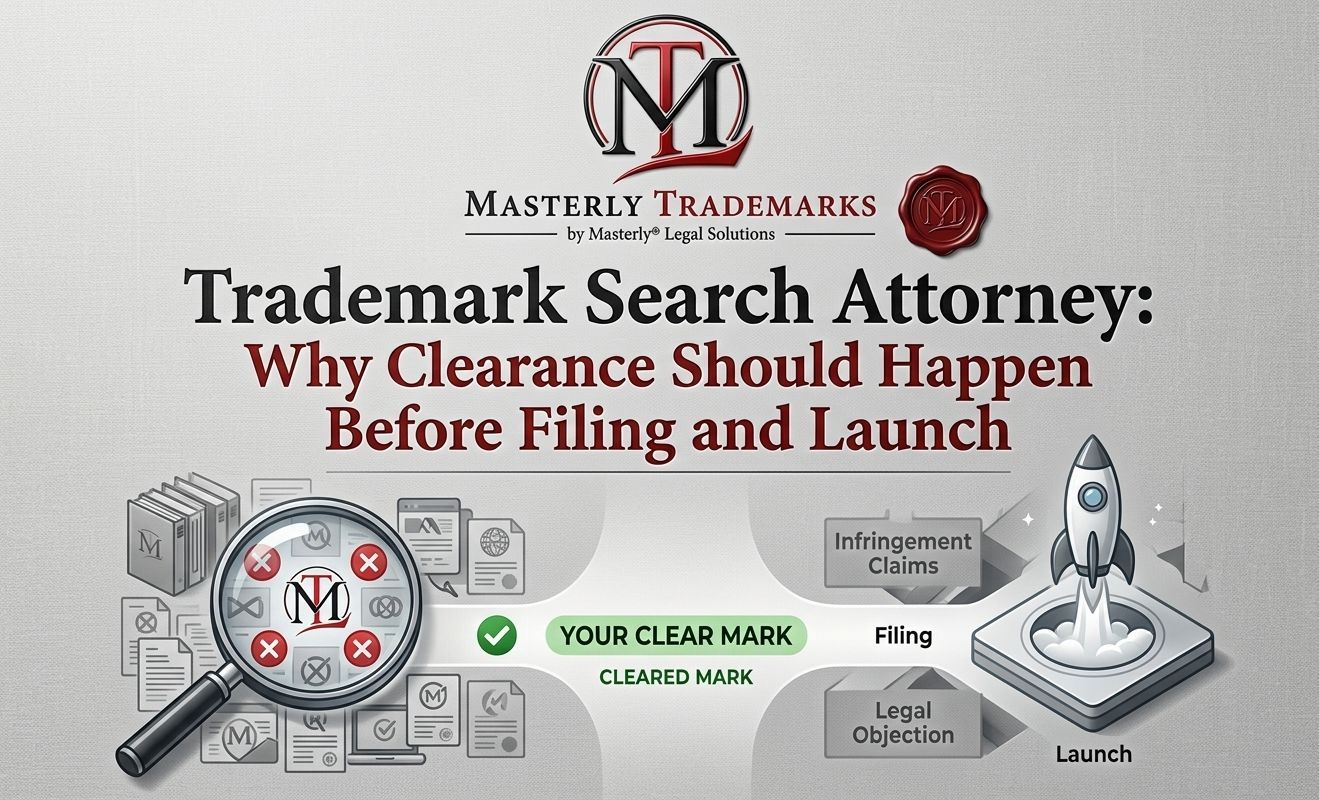
- Providing a comprehensive clearance search before filing to identify potential conflicts. Clearance searches reduce the risk of rebranding and legal disputes.
Online DIY filings from non-attorney "filing mills" often miss critical details. The USPTO warns that some of these firms misidentify the correct owner, mis-classify goods and services, or engage in unauthorized practice of law. It is essential for a trademark consultant to perform detailed searches beyond a basic database check.
A consultant also helps compare options: federal trademark registration, state registration, or relying on common-law rights, tailored to your budget and growth plan.
Trademark Consultant vs. Trademark Attorney vs. Law Firm
Only U.S.-licensed attorneys can represent clients before the USPTO, appear at the Trademark Trial and Appeal Board, or litigate trademark infringement in federal court. Trademark attorneys conduct comprehensive clearance searches and help avoid costly legal problems. A consultant cannot substitute for that legal services role.
The difference is in scope. A trademark consultant focuses on strategy, preparation, and coordination. Trademark attorneys provide legal opinions, draft substantive arguments, and handle litigation. In practice, they partner: the consultant runs brand audits, clearance work, and filing strategy; the law firm handles appeal board proceedings, TTAB proceedings, or federal court actions on behalf of the client.
A reputable consultant will be transparent about when attorney involvement is required. After the 2019 USPTO rule change, foreign-domiciled applicants must be represented by a U.S.-licensed attorney; consultants who work with international clients need to coordinate this from the start.
Key Services a Trademark Consultant Provides
A strong consulting engagement spans from early name selection through registration, monitoring, and enforcement. Here are the core services:
- Clearance searches and risk assessments. Trademark clearance searches should include federal, state, and common-law searches. Consultants conduct comprehensive trademark searches to prevent conflicts with existing marks.
- Application preparation. Consultants help with application filings and classification under the Nice Classification system (45 classes). They guide you on selecting the correct owner entity, filing basis (use in commerce vs. intent-to-use), and drafting precise goods/services descriptions.
- Portfolio management. Effective trademark portfolio management includes tracking renewal deadlines and monitoring asset status. Service marks protect brand identity for service providers; registering a service mark provides exclusive rights to use it.
- International filings. Advising whether to extend a U.S. registration abroad via the Madrid Protocol or direct national filings, and coordinating with foreign counsel and trademark offices.
- Licensing and brand architecture. Trademark consultants help negotiate licensing agreements and franchise strategies. They may also advise on the proper usage of trademarks in marketing and packaging to preserve rights and support a consistent claim of rights in the brand.
How a Trademark Consultant Guides the Registration Process
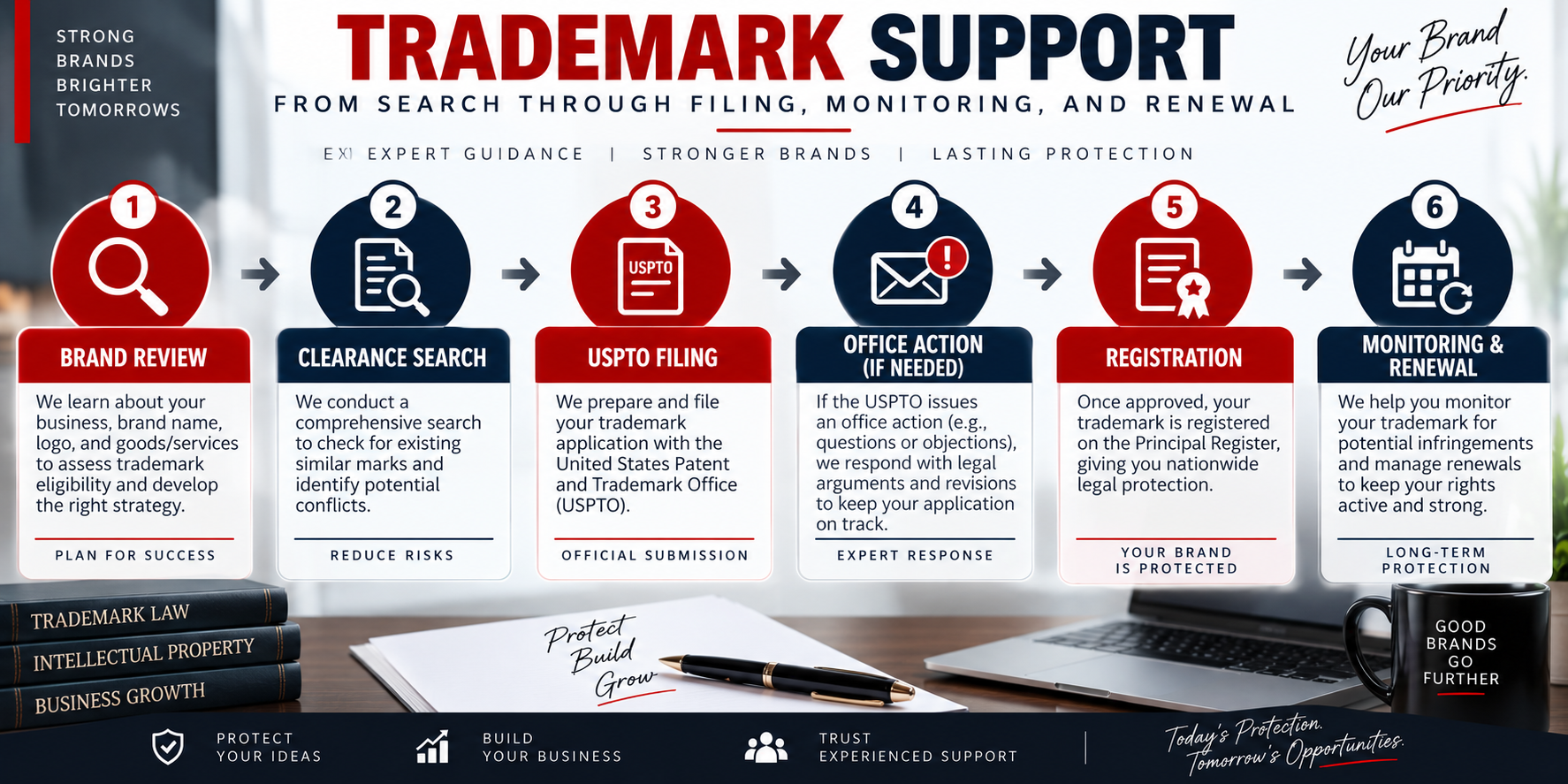
The trademark registration process typically takes 8 to 12 months to complete for a clean filing, though contested applications can push beyond 14 months. USPTO data from the first half of FY 2026 shows first office action pendency dropped to about 4.45 months, down from 5.6 months the prior year.
A consultant helps at each stage:
- Pre-filing. Conducting a comprehensive search and risk assessment.
- Drafting. Preparing the application with correct owner, basis, classes, specimens, and drawings via TEAS forms.
- Monitoring. Tracking status through TSDR (Trademark Status and Document Retrieval) and watching for office actions, publication, and whether the mark is approved for registration or moves into the next USPTO phase.
- Post-publication. Advising during the opposition window and, for intent-to-use applications, tracking Statement of Use and extension deadlines to prevent abandonment.
Using the correct international classes and specifying goods and services precisely matters. Many applicants misclassify, leading to unnecessary refusals. After registration, the consultant sets up calendars for Section 8 and Section 9 maintenance filings (between years 5 and 6, and every 10 years). Attorneys ensure timely filing of maintenance documents so the registration does not lapse.
Handling Office Actions and Trademark Trial and Appeal Board Matters
An office action is a letter from a USPTO examining attorney identifying issues with your application. It is a common part of the federal trademark registration process.
A consultant reviews office actions to sort simple procedural issues (amending a specimen, clarifying the identification) from complex substantive refusals. Likelihood of confusion under Section 2(d) and descriptiveness under Section 2(e) require legal arguments, so the consultant coordinates with trademark attorneys licensed in a U.S. state to draft and file responses.
Example: a mark refused under Section 2(d) for similarity to an earlier registration. The consultant organizes evidence of marketplace conditions, consumer perception differences, and channels of trade. The attorney uses that evidence in TTAB briefing. According to TTAB data from Q1 2026, only about 7.5% of opposition and cancellation proceedings reached a contested decision on the merits; the rest ended via default or settlement.
When an examining attorney maintains a refusal, the consultant helps the client decide the best course: appeal, adjust the filing strategy, or rebrand. Federal registration serves as evidence of ownership in disputes, so fighting for the right mark is often worth the investment.
Strategic Brand Protection Beyond Registration
Registration is only the beginning. Trademark registration provides legal presumption of ownership nationwide and allows you to use the ® symbol. Federal trademark registration protects your mark throughout the entire U.S. and gives the owner a stronger basis to enforce trademark rights against unauthorized use, including the ability to sue for infringement in federal court. Registered trademarks can build long-term asset value for companies over time.
Trademark consultants assist businesses with monitoring and enforcing their trademark rights through:
- Watch programs. Monitoring new USPTO filings, online marketplaces, domain registrations, and social media for confusingly similar uses that could confuse consumers and help spot potentially infringing uses early.
- Graduated enforcement. Advising on steps from internal documentation to formal cease-and-desist letters drafted by attorneys to help enforce rights before infringement spreads.
- Litigation coordination. Gathering evidence of confusion, sales data, and brand reputation for potential federal court actions handled by dedicated litigation counsel.
- Brand expansion. Assessing risks when launching new product lines or creating sub-brands, ensuring moves do not dilute core trademark rights.
Choosing the Right Trademark Consultant for Your Business
Selecting a consultant is as consequential as choosing a lawyer or law firm for your intellectual property matters. Here's what to look for:
- Industry experience. Technology, fashion, e-commerce, food and beverage, and healthcare each have different norms for distinctiveness and competition. A consultant established in your industry will already know analogous marks and examiner patterns.
- Attorney partnerships. Verify whether the consultant works with U.S.-licensed trademark attorneys for USPTO filings, TTAB appeals, and complex office action responses. Ask who handles trademark matters that require legal services.
- Search tools and reporting. Consultants conducting only basic USPTO searches miss state, common-law, domain, and marketplace conflicts. Ask how they report risk levels and recommendations to clients.
- Scope and fees. Request a clear outline before engagement covering searches, applications, responses, and communication with the patent and trademark office. Know what is included and what triggers additional fees.
Entrepreneurs building a brand from scratch and established companies expanding into new markets both benefit from this knowledge. The right consultant will determine which steps protect your investment now and as your business grows, then bring in the right attorneys to complete the team for success.
Frequently Asked Questions About a Trademark Consultant
What does a trademark consultant do?
A trademark consultant provides professional guidance on trademark searches, filing strategy, USPTO procedures, protection, and ongoing trademark matters.
Why should I hire a trademark consultant?
A trademark consultant can help identify potential conflicts, prepare a stronger filing strategy, and manage legal issues that may arise during the USPTO process.
Is a trademark consultant the same as a trademark attorney?
Not always. A trademark attorney is a licensed lawyer who can provide legal advice and represent clients before the USPTO. Masterly Trademarks provides attorney-guided trademark services for businesses seeking professional legal support.
Can a trademark consultant help with USPTO filing?
Yes. Masterly Trademarks provides professional USPTO filing support, including application preparation, classification review, filing, and assistance with Office Actions when necessary.
Should I hire a trademark consultant before launching my brand?
Early professional review can help identify potential trademark conflicts before you invest heavily in branding, packaging, advertising, or other business assets.
Can a trademark consultant help after registration?
Yes. Trademark support can continue through monitoring, enforcement, renewal, maintenance, and portfolio management.
Does Masterly Trademarks work with small businesses?
Yes. Masterly Trademarks serves entrepreneurs, small businesses, corporations, creators, e-commerce businesses, and other organizations seeking professional trademark protection.
Request a Trademark Consultation
Your brand is one of your most important business assets. Do not wait until a trademark conflict, USPTO problem, or infringement issue threatens everything you have built.
If you are looking for a trademark consultant who can provide professional, attorney-guided support, Masterly Trademarks can help.
Call (972) 236-5051 or contact Masterly Trademarks to discuss your brand, trademark needs, and the right protection strategy for your business.
You might also like