International Trademark Registration: When the Madrid Protocol Fits a Growing Brand
Expanding Internationally Requires More Than a Strong Brand
Growing into international markets creates exciting opportunities, but it also introduces new legal risks for businesses and brand owners planning to expand abroad. A trademark that protects your business in the United States does not automatically protect it in other countries, and without proper registration, another business may be able to use a similar brand name in a market where you plan to operate.
A Madrid Protocol trademark attorney helps businesses evaluate international filing strategies, prepare Madrid Protocol applications, and manage trademark protection across multiple countries. Whether you are filing for the first time or expanding an existing portfolio through international trademark registration, careful legal planning can reduce delays, limit enforcement problems, and support long-term brand growth.
This article explains what a Madrid Protocol trademark attorney does, how the Madrid System and WIPO filing process work, how to choose country designations, and how to plan for long-term foreign trademark protection as your business grows.
Masterly Trademarks helps businesses protect valuable brands as they grow beyond U.S. borders.
Why International Trademark Protection Matters
Many companies expand internationally through online sales, manufacturing, licensing, franchising, or global partnerships.
Without proper foreign trademark protection, your brand may face challenges that include:
- Similar trademarks registered by others
- Delays entering new markets
- Brand confusion
- Licensing complications
- Enforcement difficulties
- Lost business opportunities
Planning before expansion allows businesses to protect valuable intellectual property while supporting future growth.
What a Madrid Protocol Trademark Attorney Helps You Evaluate
Every international expansion strategy is different.
A Madrid Protocol trademark attorney reviews your current trademark portfolio and business objectives to determine whether an international filing strategy aligns with your goals.
Our review may include:
- Existing U.S. trademark registrations
- Pending trademark applications
- International expansion plans
- Countries where protection may be needed
- Goods and services classifications
- Filing strategy
- Portfolio management considerations
The objective is to build a practical legal strategy before filing internationally.
Understanding the Madrid Protocol Application
One Filing Can Support Multiple Country Requests
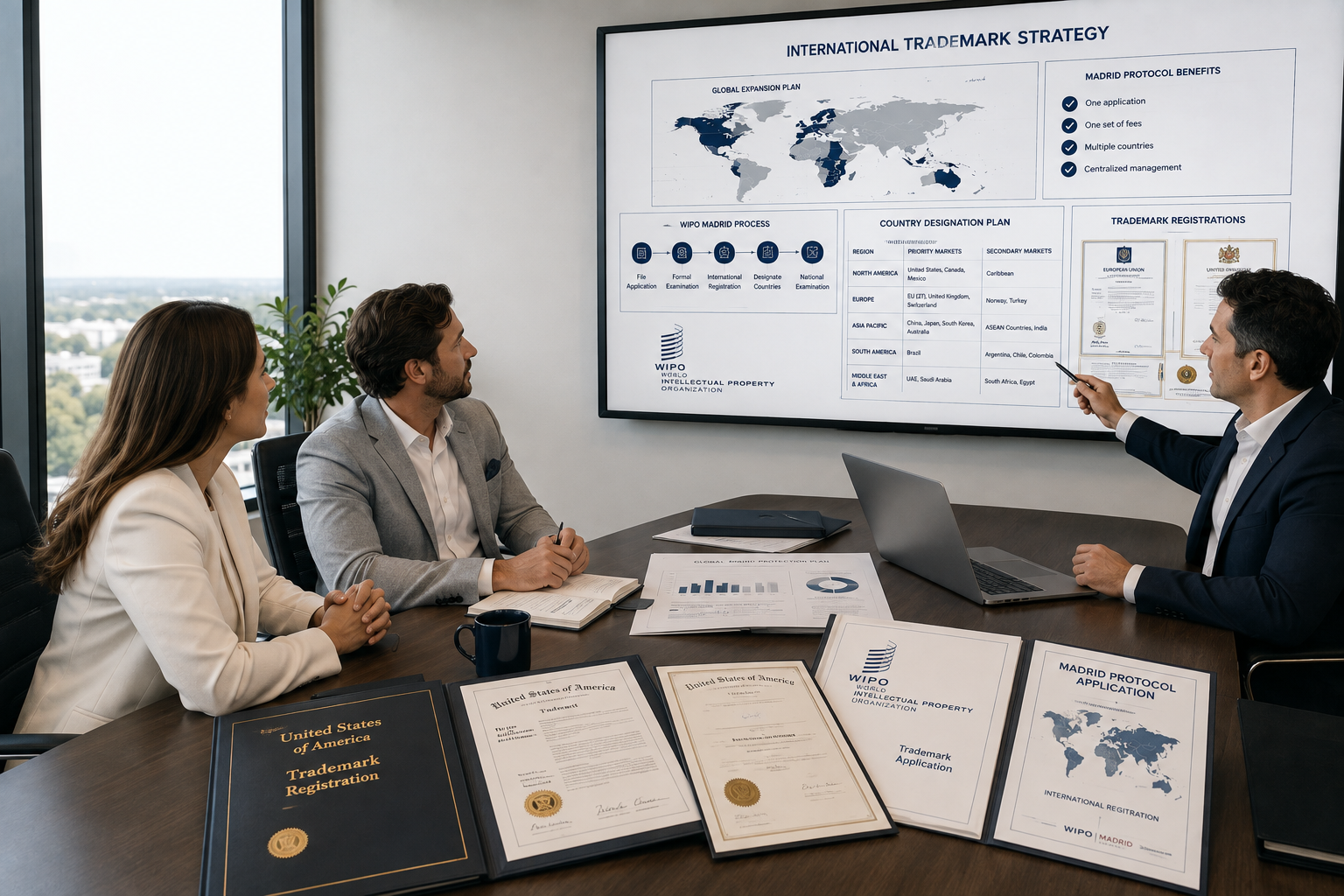
A Madrid Protocol application allows qualifying trademark owners to request trademark protection in multiple participating countries through a centralized filing process administered by the World Intellectual Property Organization, using a single international trademark application filed in one language and paid in one currency through an international application.
The application fee includes a basic fee, and filing fees vary based on the number of designated countries.
Although the filing process is centralized, each designated country independently reviews the application under its own trademark laws.
Understanding this distinction helps businesses prepare realistic expectations throughout the registration process. An international registration remains valid for ten years from the registration date, subject to renewal.
Choosing the Right Country Designation
Not every business requires protection in every country.
Not every market is part of the system, and various countries still require separate national filings, including South Africa and Canada.
Selecting the appropriate country designation depends on factors such as:
- Current business operations
- Planned expansion
- Manufacturing locations
- Distribution networks
- Licensing agreements
- Future growth objectives
A thoughtful filing strategy focuses protection where it provides the greatest long-term value, since businesses may file through Madrid for one or more countries only when each country designated is a participating member.
International Trademark Registration Supports Business Growth
An international trademark registration strategy should reflect your company's future plans.
Businesses often seek international protection before:
Expanding Sales
Companies entering new international markets may benefit from protecting their brands before products become widely available.
Licensing Intellectual Property
International licensing agreements often require trademark protection in relevant jurisdictions.
Opening Foreign Operations
Businesses establishing offices, distributors, or subsidiaries frequently evaluate trademark protection as part of expansion planning.
Protecting Brand Reputation
Consistent trademark protection helps strengthen brand recognition across multiple countries.
Understanding WIPO Trademark Filing
The World Intellectual Property Organization administers the Madrid System used for many international trademark filings.
A WIPO trademark filing lets applicants file one application through the international bureau of the intellectual property organization wipo, which checks formalities and records the mark in the international register before national review.
However, individual trademark offices continue to examine each request according to their own legal requirements. Each designated country generally has up to 18 months to grant protection or refuse it under local law, and national trademark offices examine applications within 18 months. If no refusal issues, the resulting protection has the same effect as if you had applied directly to register the mark there.
Preparing a complete and accurate filing helps support a smoother review process.
Foreign Trademark Protection Requires Long-Term Planning
International trademark protection extends beyond the initial application.
An international filing must rest on a national application or registration in the applicant’s home office, whether that foundation is the application or registration first filed there. The international registration then depends on that underlying application, basic application, or basic registration for five years, so issues during that period can trigger a central attack and affect the broader filing.
Businesses should continue monitoring:
- Portfolio updates
- Ownership records
- Renewal deadlines
- Business expansion
- New country filings
- Trademark maintenance
Developing a long-term strategy allows your intellectual property portfolio to grow alongside your business.
Why Businesses Choose Masterly Trademarks
Masterly Trademarks helps businesses develop practical trademark strategies for domestic and international growth.
Our attorneys understand that expanding internationally involves more than filing paperwork. Every decision should support your broader business objectives while protecting the value of your brand.
Whether you are filing your first Madrid Protocol application, evaluating foreign trademark protection, or planning broader international trademark registration, we provide personalized legal guidance based on your business goals.
Understanding How the Madrid System Supports International Brand Protection
Businesses operating through a commercial establishment often look to the Madrid Agreement and its related international framework when expanding into the European Union and other foreign countries. The Madrid System helps trademark owners worldwide seek protection based on existing national registrations or qualifying applications through a coordinated application process administered by the World Intellectual Property Organization. In many cases, a filing begins with the United States Patent and Trademark Office, relies on an applicable priority date, and is submitted through a single office before WIPO forwards the request to the selected jurisdictions.
Depending on your business strategy, protection may extend to many countries, including participating members such as Australia, Austria, Armenia, Antigua and Barbuda, Thailand, Trinidad and Tobago, the Faroe Islands, or the Islamic Republic of participating member states where applicable. The Madrid System combines the two treaties that form the Madrid Union, making it possible to manage qualifying service marks and trademark registrations with one renewal date instead of separate renewal schedules in each jurisdiction. However, some countries may require filings to be filed directly, certain designations may involve additional fees, and local examination standards still apply. A Madrid Protocol trademark attorney can help evaluate whether this internationally recognized system supports your goals for effective industrial property protection while helping you monitor every important renewal date as your global trademark portfolio grows.
Frequently Asked Questions
What does a Madrid Protocol trademark attorney do?
A Madrid Protocol trademark attorney helps businesses evaluate international filing strategies, prepare applications, and address trademark protection across multiple countries.
What is a Madrid Protocol application?
A Madrid Protocol application is a centralized filing that allows qualifying trademark owners to request trademark protection in multiple participating countries.
What is international trademark registration?
International trademark registration refers to seeking trademark protection outside your home country through available legal filing systems and national trademark offices.
What is a WIPO trademark filing?
A WIPO trademark filing is an international application submitted through the World Intellectual Property Organization under the Madrid System, processed by its International Bureau and then recorded in the international register. Protection is then considered in each designated country, where local offices may grant protection or refuse it under national law.
What is foreign trademark protection?
Foreign trademark protection refers to obtaining legal trademark rights in countries outside the United States.
What is a country designation?
A country designation identifies the contracting party where trademark protection is requested through a Madrid Protocol application; depending on filing strategy, that can be one country or multiple designated countries.
Request an International Trademark Filing Consultation
Expanding internationally is easier when your trademark strategy is planned from the beginning. Masterly Trademarks can evaluate your brand, prepare your Madrid Protocol application, review country designation options, and help you pursue international trademark protection that supports your business goals.
Madrid membership can change over time; for example, New Zealand joined the Madrid Protocol on December 10, 2012, so country availability should be checked before filing.
Call Masterly Trademarks today at (972) 236-5051 or contact us online to request an international trademark filing consultation.
You might also like