The Best Trademark Service for Entrepreneurs: Secure Your Brand Before It’s Too Late
Picking a trademark service is one of those decisions that feels small until it goes wrong. File incorrectly, skip a clearance search, or choose the wrong trademark class, and you could face a rejection, a forced rebrand, or a cease and desist letter from a competitor. This guide breaks down what separates a good trademark service from a waste of money, with real costs, timelines, and provider comparisons so you can protect your brand without overpaying.
Quick Answer: What Is the Best Trademark Service for Most Small Businesses?
The best trademark service for most small businesses balances attorney support, transparent trademark cost, and a clear timeline for USPTO filings. For the majority of founders registering one or two brand names, a flat-fee, attorney-led online service outperforms both pure DIY filing and expensive traditional law firms.
Services like JPG Legal, Trademark Engine-style platforms, and boutique trademark law firms tend to deliver better outcomes than general DIY form sites when your business name is central to your identity and future expansion. JPG Legal's basic trademark registration package costs $399 plus government fees. Trademark Engine offers a $99 basic trademark registration plan and has filed over 100,000 trademarks since 2016. LegalZoom's trademark registration starts at $249 plus USPTO fees.
Here is how the three main approaches compare:
- DIY USPTO filing. You fill out the TEAS application yourself. The minimum fee for a federal trademark application is $250 per class. Pros: lowest out-of-pocket cost, full control. Cons: highest risk of errors in classification, goods/services descriptions, and missing conflicts. No attorney to handle office actions.
- Flat-fee online trademark attorney service. An experienced attorney reviews your search results, drafts the application, and handles basic office actions. Service fees range from about $99 to $800 depending on depth. Pros: reduced risk of rejection, predictable pricing. Cons: higher cost than DIY; may not cover international filings or litigation.
- Large full-service law firms. Deep expertise, capacity for litigation and global portfolios. Partner time can run $400 to $800 per hour. Trademark registration can cost up to $2,500 on average at these firms. Pros: best for complex or contested marks. Cons: overkill in cost and process for a single-brand small business.
Trademark registration costs start at $49 plus filing fees at the cheapest automated platforms. The rest of this article explains how to evaluate and compare specific providers, so you can identify the best trademark service for your needs and budget.
Understanding Trademark Services and Why They Matter
Trademark services typically cover availability searches (often called trademark clearance), trademark application preparation and filing, responses to USPTO office actions, monitoring for similar marks after registration, and enforcement advice. These services exist because registering a trademark with the United States Patent and Trademark Office is a legal process with real consequences for errors.
Trademarks protect brand names, logos, and slogans as part of your intellectual property portfolio. Federal registration grants exclusive rights to use a trademark across the country, not just in the geographic area where you operate. A trademark registration establishes a legal presumption of ownership, and registered trademarks enter official government databases as public notice. You can use the ® symbol once your trademark is registered, which signals legal protection to competitors and consumers.
Registration of a trademark can deter others from applying for similar marks in the same class. Registered trademarks allow you to sue for infringement in federal court. A registered trademark can also increase the business value and support licensing opportunities if you ever want to franchise, license, or sell the brand.
U.S. trademark law operates on a "first to use" basis, but federal registration provides leverage to take action against trademark infringement nationwide. Without registration, you are limited to common law rights in the specific area where you actually do business.
Filing directly through USPTO.gov gives you control but demands precision. Misclassifying goods, drafting vague descriptions, or skipping a proper search can lead to refusals that cost months and hundreds of dollars. The trademark registration process takes 6 to 12 months when things go smoothly; complications stretch it further. Choosing the right service early can save thousands of dollars in rebranding, disputes, or legal fees down the road.
Key Criteria for Choosing the Best Trademark Service
Not all law firms or online platforms offer the same depth of trademark law experience, pricing transparency, or post-filing support. A provider that looks good on a landing page may cut corners on search depth or charge hidden fees for office action responses. Here is what to evaluate:
- Level of attorney involvement. Is a licensed trademark attorney reviewing your application, search results, and goods/services description? Or is the service limited to document preparation by non-lawyers? Choosing a trademark provider should consider attorney involvement in application review.
- Trademark search depth. Does the provider search only the USPTO's TESS database for an exact mark? Or does the search cover state registrations, common law sources (domain names, business directories, social media), phonetic variants, and foreign registries? A comprehensive trademark search examines more than just exact text matches.
- Clarity of pricing. Transparent pricing should include all aspects of trademark service fees: USPTO fees per trademark class, service fees, and any add-ons for office actions, additional classes, or design marks. Flat fees beat hourly billing for predictability.
- Experience with office actions. Over 40% of trademark applications can face issues during examination. Ask how many marks the provider files each year and how often they handle contested or refused applications.
- Communication and support. Does the provider offer phone, email, or a client portal? What are typical response times?
- Extra services. Look for trademark monitoring, enforcement strategies, renewal reminders, and portfolio management if you plan to file more than one trademark.
Small businesses should prioritize transparent flat-fee pricing and clear scope over flashy marketing. Check the bar membership of any named trademark attorney, read online reviews from the past few years, and confirm the provider's filing volume.
The best trademark for a startup launching a single brand name is different from the best option for a company with dozens of trademark classes worldwide. Context drives the right choice.
Types of Trademark Providers: DIY, Online Services, and Law Firms
The market for trademark help splits into three main categories: pure DIY, automated platforms with limited legal input, and full-service law firms or boutique IP practices. Each involves a different cost-risk tradeoff.
- DIY USPTO filing.
- Suitable only for very simple, low-risk word marks where the owner is confident in classification.
- You can register a trademark yourself with the USPTO through the TEAS electronic system.
- Requires choosing the correct trademark class and drafting precise goods/services descriptions.
- Lowest direct cost but highest risk of errors and refusals. Mistakes in trademark filing can lead to application rejections or lost fees.
- Online preparation and filing services.
- Platforms like Trademark Engine-type services combine software workflows with optional human review.
- Often offer tiered packages: basic search only, comprehensive search, or full attorney consultation.
- Appeal to budget-conscious small businesses wanting some professional oversight without paying law firm rates.
- Using an expert minimizes the risk of procedural errors in trademark applications, even at the budget tier.
- Boutique trademark law firms and IP-focused practices.
- Led by experienced trademark attorneys with day-to-day USPTO practice.
- Offer in-depth trademark clearance searches, filing strategy, and enforcement support.
- Higher fees than DIY or automated platforms but lower risk and more tailored advice.
- Professional trademark services conduct deep clearance searches across various databases.
- Large, full-service law firms.
- Strong for complex portfolios, litigation, and international filings.
- Often overkill in cost and process for single-brand small businesses; traditional law firms bill hourly and routine filings may be handled by junior associates.
Choosing the right service for trademark filing depends on budget and complexity.
Comparing Trademark Costs: What You Really Pay
Trademark cost has two layers: government fees paid to the USPTO and service or attorney fees paid to your provider. Both scale with the number of trademark classes you file in.
Government fees (USPTO fees):
- As of the January 2025 fee update, the USPTO replaced the old TEAS Plus/TEAS Standard split with a single base electronic application fee of $350 per class for filings under Sections 1 and 44.
- The minimum fee for a federal trademark application is $250 per class if you qualify for certain pre-identified goods/services descriptions; however, the current standard base is $350.
- Intent to use application filings trigger additional fees later when you file a Statement of Use after receiving a Notice of Allowance.
- USPTO charges additional fees if you use free-form goods/services descriptions that do not match pre-approved identifications.
Service fee ranges (2023 to 2025 pricing):
- Low-fee online services: starting around $49 to $199 plus USPTO fees for basic search and filing. Trademark Engine's basic plan starts at $99 for trademark registration.
- Attorney-led flat-fee services: JPG Legal starts at $399 plus government filing fees. Other attorney-led platforms charge approximately $499 to $800 plus USPTO fees per class.
- Trademark Firm's registration packages range from $775 to $2,525 depending on scope.
- Trademark Factory's packages range from $2,495 to $5,995 for all-inclusive trademark registration.
- Traditional law firms often charge $1,500 to $2,500 or more per mark, consistent with data from AIPLA economic survey benchmarks on IP legal services.
Watch for hidden costs:
- Extra charges for office action responses (substantive refusals often cost $200 to $500 on top of base fees).
- Per-class surcharges vs. per-mark pricing; make sure you know which you are paying.
- Additional fees for design marks (logos) compared to text-only word marks.
- Monitoring subscription fees that auto-renew.
Trademark Classes: Why Classification Drives Price and Strategy
Trademark classes categorize goods and services under the Nice Classification system, which divides commerce into 45 classes. Each class you include in a trademark application incurs a separate USPTO filing fee and, often, a separate service fee from your provider.
Proper classification of goods and services is critical in trademark application success. Filing in the wrong class wastes fees and may fail to protect the core business. Over-filing in many classes inflates cost without added benefit for a small business that only operates in one product category.
Concrete examples:
- Clothing brands typically file in Class 25. Software-as-a-service providers use Class 42. Educational or entertainment services fall under Class 41.
- A coffee shop that also sells branded mugs might need Class 43 (restaurant or café services) and Class 21 or Class 25 (merchandise), each requiring its own filing fee.
A trademark application must include a description of the trademark and the goods or services it covers. The best trademark services include a pre-filing consultation to match your business model to the right classes and help draft descriptions that USPTO examining attorneys are likely to approve. Some providers include one class in their baseline fee; each additional class adds both a service surcharge and the full government per-class fee.
Top Online Trademark Filing Platforms (Pros and Cons)
Online platforms have made federal trademark filing accessible to founders who would never have called a law firm. But offerings and safeguards differ by platform and price tier.
- LegalZoom-style services. LegalZoom's trademark registration starts at $249 plus government fees. Includes basic search and attorney oversight at higher tiers. LegalZoom's trademark registration turnaround time is six to nine months. Fits small businesses new to the trademark registration process who want a recognizable provider. Limitation: international support and litigation fall outside standard scope.
- Trademark Engine-type platforms. Entry packages start near $99 for basic search and filing. Trademark Engine has filed over 100,000 trademarks since 2016. Attorney review available at higher tiers or as add-ons. Appeals to founders wanting speed, transparency, and low entry cost. Risk: lowest-tier packages may skip common law search and provide limited office action support. Some customers report auto-renewing monitoring subscriptions that were not clearly disclosed.
- Rocket Lawyer-style legal subscriptions. Bundle membership gives access to document templates, optional attorney consults, and trademark filing at reduced per-mark cost. Useful for repeat filers or businesses needing a variety of legal services. Drawback: less specialized in trademark practice than boutique IP firms; search depth and turnaround may lag.
- Ultra-low-fee services. Some platforms advertise trademark registration costs starting at $49 plus filing fees. These typically provide minimal legal support; often just form submission with no attorney review. Trademark Center offers a money-back guarantee with no time limit, which reduces some risk. Trade-off: limited ongoing support, no common law search, and poor handling of office actions.
Which platform type fits best:
- Very tight budgets: ultra-low-fee or basic Trademark Engine plan; accept the risk of limited protection.
- Time-pressed but risk-aware founders: mid-tier platform with attorney review and a flat fee.
- Those who value a personal attorney relationship: boutique law firm or attorney-led service.
Attorney-Led Trademark Law Firms vs. Automated Platforms
Working with a dedicated trademark attorney differs from using a tech-first platform in depth of advice, risk management, and long-term strategy. An experienced attorney does not just file forms; they evaluate whether your mark is defensible, advise on future expansion into new classes, and handle legal refusals that automated systems cannot navigate.
Benefits of attorney-led representation:
- Direct access to a licensed trademark lawyer for strategy, risk analysis, and complex questions about intellectual property law.
- Better handling of office actions citing likelihood of confusion or descriptiveness under Section 2(e). Trademark services assist with responses to USPTO office actions, but attorney-led firms resolve them at higher rates.
- Thoughtful planning of long-term intellectual property strategy, including potential international filings through the Madrid Protocol.
Concrete examples:
- JPG Legal is a Brooklyn-based law firm offering flat-fee trademark registration with attorney involvement from search through minor office actions, starting at $399 plus government fees. Clients get a named, licensed attorney who reviews all the information before filing.
- Compare this with large, traditional law firms where partner time runs $400 to $800 per hour and routine filings may be delegated to junior associates with less trademark-specific experience.
Trade-offs:
- Attorney-led services usually have higher upfront fees than the cheapest automated trademark engine platforms.
- They often produce higher approval rates and fewer surprises, which matters when brand names are core brand assets.
How to vet a trademark attorney:
- Check state bar records and confirm active membership.
- Confirm a focus on trademark and intellectual property law, not general practice.
- Ask how many marks they have filed and how many office actions they respond to each year. An experienced attorney who handles hundreds of filings annually will spot problems that a generalist misses.
Best Trademark Services for Different Types of Businesses
The best trademark registration service depends on the business's stage, industry, budget, and risk tolerance. There is no single answer.
- Early-stage solo founder with one business name. A mid-priced, flat-fee attorney-backed platform that bundles a basic search and one-class filing is the sweet spot. Total cost: roughly $500 to $850 including USPTO fees. Adequate legal protection for a single word mark.
- E-commerce brand with multiple product lines and logos. Needs a boutique IP law firm to map out trademark classes, plan for future expansion into new product categories, and handle Amazon Brand Registry requirements. Multiple filings across different trademark classes add up; a firm that offers portfolio pricing saves money over filing each mark separately.
- Brick-and-mortar local service business (gym, café). Can often use a budget-friendly online service plus limited attorney review. Regional focus and lower risk of national conflicts make a comprehensive search less urgent, though a common law search of local business name registrations is still wise.
- Tech startup planning international expansion. Should consult a trademark attorney or law firm with Madrid Protocol experience and a foreign counsel network. A U.S.-only filing website will not handle multi-jurisdiction strategy.
Avoid overpaying for premium bundles that include global trademark monitoring or litigation defense if you only operate in one country and one niche. But multi-owner ventures or those expecting investment should treat trademark registration as non-negotiable; ownership disputes over a properly filed mark can stall or kill a deal.
Common Trademark Mistakes Even "Best" Services Can't Fully Fix
Even the best trademark service cannot overcome fundamental problems like choosing a generic name or copying an existing famous mark. Trademark services can streamline the process of protecting brand assets, but the business owner still makes the foundational branding decisions.
- Picking a descriptive mark. A name like "Fast Plumbing Services" for a plumbing company will almost certainly be refused by the trademark office under Section 2(e). Only distinctive marks (arbitrary, fanciful, or suggestive) register without proving acquired distinctiveness through years of use.
- Skipping common law uses. Searching only the USPTO's federal database misses unregistered marks actively used in commerce. A prior user in another state can challenge your registration even after it is approved.
- Wrong trademark class or missing products. Filing in Class 25 (clothing) when your core product is software (Class 42) wastes fees and leaves the actual business unprotected.
- Copying artwork or design templates. Even if a logo mark passes trademark examination, it can still trigger copyright infringement claims if based on someone else's copyrighted design.
- Waiting until after launch. A tea company that launched under "Tea & More" without searching first discovered a registered "TeaMore" in the beverages class during examination. Rebranding cost over $20,000 in redesigns and marketing. An attorney-led service would have flagged this conflict before any money was spent on packaging.
Over 40% of trademark applications can face issues during examination. A good trademark attorney or service will warn about these problems at the search and strategy stage, but the owner must be willing to adjust the trademark name or logo if risk is high.
How to Evaluate Trademark Search Quality
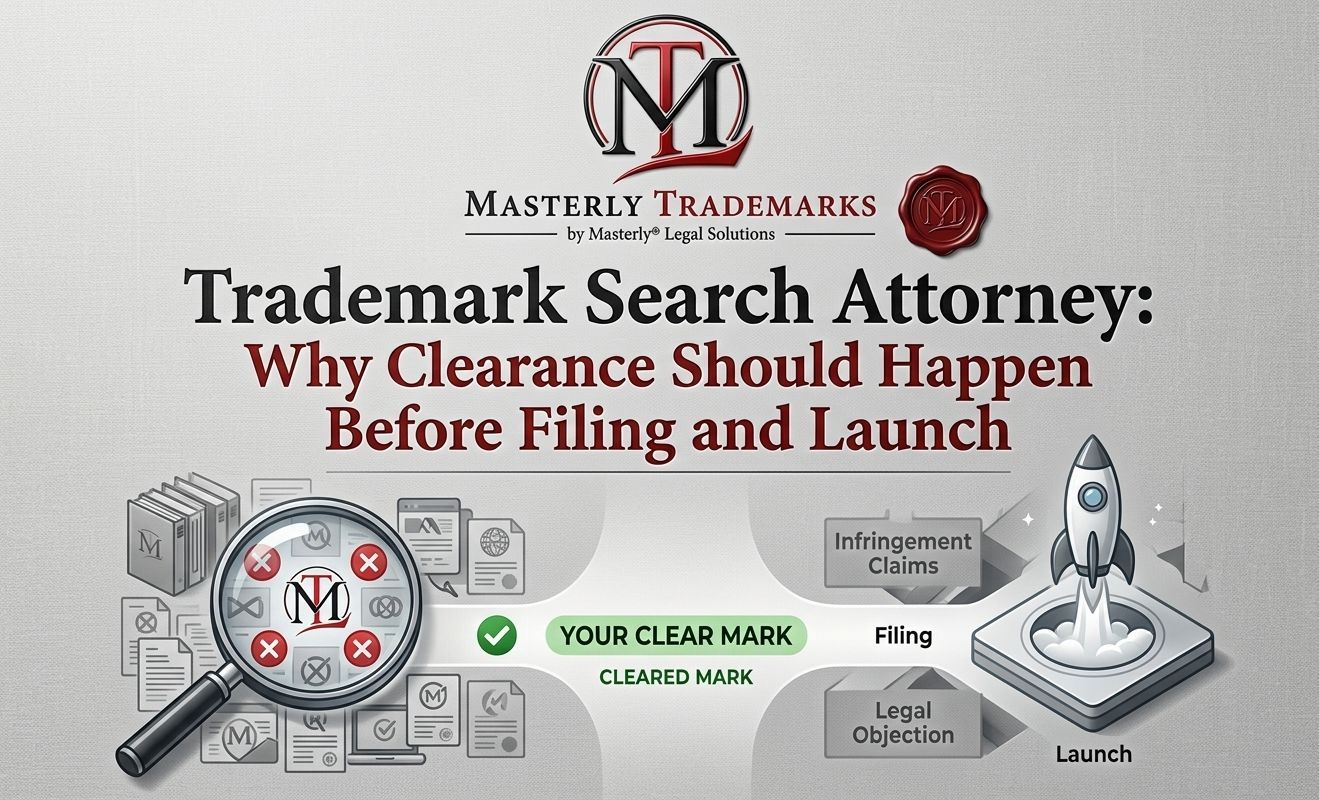
The trademark search is often more valuable than the form-filling. A poor search that misses conflicts leads to rejections, oppositions, or infringement suits months after you have already invested in branding.
- Basic "knockout" search. Checks the USPTO's TESS database for the exact mark and close text variants. Catches obvious conflicts but misses phonetic similarities and unregistered uses.
- Expanded search. Includes phonetic and spelling variants, design search codes for logos, and similar goods/services across related classes. A different trademark that sounds identical but is spelled differently can still block your registration.
- Comprehensive search. Covers state trademark databases, common law search sources (domain registrations, secretary of state business name filings, social media handles), and sometimes foreign registries. This level is what boutique firms and higher-tier platforms provide.
The best trademark services for serious brands deliver a written search report summarizing risk, include an attorney's opinion on likelihood of confusion, and suggest alternative brand names or filing strategies when risk is high. Be cautious of "search included" claims that only cover a quick USPTO lookup with no legal interpretation.
Timeline and Process: From Filing to Registration
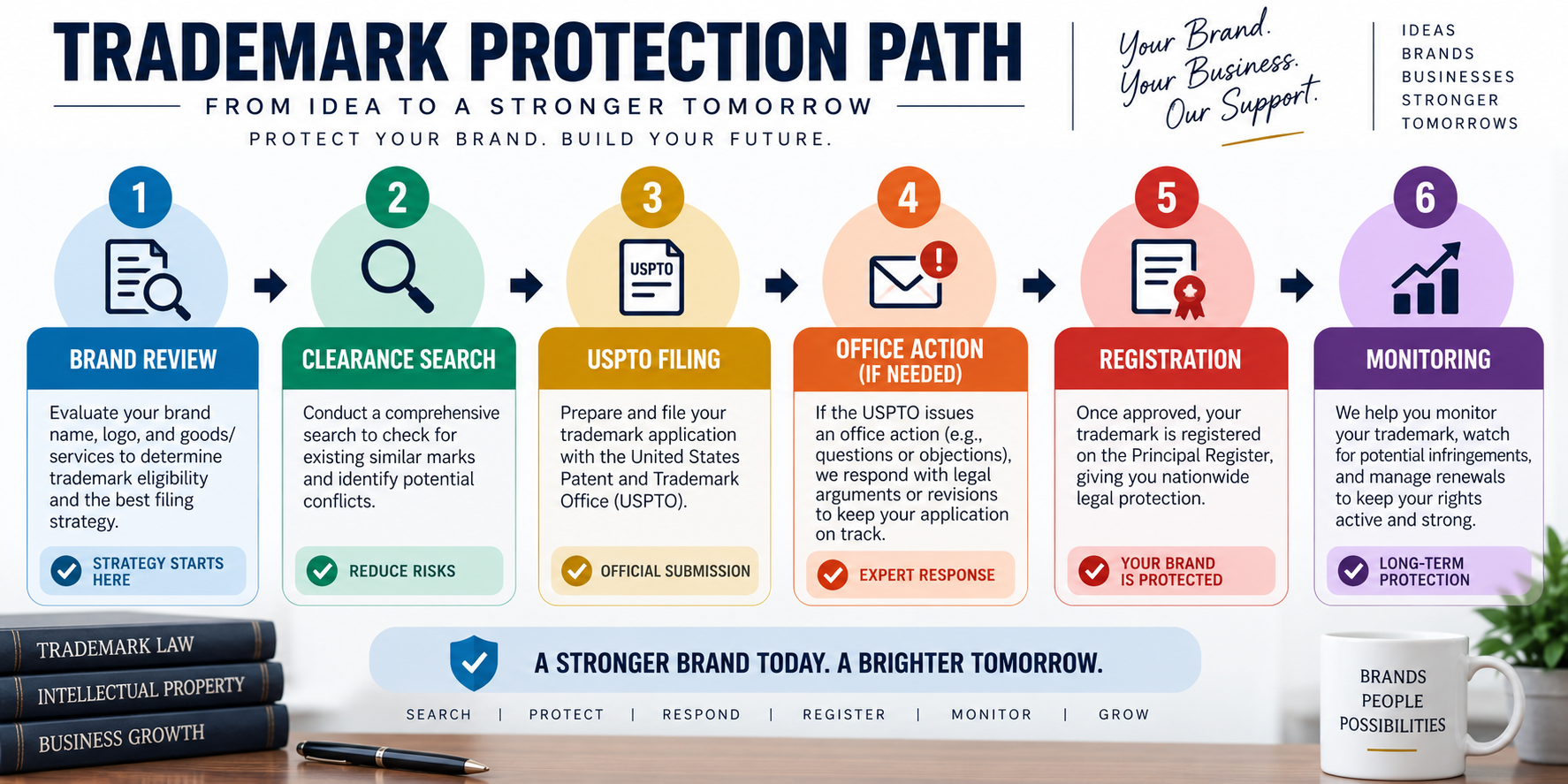
Federal trademark registration is a multi-step process, not a one-click purchase. The whole process typically spans 8 to 16 months from filing to final registration, though USPTO pendency data shows average disposal times have improved to roughly 10 months as of early 2026.
- Pre-filing. Brand selection, trademark clearance search, classification strategy, and ownership decisions. This stage determines whether the rest goes smoothly.
- Filing. Submitting the electronic application to the USPTO, paying fees per class, and receiving a serial number. Trademark applications are filed with the United States Patent and Trademark Office.
- Examination. A USPTO examining attorney reviews the application, usually issuing a first action about 4.5 months after filing as of mid-2026. Office actions may cite likelihood of confusion with an existing mark, descriptiveness, or procedural defects.
- Publication. If the mark passes examination, it is published in the Official Gazette for a 30-day opposition period. Any party believing they would be harmed can file an opposition.
- Registration or Notice of Allowance. For marks already in use, the USPTO issues a registration certificate. For intent to use application filings, you receive a Notice of Allowance and must later file a Statement of Use with proof that the mark is in commerce.
Ongoing monitoring and maintenance are necessary after securing a trademark. Section 8 and 15 filings are required between years 5 and 6 to maintain registration and claim incontestability. Renewals are due every 10 years. A trademark service can alert clients to potential infringements after registration and ensure these deadlines are not missed. Trademark registration provides nationwide protection for your brand, but only if you keep the registration alive. Trademark protection lasts indefinitely as long as the mark stays in use and maintenance filings are completed.
When You Need a Dedicated Trademark Attorney (Not Just a Filing Service)
Some situations are too high-stakes or complex for a generic online filing platform. Here are the triggers that should push you toward hiring a dedicated trademark attorney or IP-focused law firm:
- You receive a USPTO office action citing likelihood of confusion with a similar existing mark. Responding to a Section 2(d) refusal requires legal argument, evidence of marketplace differences, and sometimes consent agreements from the other party.
- You receive a cease and desist letter or a notice of opposition from another company. These are adversarial proceedings that demand legal strategy.
- Your trademark name is already in use by others in different states or industries, and you need a formal risk assessment before investing further.
- You are planning international filings through the Madrid Protocol or separate national trademark office applications in other countries.
- Your business is venture-backed, preparing for acquisition, or built on licensing or franchising. Clean, properly filed trademark registrations are a due diligence requirement.
Working directly with a trademark lawyer allows for custom strategies: coexistence agreements, consent agreements, or redesigning logos to avoid conflicts before they escalate. Law firms handle enforcement and litigation, not just registering a mark. That distinction matters when someone starts to sell products under a confusingly similar name from the same source.
Understanding the Trademark Application Process Before You File
The trademark application process involves more than submitting paperwork to the USPTO. Your application must accurately identify the trademark owner, the brand being protected, and the goods or services connected to it. Potential conflicts, filing requirements, and USPTO responses can also affect the outcome. Masterly Trademarks provides attorney-guided support throughout the process, from trademark clearance and application preparation to responding to office actions when needed. If your brand is important to your business, working with an experienced trademark attorney can help you make informed decisions before and after filing.
FAQ About the Best Trademark Service
What is the best trademark service for a business?
The best trademark service is one that provides more than filing assistance. Look for attorney-guided searches, application preparation, USPTO filing, office-action support, monitoring, and enforcement options.
What is the best trademark registration service?
The best trademark registration service depends on your brand and legal needs. Masterly Trademarks provides attorney-guided trademark searches, filing, registration, office-action assistance, monitoring, and enforcement.
Why use a trademark filing service?
A trademark filing service can help businesses prepare and submit an application correctly. Attorney-guided filing can also provide legal analysis of potential conflicts and filing issues.
Do I need a trademark attorney service?
Not every business has the same needs. A trademark attorney service can be especially valuable when the brand is commercially important, potential conflicts exist, an office action has been issued, or enforcement may become necessary.
Does trademark protection end after registration?
No. Trademark owners may need ongoing monitoring, maintenance, and enforcement to protect their rights.
Can Masterly Trademarks search for conflicts before filing?
Yes. Masterly Trademarks provides comprehensive trademark search and clearance services designed to identify potential conflicts before filing.
Can Masterly Trademarks respond to a USPTO office action?
Yes. The firm provides legal assistance with office actions and other challenges that may arise during the trademark examination process.
Does Masterly Trademarks handle trademark enforcement?
Yes. Services include cease and desist assistance, online infringement matters, dispute resolution, and TTAB proceedings.
Request a Trademark Strategy Consultation.
Your brand may become one of the most important assets your business owns. Before you invest further in a name, logo, product line, or national expansion, it is worth understanding whether the brand can be protected and what risks may exist.
Masterly Trademarks provides attorney-guided trademark services from search and filing through registration, monitoring, and enforcement.
If you are comparing the best trademark service for your business, speak with counsel about your brand before making a decision.
Call Masterly Trademarks at (972) 236-5051 or request a trademark strategy consultation through the firm's website.
This content is for general informational purposes and does not constitute legal advice or create an attorney-client relationship. Trademark outcomes depend on the facts of each matter and the applicable law and USPTO procedures.
You might also like