Copyright Lawyer When Businesses Need Registration, Ownership, and Licensing Guidance
Your business may own valuable content, but ownership is not always as simple as knowing who paid to create it.
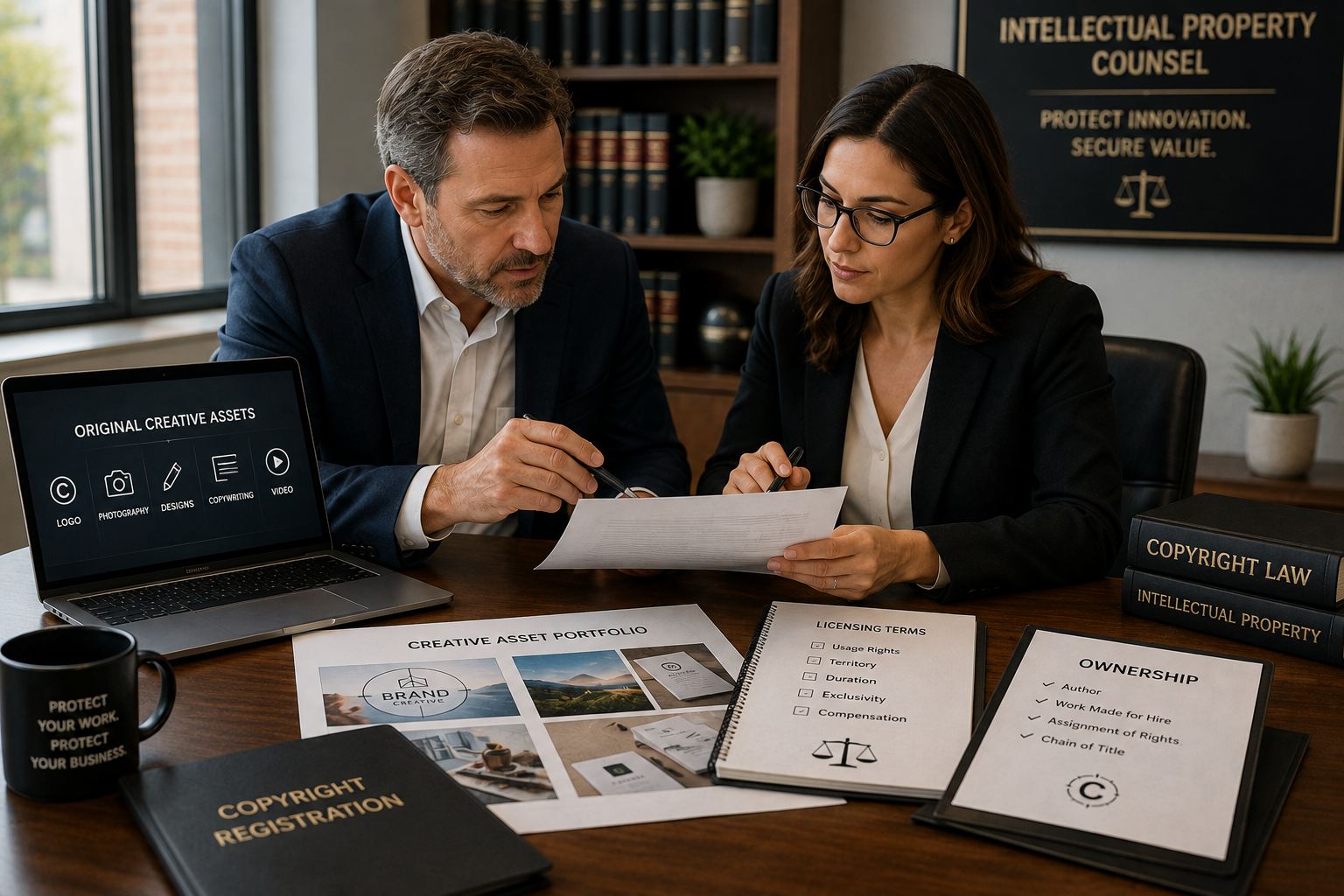
Websites, photographs, videos, books, training materials, advertising campaigns, graphics, written content, and other original works can become important commercial assets. Problems often appear when a competitor copies content, a former contractor claims ownership, a licensing relationship becomes unclear, or a business discovers that important works were never registered.
A copyright lawyer can help businesses address these issues before uncertainty becomes a larger legal or commercial problem.
Masterly Trademarks provides legal services for businesses, creators, publishers, agencies, and organizations seeking to protect intellectual property. If you need legal guidance involving copyright registration, ownership, or licensing, call (972) 236-5051 to discuss your situation.
Your Business Content May Be More Valuable Than You Realize
Businesses invest significant time and money creating original content.
A company may commission professional photography for its website. An agency may produce advertising campaigns for clients. A publisher may invest in manuscripts, illustrations, and other creative material. A business may develop videos, written training materials, graphics, or digital content that becomes closely connected to its brand.
Those assets can continue creating value long after the original project ends.
The problem begins when content ownership is unclear.
Who owns the photographs created by an outside photographer? What rights did the company receive from a freelance designer? Does an agency own a creative asset, or does its client? Was copyright transferred, licensed, or retained by the creator?
These questions can become especially important when content generates revenue or becomes central to a company's marketing.
A copyright attorney can evaluate the circumstances and help determine what legal protection may be appropriate.
A Copyright Lawyer Can Address Copyright Law, Registration, and Ownership Together
Copyright protection and copyright registration are related, but they are not the same thing.
The U.S. Copyright Office explains that copyright exists automatically when an original work is fixed in a tangible medium. That principle comes from copyright law, and it is part of the intellectual property law issues a copyright lawyer handles. Registration is a separate legal step that provides important additional benefits.
For U.S. works, registration or refusal is generally required before a copyright owner can enforce exclusive rights through a federal infringement lawsuit. Timely registration may also affect the remedies potentially available in litigation, and it can provide a presumption of correctness for claims.
For businesses, however, filing an application is only part of the issue.
The correct owner must be identified. The work being claimed must be properly understood. Existing registrations, transfers, commissioned work, and contributions from different creators can complicate the analysis.
This is where legal guidance can become valuable.
A copyright lawyer can look beyond the filing itself and consider the business asset that needs protection.
Copyright Registration Can Strengthen Protection for Commercial Assets
Businesses create many forms of potentially copyrightable material.
Depending on the work and circumstances, these assets may include:
- Website content
- Photographs
- Videos and audiovisual content
- Books and written publications
- Illustrations and artwork
- Advertising materials
- Original graphics
- Certain digital content
- Training and educational materials
- Other qualifying original works, including software in the form of computer programs
The U.S. Copyright Office maintains registration options for categories including literary works, visual arts, performing arts, photographs, motion pictures, architectural works, and musical compositions.
A business may have several different types of creative assets, each presenting different registration and ownership questions.
Masterly Trademarks can provide legal guidance concerning copyright protection based on the works and circumstances involved.
Work Made for Hire Questions Can Affect Who Owns the Copyright
Paying someone to create content does not always answer every copyright ownership question.
The Copyright Act contains specific rules for a work made for hire.
A qualifying work created by an employee within the scope of employment can be treated as a work made for hire. Certain specially ordered or commissioned works may also qualify, but specific legal requirements apply.
When a work legally qualifies as a work made for hire, the employer or other qualifying party for whom the work was prepared is generally considered the author for copyright purposes unless the parties have expressly agreed otherwise in a signed written instrument. Under current law, works made for hire generally last for 95 years from publication. Duration rules also differ for anonymous and pseudonymous works, which generally last for 95 years from publication, and for works created before 1978, where copyright duration can vary based on the date of creation.
This distinction can matter for businesses that regularly hire photographers, designers, writers, videographers, developers, agencies, or other creative professionals.
Do not assume that payment alone resolves copyright ownership.
A copyright attorney can review the relevant facts and agreements when ownership is uncertain.
Content Ownership Problems Can Surface at the Worst Time
Ownership disputes often stay hidden until a creative asset becomes valuable.
A business may use photographs for years before discovering that its rights are limited. A publisher may encounter questions about illustrations after preparing a project for wider distribution. An agency and client may disagree about who can reuse campaign materials.
A company may also acquire another business and discover gaps in documentation for important creative assets.
These issues can affect more than one piece of content.
Uncertainty about content ownership can complicate licensing, commercialization, enforcement, business transactions, and relationships with contractors or other companies.
That is why businesses should treat copyrights as legal assets, not simply creative files sitting on a computer.
Masterly Trademarks can evaluate copyright concerns in the context of the company's commercial interests.
Website Copyright Protection Matters When Content Represents Your Brand
Your website may contain some of your company's most visible creative material.
Original written copy, photographs, graphics, videos, and other qualifying content can represent substantial investments in marketing and brand development.
When another party copies that material, copyright infringement can occur in digital media and online, not just on a competing website.
Copied content may create confusion, reduce the value of your creative investment, or allow another company to benefit from work your business funded. When unauthorized use is discovered, responses may matter within hours.
Website copyright protection should therefore be considered as part of a broader intellectual property strategy.
Not everything appearing on a website is necessarily protected by copyright, and copyright does not protect ideas, systems, procedures, or methods themselves. The Copyright Office explains that copyright protects qualifying expression rather than the underlying ideas, so using protected material without permission may be infringing.
A copyright lawyer can assess the specific material involved and determine which legal issues require attention, whether your business is enforcing its rights or responding to an accusation of infringement.
Copyright Licensing Can Turn Creative Work Into a Commercial Asset
Ownership is only one part of copyright protection.
Copyright owners have certain exclusive rights and can authorize other parties to exercise those rights, subject to applicable law.
That makes copyright licensing important for companies that permit others to use photographs, written material, videos, illustrations, publications, or other protected works.
A licensing arrangement may determine how intellectual property can be used and what rights the copyright owner retains.
For a business, those details matter.
A company should understand whether it is transferring ownership or permitting specific uses. It may also need clarity about the works covered by an agreement and the rights being granted.
Masterly Trademarks can provide legal guidance when copyright licensing and ownership issues affect valuable commercial content.
Publishers, Creators, and Agencies Face Their Own Ownership Concerns
Creative businesses often work with multiple contributors.
Publishers may work with authors, editors, illustrators, photographers, and designers. Agencies may work with employees, freelancers, clients, production companies, and outside creators. Businesses may commission content from several vendors during a single project.
Each relationship can create ownership questions.
The U.S. Copyright Office recognizes that copyright ownership can arise through authorship, qualifying works made for hire, assignments, and other transfers.
This makes documentation particularly important when several parties contribute to a commercial project.
A copyright attorney can review the circumstances and help a business determine where legal clarification or protection is needed.
Why Businesses Choose Legal Guidance Instead of Guessing About Copyright
Copyright questions can appear straightforward until ownership, registration, and commercial relationships overlap.
The wrong assumption about ownership can affect a registration. An unclear agreement can create uncertainty about licensing. A business may also discover that the party possessing a creative work is not necessarily the party that owns its copyright.
The Copyright Office specifically notes that owning a physical copy of a work does not, by itself, establish ownership of the copyright.
Businesses have too much invested in valuable creative assets to rely on assumptions. When disputes may lead to litigation, ask the lawyer about the firm’s litigation history and whether its lawyers handle court trials.
Working with a copyright lawyer gives the business an opportunity to address the legal issues behind the asset rather than treating copyright protection as paperwork alone.
Masterly Trademarks Helps Businesses Protect Intellectual Property
Masterly Trademarks is a firm that provides intellectual property legal services for businesses and creators.
When your company has valuable original content, the objective is not simply to collect files or place a copyright notice on a website. The larger concern is protecting the commercial value connected to the work.
Depending on the particular legal matter, copyright concerns may involve registration, ownership, commissioned works, transfers, licensing, or broader legal needs tied to protecting creative works and addressing disputes over copyrighted works. For example, a dispute may involve an original work being used without authorization.
Masterly Trademarks can evaluate the specific circumstances and provide legal guidance based on the intellectual property issues involved.
For business owners, this creates a more focused approach to copyright protection.
Instead of trying to determine alone whether a work qualifies for registration, who owns particular rights, or how an agreement affects a creative asset, you can discuss those questions with legal counsel.
A Copyright Lawyer Can Address Digital Protection, Licensing, and Copyright Disputes
Copyright concerns do not always end with registration. Businesses and content owners may encounter copyright disputes, online copying, licensing issues, or questions about who has the legal ability to use, reproduce, display, or distribute copies of creative material. A law firm experienced with intellectual property can evaluate these issues and provide representation on behalf of businesses seeking to protect commercially important works.
Copyright law can protect qualifying works that are independently created and contain the required level of creativity. Depending on the material, protection may involve written content, photographs, videos, an audiovisual work, or other audiovisual work used for commercial purposes. Copyright owners may also have rights involving derivative works, although the scope of those rights depends on the underlying work, ownership, and applicable law. Works in the public domain, by contrast, present different legal considerations and should not be treated as privately owned copyrighted material without a proper legal analysis.
Copyright Protection for Content Used Online
Digital distribution creates additional concerns for businesses whose original material appears online. The Digital Millennium Copyright Act is part of federal copyright law and addresses several issues involving copyrighted works in the digital environment. Businesses may also encounter digital rights management technologies intended to control or manage access to protected content.
A company that discovers its content being used online should not assume that every unauthorized use creates the same legal claim or requires the same response. Whether a party made a work publicly available, copied protected expression, or used material under a license can affect the analysis. A copyright attorney can review the facts, ownership records, registrations, agreements, and alleged use before advising the client about available options.
Legal Guidance When Copyright and Other Intellectual Property Rights Overlap
Commercial assets can raise more than one type of intellectual property issue. Patent law, trademark law, and copyright law protect different interests, and the correct form of protection depends on the asset involved. Copyright generally concerns qualifying original expression rather than inventions or the source-identifying functions commonly addressed by other areas of intellectual property law.
Federal copyright law also develops through statutes and decisions from federal courts, including the Supreme Court. This is one reason businesses should be cautious about relying on general online explanations when valuable intellectual property is involved. Legal questions involving ownership, infringement, licensing, or enforcement can depend on the specific facts and current law.
Masterly Trademarks focuses on counseling clients about intellectual property concerns affecting their businesses and creative assets. When a company's respective writings, visual materials, digital content, or other original works become commercially important, a copyright lawyer can evaluate the legal issues and help the client determine an appropriate process for protecting its interests.
Frequently Asked Questions About Hiring a Copyright Lawyer
What does a copyright lawyer do for a business?
A copyright lawyer provides legal guidance on matters involving original works of authorship for businesses, and copyright attorneys handle these copyright law issues. This can include both protection and disputes over unauthorized use, along with registration, ownership, licensing, transfers, commissioned content, and disputes involving protected works.
Does my business need copyright registration?
It depends on the work and the company's goals. Copyright can exist automatically when qualifying original expression is fixed, but copyright registration provides additional legal benefits. Those benefits are separate from exceptions such as fair use, which may make certain uses of copyrighted works lawful without permission when the use is considered fair. An attorney can evaluate the specific works involved.
Does my business automatically own content created by a contractor?
Not necessarily. Copyright ownership depends on the facts and applicable law. The work made for hire rules have specific legal requirements, and ownership may also depend on written transfers or other agreements.
Can a business own a copyright?
Yes. Businesses can own copyrights in qualifying circumstances, including through works made for hire and transfers of copyright ownership. Under the Constitution, those exclusive rights are granted for limited times, and for many works, copyright protection lasts for the author’s life plus 70 years.
Can copyright protect my business website?
Qualifying original content on a website may receive copyright protection. Website copyright protection may apply to original written, visual, photographic, audiovisual, or other qualifying creative material, depending on the circumstances.
What is copyright licensing?
Copyright licensing involves a copyright owner authorizing another party to exercise specified rights involving a protected work, subject to the terms of the arrangement and applicable law.
Is copyright the same as trademark protection?
No. Copyright and trademark law protect different forms of intellectual property. Copyright generally protects qualifying original expression, while trademarks generally concern source identifiers used with goods or services. By contrast, a united states patent protects inventions through a separate system administered by the United States Patent and Trademark Office, while trademark registration is handled through the trademark office rather than copyright law. More broadly, both copyright and patent protection trace back to the constitutional goal of promoting progress in the useful arts.
When should I contact a copyright attorney?
Consider speaking with a copyright attorney quickly if you discover possible infringement, receive an infringement claim, valuable business content needs registration, ownership is unclear, licensing rights need attention, or a copyright issue could affect your company's commercial interests.
If a dispute could lead to a copyright infringement lawsuit, prompt legal review can affect enforcement options, possible monetary damages, and attorney fees.
Schedule a copyright protection consultation with Masterly Trademarks
Your company's original content can represent years of creative work, investment, and brand development. Questions about ownership or protection should not be left unanswered until a dispute develops.
If your business needs copyright registration, ownership guidance, copyright licensing, or legal advice concerning valuable creative assets, speak with a copyright lawyer at Masterly Trademarks.
Call Masterly Trademarks at (972) 236-5051 to schedule a copyright protection consultation.
Website: https://www.masterlytrademarks.com/
This page provides general information and is not legal advice. Copyright ownership, registration, licensing, and work-made-for-hire questions depend on the specific facts and applicable law.
You might also like