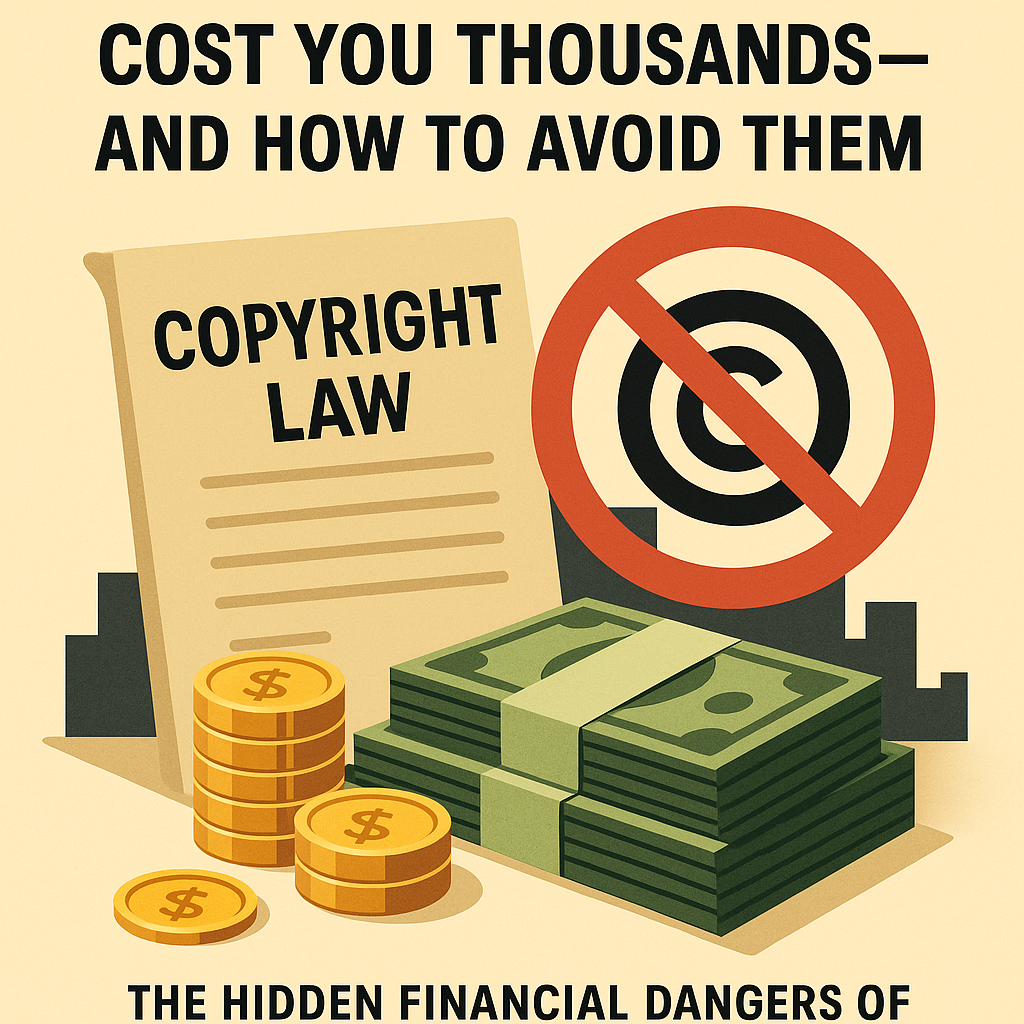
Copyright Mistakes That Could Cost You Thousands and How to Avoid Them
The Hidden Financial Dangers of Copyright Mistakes
Every day, creators unknowingly risk losing thousands of dollars by overlooking essential copyright protections. Whether you're a photographer, author, songwriter, or digital content creator, misunderstanding how copyright law works can leave your creations vulnerable. At Masterly Trademarks, a trusted trademark law firm, we help creators avoid costly copyright mistakes and protect their work legally with precision and strategy.
Misunderstanding Copyright Ownership
One of the most common copyright mistakes is assuming that you automatically own full rights to a work simply because you created it. While copyright law grants rights the moment a work is fixed in a tangible medium, failure to register that copyright can limit your ability to enforce those rights or recover damages.
You risk:
- Losing the ability to claim statutory damages and attorney's fees in court
- Difficulty proving copyright ownership without a public record
- Having no legal leverage when infringement occurs
Registering your work with the copyright office is a proactive step that secures your legal standing.
Waiting Too Long to Register
Delaying your copyright registration can be a costly misstep. The copyright registration process isn’t just a formality—it’s your ticket to legal remedies in case of infringement. The copyright act makes it clear: you must register before you can file a lawsuit.
Without timely registration, you may:
- Be unable to recover damages if your work is infringed
- Face higher legal costs due to weaker claims
- Miss opportunities to stop infringers through injunctions
Register early to avoid these traps and protect your work legally.
Relying on the Wrong Copyright Forms
Many creators fall into the trap of using the wrong application form when registering their work. Choosing between the standard application, group registration, and supplementary registration requires knowledge of the subject matter and purpose.
Examples of costly mistakes include:
- Using the same application for different types of work (e.g., sound recordings vs. musical works)
- Submitting unpublished and published works together incorrectly
- Ignoring specific deposit requirements for formats like sheet music or unpublished photographs
Work with a trademark attorney to ensure your registration is accurate.
Misjudging What Copyright Protects
Copyright only covers original works fixed in a tangible medium. It does not protect:
- Ideas
- Titles or short phrases
- Facts or data
- Mechanical processes (which may fall under patent law instead)
Trying to register unprotected content can waste your filing fee and leave you with no legal shield.
Understanding what copyright protects is crucial to making informed legal decisions.
Failing to Register Derivative or Collaborative Works
If you've created derivative works or collaborated with others, assuming you're the sole copyright owner can be disastrous. Each contributor may have rights, and unregistered changes can create legal confusion.
Avoid these traps by:
- Using contracts that define copyright ownership clearly
- Registering both original and derivative works where applicable
- Consulting a trademark law firm when unclear on rights
Mistaking the Copyright Office for an Enforcement Agency
The copyright office is a federal agency that records ownership—but it doesn’t enforce rights. That job falls to courts, and only registered works have full access to legal remedies.
Also, don't confuse the trademark office or patent and trademark office with the copyright system—each protects different types of intellectual property.
Let legal professionals guide you in navigating enforcement after registration.
Misusing Group Registration
Group registration can save time and money, but only if used correctly. For instance:
- Unpublished works can be grouped together
- Published photographs may be eligible under special rules
Using group registration incorrectly can lead to invalid claims, rejection by the electronic copyright office, and financial loss. Misuse also weakens your public record, putting your rights at risk.
Ignoring Digital Format Requirements
Digital creatives often submit the wrong deposit or overlook technical specs required by the copyright registration system.
Errors include:
- Failing to submit the correct file type
- Neglecting metadata required in a digital format
- Using outdated electronic check methods or payment systems
Ensure compliance by consulting copyright office practices before you submit.
Believing You Don't Need a Trademark Law Firm
Some creators assume copyright and trademarks are totally separate. But both are part of a solid intellectual property rights strategy. A trademark law firm like Masterly Trademarks ensures all your assets—from logos to literary works—are protected.
We help you:
- Navigate copyright and trademark registrations
- Handle copyright issues from improper usage
- Monitor and defend against infringement
Integrated protection is more effective than isolated efforts.
Registering Without Legal Guidance
Filing your own registration application can save on the surface but lead to serious errors. Mistakes may result in rejection, limited rights, or exposure to legal risk.
Having a trademark attorney handle the process ensures:
- Proper use of forms and fees
- Strategic registration of works created
- Clear notice and enforcement options
Legal help turns confusing red tape into a reliable protection strategy.
Failing to Monitor and Enforce Your Rights
Once registered, creators often forget the next step: active monitoring and enforcement.
Consequences of inaction include:
- Loss of control over how your work is used
- Missed licensing opportunities
- Difficulty proving copyright infringement in court
Monitoring public use and responding quickly protects your investment.
Underestimating the Power of Supplementary Registration
Think your earlier registration is the final word? Think again. New developments, corrections, or changes can be added through supplementary registration.
It's especially helpful for:
- Clarifying errors in the public record
- Adding new versions of literary work or musical works
- Registering AI-generated edits to original content
An updated record strengthens your legal standing in future disputes.
Overlooking Artificial Intelligence and Copyright
New technology introduces new risks. Many creators now use artificial intelligence to generate content. But if you don't control the underlying data or model, copyright claims may be rejected.
AI-generated works need careful handling:
- Define authorship in contracts
- Include AI-disclosure where required
- Register edits and human contributions separately
Protect your AI-enhanced content with legal clarity.
Thinking Registration Isn’t Worth the Fee
Skipping registration to save the filing fee may seem smart—until infringement happens. That small investment opens the door to:
- Legal enforcement
- Licensing revenue
- Deterrence against copycats
The fees are minimal compared to the financial losses of unprotected work.
Using Incomplete or Inaccurate Documentation
Whether it's an example, a document, or a complete copyrighted work, incomplete registration materials can invalidate your claim.
Always:
- Double-check the submission materials
- Ensure all individual authors are named
- Meet library of congress deposit standards
Strong documentation leads to strong protection.
Not Understanding Exclusive Rights
As a copyright owner, you hold the exclusive right to:
- Reproduce
- Distribute
- Display
- Publicly perform your work
Failing to assert these rights allows others to profit from your labor without consequence.
Forgetting to Register Performances and Sheet Music
Musical works and sheet music need their own registrations, especially if you're planning to publicly perform them. Don’t assume recording registration alone covers every usage.
Make sure each creative component is registered individually to prevent gaps in protection.
Believing Published and Unpublished Works Follow the Same Rules
There are key differences in how you register published vs. unpublished works. Mixing them in the wrong way can cause rejection or weak enforcement.
Ensure each work’s status is correctly identified and treated in its registration application.
Filing Incomplete Claims with the Office
A vague or overly broad copyright claim can lead to rejection by the office or later challenges.
Avoid these issues by:
- Clearly identifying the work
- Specifying the year it was created
- Including all necessary supporting materials
Our team at Masterly Trademarks can guide you to a strong, enforceable claim.
Contact Masterly Trademarks Today
Navigating the copyright world alone is a gamble. At Masterly Trademarks, we don’t just help you file forms—we build your legal foundation from the ground up. Whether you're registering a new literary work, seeking help with supplementary registration, or unsure about AI-generated content, our team is here to provide clarity and confidence.
Contact us at (972) 236-5051 to schedule a free consultation. Let us answer your questions and ensure your work receives the full copyright protection it deserves. The longer you wait, the more you risk. Don’t let your creativity go unprotected—reach out today and secure your rights with a team that understands every layer of copyright and trademark law.
You might also like