Intellectual Property Attorney: When a Brand Needs Trademark and Copyright Counsel Working Together
A growing brand can face more than one type of intellectual property problem at the same time.
Your business name or product name may raise trademark concerns. Your website, photographs, written content, graphics, videos, packaging, or other creative work may involve copyright issues. For businesses, creators, agencies, publishers, founders, and company leadership, separating these concerns can make an already complicated situation harder to manage.
An intellectual property attorney provides legal guidance on these issues and helps you see the larger picture when trademark and copyright concerns overlap and affect your brand or commercial project. Instead of treating each issue as though it has nothing to do with the others, Masterly Trademarks helps clients address overlapping intellectual property concerns, align strategy with business goals, and make informed decisions about brand protection, marketing, product development, licensing, and expansion.
Your Brand May Involve More Than Trademark Law
A brand is rarely just a name.
Consider what customers actually see when they interact with a business. They may encounter a company name, logo, website, product packaging, photographs, videos, advertisements, written materials, graphics, and other creative content.
Different intellectual property concerns can arise around those assets.
That becomes especially important as a business grows. A company may hire an agency to develop new materials, work with independent creators, publish original content, license assets, introduce products, or expand its online presence.
A trademark question may therefore be connected to a copyright question. The decisions surrounding one asset can affect how the company approaches another.
This is where broader intellectual property strategy becomes important.
When Trademark and Copyright Issues Start to Overlap
Imagine a company preparing to launch a new product.
The product has a name and logo. Its website includes original copy and photographs. Marketing materials include graphics and videos. An outside agency or independent creator may have helped develop some of those assets.
There are several intellectual property interests connected to one commercial project.
If a problem develops, leadership needs to understand what kind of intellectual property is involved before deciding what to do next.
A trademark attorney may address questions involving names, marks, and brand identity. A copyright attorney may address concerns involving original creative works. When both areas affect the same business objective, intellectual property law provides the broader framework, and the work may involve filing, enforcement, and agreements rather than treating them as completely separate concerns.
Intellectual Property Problems Can Become Business Problems
An intellectual property concern does not stay confined to a legal document.
It can become relevant to marketing, ecommerce, publishing, licensing, advertising, product development, partnerships, and expansion.
For a founder or established company, that means intellectual property decisions should be considered alongside business decisions.
The question is not simply, "Do we have a trademark issue?" or "Do we have a copyright issue?"
Leadership may need to ask a broader question:
What intellectual property does this business rely on, and how should those assets fit into its plans?
Why an Intellectual Property Attorney Matters When Rights Overlap
When a company has both trademark and copyright concerns, an intellectual property attorney can help leadership evaluate those concerns within a broader legal and business context of ip law.
This can be valuable because different assets may serve different purposes.
A trademark can be closely connected to how customers recognize a source of products or services. Copyright can apply to qualifying original creative works. A growing business may depend on both, and this kind of counsel helps protect ownership rights over inventions and creations.
Understanding that distinction can help a company avoid viewing intellectual property as one single asset.
It can also help leadership recognize when different intellectual property concerns are connected to the same commercial objective.
One Brand Can Include Many Valuable Assets, Including Trade Secrets
Think about an established ecommerce brand.
Its intellectual property may involve the brand name customers search for, logos displayed on products, photographs used on sales pages, written product descriptions, videos used in advertising, and other original materials.
A publisher may have different concerns involving names, written works, artwork, and licensing.
A creative agency may need to consider its own brand while also working with intellectual property created for clients.
The details vary, but the larger issue remains the same. Modern businesses can depend on several types of intellectual property at once.
Intellectual Property Strategy Should Match the Business
Legal decisions are more useful when they support what the company is actually trying to accomplish.
A business preparing to license a brand may have different concerns from a creator building a media company. A publisher may have different priorities from an ecommerce company introducing new product lines, especially when confidentiality agreements or contracts need to define ownership or protect sensitive information.
This is why intellectual property strategy should reflect the company's actual assets and commercial direction.
Trade secret attorneys develop strategies to protect confidential information, including trade secrets, through tailored legal planning.
For leadership, this may mean looking at intellectual property when considering:
- New brands and product names
- Original content and creative assets
- Ecommerce expansion
- Publishing projects
- Licensing opportunities
- Marketing campaigns
- Agency and creator relationships
- New products or services
- Business expansion
The goal is not to make every business decision more complicated. Drafting contracts helps ensure ownership rights are retained in creative works. It is to identify important intellectual property concerns before they become disconnected from the company's larger plans.
Brand Protection May Require a Broader Intellectual Property Law View
Brand protection can extend beyond responding to a single trademark concern.
Companies invest in names, visual identity, creative materials, content, and reputation. As those assets become more important to the business, leadership may want legal guidance that considers how they relate to one another.
A brand protection attorney can help businesses examine issues involving important brand assets in the context of their larger protection goals, including clearance searches for new names or creative assets, trademark registrations, and related registration strategy in the U.S. and abroad.
This becomes especially useful when a company is expanding.
A business may introduce a new brand while simultaneously creating advertising, photographs, videos, packaging, and website content to support it. If questions arise about those assets, leadership benefits from understanding which concerns involve trademarks, which involve copyright, and where the issues intersect. Early review can also reduce infringement risk by identifying conflicts with an existing trademark and preserving trademark rights before launch.
Intellectual Property Concerns Can Affect Creators and Agencies Too
These issues are not limited to large corporations.
Creators can build valuable brands around original content. Agencies can develop their own intellectual property while producing creative work for clients. Publishers work with names, written works, artwork, and other materials. Founders may begin building intellectual property before their companies have even reached the next stage of growth.
As those businesses become more successful, the value placed on their brands and creative assets may increase.
That is why professional guidance can become increasingly important.
The objective is not to turn a founder, creator, publisher, or agency executive into an IP lawyer. Their job is to build and manage the business.
Legal counsel can address the intellectual property questions while leadership stays focused on its commercial priorities. When hiring, businesses should look for legal professionals whose practice fits the matter and who can identify potential conflicts of interest early.
Masterly Trademarks Helps Clients Address the Bigger Intellectual Property Picture
When trademark and copyright concerns overlap, clients should not have to determine every legal distinction on their own before asking for help.
Masterly Trademarks provides a professional point of contact for businesses and creators dealing with intellectual property concerns connected to their brands.
The process begins with understanding the issue and the assets involved.
Is the concern connected to a brand name or mark? Does it involve original creative material? Are several intellectual property interests connected to the same product, campaign, publication, or business expansion?
These questions can help identify the type of legal guidance the situation requires, whether that means filing with the trademark office uspto, responding to infringement, or handling a matter involving the patent and trademark office.
IP attorneys may assist clients with registrations, enforcement letters, and related legal steps. They can draft and file applications with the uspto or trademark office to protect rights, and an intellectual property attorney can issue a cease-and-desist letter when needed.
For clients, the benefit is straightforward. You can bring the intellectual property problem to a professional rather than trying to become your own trademark or copyright specialist.
Protecting Intellectual Property Before the Business Expands
Intellectual property deserves attention before a major business move creates more exposure.
That can be especially important before launching a new brand, publishing content, entering a licensing arrangement, introducing a product, or expanding marketing.
Once additional people, partners, customers, and organizations become involved, intellectual property questions can become more important to the business.
Professional guidance gives leadership an opportunity to address those concerns with greater clarity.
Masterly Trademarks helps clients focus on what matters most: protecting important intellectual property while continuing to build the business behind it.
Intellectual Property Issues Can Cross Multiple Areas of Law
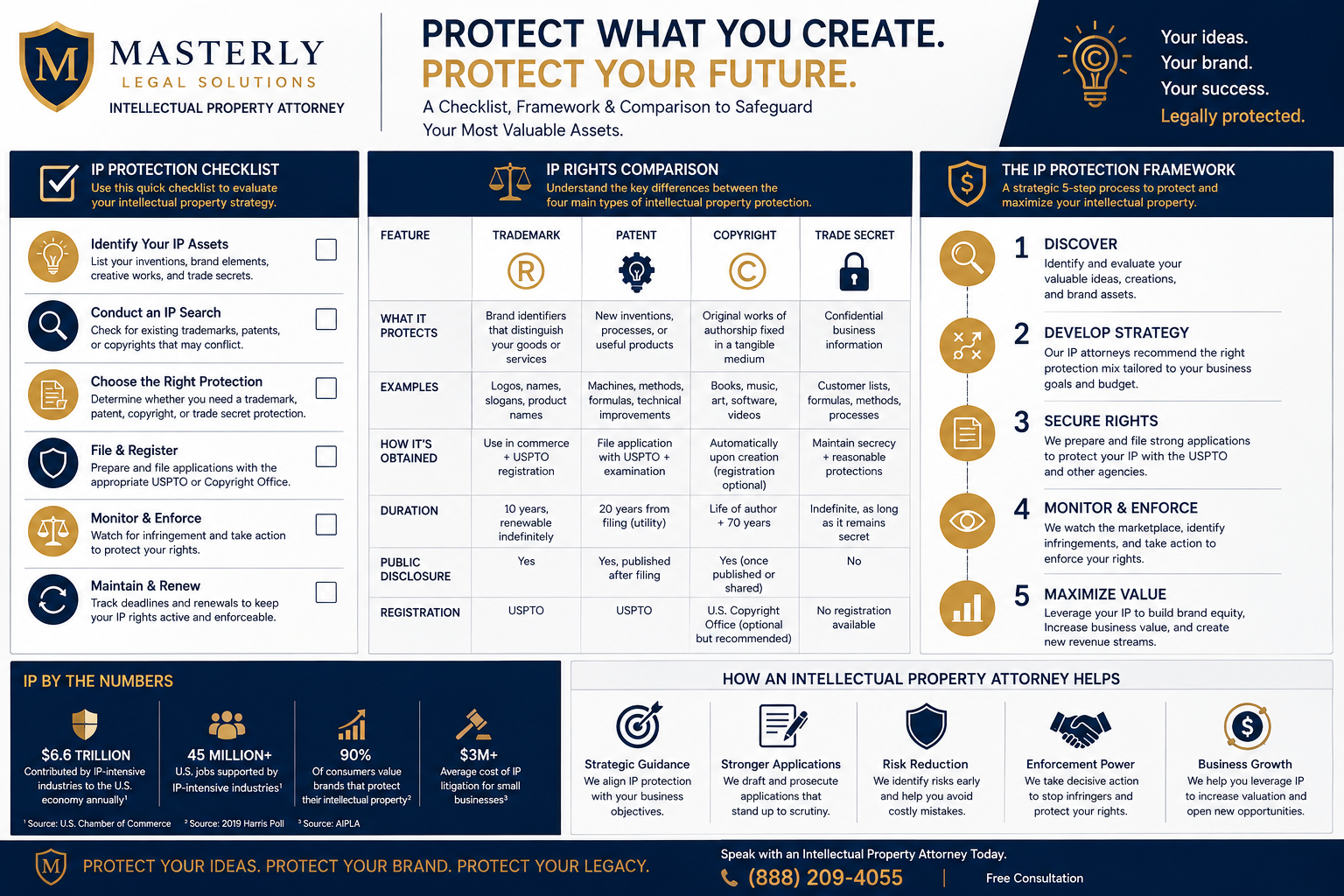
Intellectual property can become complicated when a growing business has interests in multiple areas at the same time. A company may have questions involving copyright law, patent law, trademarks, creative works, technology, licensing agreements, or other commercial transactions. Businesses selling consumer goods, publishers, agencies, technology companies, and artists can all encounter different IP issues as their work reaches more customers. For this reason, intellectual property lawyers may focus on different areas depending on their legal practice and technical knowledge. Some lawyers work primarily with copyrights or trademarks, while others focus on patents, litigation, licensing, or related intellectual property matters.
For businesses focused on their brands, federal trademark registration can be one part of a larger protection strategy. A trademark lawyer can help a business address trademark matters involving its names and marks, including concerns about another mark that may be confusingly similar. Trademark matters can also become more complex when disputes arise. Depending on the circumstances, intellectual property disputes may involve lawsuits, a district court, the Trademark Trial and Appeal Board, or other proceedings. Patent matters may involve the United States Patent and Trademark Office, while certain intellectual property disputes involving imported goods can involve the International Trade Commission. Some matters require trial lawyers or counsel with experience handling a trademark trial or proceedings before an appeal board. The appropriate legal path always depends on the specific facts and rights involved.
Protecting Intellectual Property Starts With Understanding What the Business Owns
Companies seeking to protect patents, trademarks, copyrights, and other intellectual property should understand that these rights are not interchangeable. The legal options available to enforce intellectual property rights can vary based on the type of property, the nature of the dispute, and where the activity occurs. This becomes especially important for companies serving multiple clients or operating across the country and around the world, where business activities may raise different legal and commercial questions. An attorney's extensive experience in one area should also not be assumed to cover every type of intellectual property matter.
Masterly Trademarks helps clients address trademark and brand concerns as part of a thoughtful intellectual property strategy. When trademark and copyright interests overlap, the goal is to help the client understand the issues affecting the brand and determine the appropriate legal direction. Businesses do not need to become experts in every branch of intellectual property law. They need qualified guidance that helps them identify what deserves attention and make informed decisions about protecting the assets behind their business.
Trademark Rights Can Become Part of Larger Intellectual Property Issues
Growing businesses can face IP issues that involve more than one type of intellectual property. A company may own valuable patents, trademarks, copyrights, creative materials, and other assets that support its products and brand. Because these rights are different, intellectual property lawyers and IP attorneys may focus on particular areas of law and bring different levels of technical knowledge to a matter. For a business concerned about its brand, understanding and protecting its trademark rights can be an important part of the larger intellectual property strategy.
Federal trademark matters are handled through the United States Patent and Trademark Office, sometimes referred to more generally as the patent and trademark office or trademark office. Certain trademark disputes can also involve proceedings before the Trademark Trial and Appeal Board. A trademark trial or matter before an appeal board is different from routine brand protection and should be evaluated based on the specific facts involved. Masterly Trademarks helps businesses address trademark concerns with professional guidance so founders and leadership teams can focus on protecting the brands they have worked to build.Masterly Trademarks helps businesses address trademark concerns with expert legal guidance, allowing founders and leadership teams to concentrate on protecting the valuable brands they have built.
Frequently Asked Questions About Intellectual Property Attorneys
What does an intellectual property attorney do?
An intellectual property attorney provides legal guidance involving intellectual property matters. The specific assistance appropriate for a client depends on the assets, issues, and circumstances involved. Intellectual property law includes six different areas of specialization, so some IP attorneys focus on trademarks, copyrights, or trade secrets, while others help protect inventions by preparing and prosecuting patent applications and advising on patent rights.
When should I contact an intellectual property attorney?
Consider speaking with an attorney when intellectual property concerns affect an important brand, creative asset, product, publication, licensing opportunity, or business decision.
What is the difference between a trademark attorney and a copyright attorney?
A trademark attorney handles matters involving trademarks, while a copyright attorney focuses on copyright matters. Some business situations can involve both areas of intellectual property.
Can trademark and copyright issues affect the same brand?
Yes. A business can have trademarks connected to its brand identity while also relying on original creative works that may involve copyright.
Do businesses need an IP lawyer before expanding a brand?
The need for legal counsel depends on the circumstances. Businesses planning important launches, licensing arrangements, or expansion may benefit from discussing potential intellectual property concerns before moving forward. Costs can vary depending on the type of work involved, including filings, legal review, and government fees.
Why should a business consider intellectual property strategy?
An intellectual property strategy can help a company consider its important intellectual property assets alongside its business plans rather than treating each issue as an isolated concern. It may also need to account for litigation risk, including potential claims in federal and state courts and state courts, arbitration, and appeals, and in some matters a court fight can continue to the supreme court.
Can creators and agencies need intellectual property counsel?
Yes. Creators and agencies can face trademark and copyright questions involving their brands, original works, commercial projects, and relationships with other parties. They may also need help with unfair competition, trade dress, or other intellectual property rights tied to campaigns or commercial projects.
Request an Intellectual Property Protection Consultation Through Masterly Trademarks
Your trademarks, creative materials, and brand identity can all play an important role in the business you are building.
When those interests overlap, you should not have to determine alone whether you need help with registration, enforcement, negotiation, or broader intellectual property guidance depending on the issue.
Speak with an intellectual property attorney through Masterly Trademarks about the intellectual property concerns affecting your brand or business.
Visit MasterlyTrademarks.com or call (972) 236-5051 to request a consultation with the Masterly Trademarks firm.
You might also like