
Supplemental Register vs. Principal Register: What Brand Owners Need to Understand
Receiving a USPTO Office Action stating that your trademark is descriptive can be discouraging. Many business owners assume their application has reached the end of the road, but that is not always the case. In some situations, a supplemental register trademark may provide a practical registration option while supporting your long-term branding goals. Understanding your choices before responding can help you make informed decisions that protect your business.
At Masterly Trademarks, we help founders, entrepreneurs, and growing businesses evaluate trademark applications after descriptiveness concerns, Supplemental Register recommendations, and other USPTO examination issues. Our goal is to help you choose the registration strategy that best supports your brand today and in the future.
Why Registration Strategy Matters
Your trademark represents your business identity, reputation, and customer recognition. When the USPTO raises concerns that your mark is descriptive, your response can affect both the progress of your application and your long-term intellectual property strategy.
Rather than making assumptions after receiving an Office Action, business owners benefit from reviewing every available trademark registration option before deciding how to proceed.
In some situations, a supplemental register trademark may offer a path on the USPTO’s secondary register with limited but meaningful protection, though it does not provide the Principal Register’s constructive notice, presumptions of ownership, or exclusive right advantages.
Understanding a Supplemental Register Trademark
A supplemental register trademark is a federal trademark registration option available for certain marks that are eligible for this filing path because they do not currently qualify for registration on the principal register, but otherwise satisfy applicable registration requirements, including actual use in commerce with the identified goods.
Many applicants first learn about the Supplemental Register after receiving an Office Action explaining that the USPTO considers part or all of the trademark descriptive, and a review of every available trademark registration option should account for the fact that different filing paths carry different legal benefits.
Placement on the Supplemental Register does not necessarily prevent future opportunities. Instead, it may provide a registration path while a brand continues developing marketplace recognition. Choosing the appropriate filing strategy today can also preserve the chance to later seek the Principal Register, which offers stronger legal protection, including constructive notice and a presumption of federal ownership.

Why the USPTO May Recommend the Supplemental Register
Every application is evaluated individually.
The USPTO may recommend the Supplemental Register when an examining attorney believes the trademark is descriptive rather than inherently distinctive, but the mark is still eligible and already in active use in commerce for the identified goods or services.
Examples may include:
- Descriptive business names
- Product descriptions
- Service descriptions
- Geographic wording
- Industry terminology
By contrast, weak trademarks may be directed here while they build recognition, whereas arbitrary marks and fanciful trademarks are more often associated with the Principal Register. One example is a descriptive mark that gains marketplace recognition over time and is eventually treated as a strong trademark. Rights can still be granted on the supplemental now, and the owner may later seek registration on the principal as the mark becomes stronger.
The appropriate response depends on the specific trademark, the goods or services offered, and the applicant's long-term branding objectives.
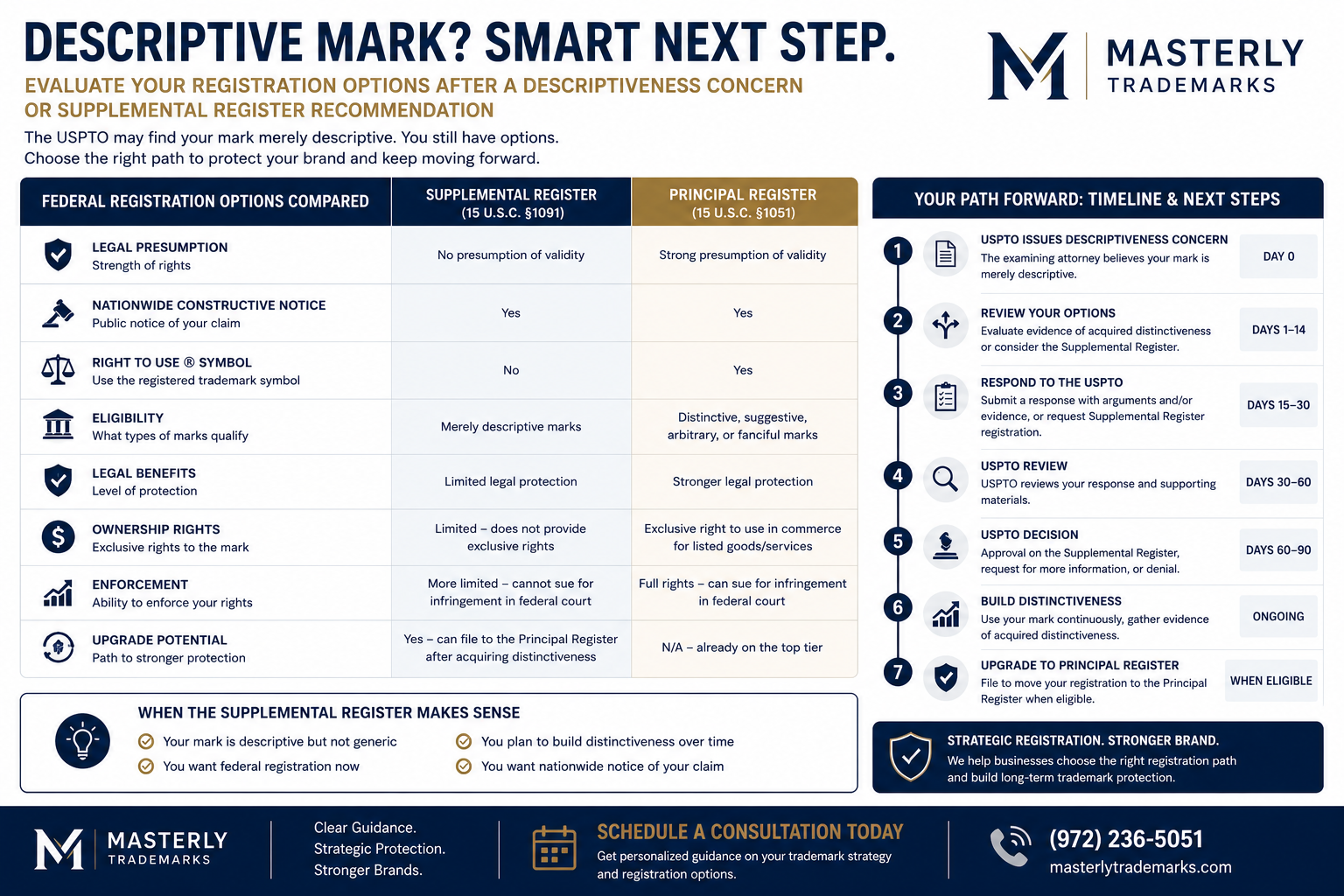
Principal Register vs Supplemental Register
One of the most common questions business owners ask involves principal register vs supplemental register.
The Principal Register generally provides registration for trademarks that satisfy the applicable legal requirements for distinctiveness.
Arbitrary or fanciful marks are more likely to receive Principal Register protection, while weaker descriptive marks may be directed to the Supplemental Register based on the examiner’s reasoning about distinctiveness, validity, and ownership.
The Supplemental Register provides another federal registration option for certain descriptive trademarks that meet statutory eligibility requirements, and a mark registered on the supplemental may still use the ® symbol, carry a federal trademark registered date, and help block later-filed similar marks or similar trademarks even without the Principal Register presumptions or incontestable status after five years.
Determining which path is most appropriate requires reviewing the application, the examiner's reasoning, and the overall business strategy before making a decision.
When a Descriptive Trademark Raises Questions
Receiving a descriptiveness refusal does not necessarily mean your trademark lacks value.
A descriptive trademark often communicates useful information about a product or service, making it attractive from a marketing perspective. However, descriptive wording may also create challenges during the registration process. In practice, you may still be able to file and amend an application to the supplemental register, and once registered there you can use the ® symbol; just as with the Principal Register, the USPTO can block similar trademarks because both registers can block confusingly similar later-filed applications.
That option also carries an admission that the mark is descriptive, and supplemental registration does not create a legal presumption of validity or ownership, does not become incontestable after five years, and cannot be used to stop infringing imports through U.S. Customs, so the registration date and long-term strategy still matter.
Business owners should carefully evaluate whether:
- The examiner's analysis is accurate
- Additional evidence may support registration
- An amendment is appropriate
- Another filing strategy better supports long-term goals
Every application deserves individualized legal review before responding.
Understanding Acquired Distinctiveness
Some businesses develop strong customer recognition over time, and consumers may come to recognize the same mark as identifying one source.
In certain situations, acquired distinctiveness may become relevant when evaluating future registration opportunities or responding to descriptiveness concerns, especially when showing secondary meaning after continuous use.
Whether acquired distinctiveness applies depends on the specific facts surrounding the trademark and the available supporting evidence, including whether customers now associate the mark with your business.
An amendment is appropriate in some cases, but it may also amount to admitting the mark is descriptive, so that choice should be weighed carefully before you file a response.
An experienced trademark attorney can help evaluate whether this concept plays a role in your overall filing strategy.
Developing the Right USPTO Application Strategy
Every trademark application should support your larger business goals, especially when a descriptive mark can serve to become recognized by customers and consumers over time through continuous use.
An effective USPTO application strategy considers more than simply obtaining a registration. It also evaluates how today's decisions may affect future filings, enforcement efforts, and brand growth.
That growing recognition is often described as secondary meaning and may support a later effort to seek registration on the principal for the same mark.
Our legal review may include:
For marks on the Supplemental Register, enforcement may require proving secondary meaning.
Reviewing the Office Action
We carefully evaluate the examining attorney's reasoning and identify available response options.
Evaluating Trademark Registration Alternatives
We help determine whether amendment, response, or another filing strategy best supports your objectives.
Planning for Future Brand Growth
Trademark decisions should support long-term expansion rather than only addressing today's examination issues. One option is to amend the application and file for registration on the supplemental register, which can serve as a practical step while the mark develops and any related brand or patent strategy moves forward.
Brand Protection Begins With Informed Decisions
Effective brand protection involves more than filing government paperwork, because misuse can take more than one form online and create a false association with your brand that misleads consumers and diverts customers. Registration decisions can also affect how you address trademark infringement and support an infringement claim when others use your mark without permission. In some circumstances, registration on the Supplemental Register can also serve as a basis for international trademark filing.
Business owners benefit from legal guidance when:
- Responding to descriptiveness refusals
- Evaluating Supplemental Register recommendations
- Planning new trademark applications
- Expanding product lines
- Protecting valuable business names
- Building long-term intellectual property strategies
Masterly Trademarks helps clients understand both the immediate application issues and the broader business implications of every filing decision.
Why Businesses Choose Masterly Trademarks
Trademark registration is one of the most important legal investments many businesses make.
Masterly Trademarks provides strategic legal guidance for entrepreneurs, startups, and established companies seeking practical solutions for trademark registration and USPTO proceedings.
Clients choose our firm because we provide:
Personalized Legal Strategy
Every trademark application receives individualized legal analysis based on the client's business objectives.
Thorough Application Review
We carefully review Office Actions, descriptiveness concerns, and available registration options before making recommendations.
Clear Communication
We explain trademark law in straightforward language so clients understand every available option.
Long-Term Brand Planning
Our legal guidance focuses on protecting both today's trademark application and tomorrow's business growth.
Frequently Asked Questions
What is a supplemental register trademark?
A supplemental register trademark is a federal registration option available for certain trademarks that do not currently qualify for the Principal Register but otherwise meet applicable registration requirements.
What is the difference between the Principal Register and the Supplemental Register?
The difference between principal register vs supplemental register depends on the legal requirements for registration, including the distinctiveness of the trademark and other applicable USPTO standards: the Principal Register provides presumptions of ownership and validity, gives the exclusive right to rely on those presumptions, and can lead to incontestable status after five years of continuous use. By contrast, a supplemental register trademark is available only for eligible marks already in use in commerce, and while it does not provide those same presumptions, registration on the Supplemental Register does allow use of the ® symbol.
Can a descriptive trademark still be registered?
Yes. In some situations, a descriptive trademark may qualify for registration on the Supplemental Register or through another appropriate legal strategy, depending on the circumstances. If the same mark later develops secondary meaning through use, you can seek Principal Register protection for a strong trademark; that register provides presumptions of ownership and validity, while the Supplemental Register does not provide a legal presumption of validity or a presumption of federal ownership. Supplemental Registration also does not lead to incontestable status after five years of continuous use.
What is acquired distinctiveness?
Acquired distinctiveness refers to circumstances in which a trademark may become associated with a particular source through its use in commerce over time. For example, a descriptive mark can, through continuous use, come to recognize in consumers’ minds a single source, develop secondary meaning, and later be strong enough to seek Principal Register protection for the same mark.
Should I accept a Supplemental Register recommendation?
Every application is different. Reviewing your registration options with an experienced trademark attorney helps ensure your response supports both your current application and your long-term business goals. A supplemental register trademark can offer real benefits, including use of the ® symbol, citation against later-filed similar marks, and a basis for enforcement in federal court. But it also comes with limitations compared with the Principal Register, since acquired distinctiveness develops only when consumers come to recognize the mark as identifying one source through continuous use—for example, after years of consistent branding.
Discuss the Right Trademark Registration Path
If you have received a USPTO Office Action raising descriptiveness concerns or recommending the Supplemental Register, do not make important filing decisions without understanding your legal options. Careful legal guidance can help you evaluate your registration strategy, respond appropriately, and continue protecting your brand.
Accepting that recommendation may help you block later-filed confusingly similar applications and preserve the ability to file infringement lawsuits in federal court, while you decide whether to amend your filing now or later seek the Principal Register, which offers stronger protection and, unlike the Supplemental Register, supports efforts to stop infringing imports through U.S. Customs.
Masterly Trademarks represents founders, entrepreneurs, and businesses seeking experienced legal guidance for trademark applications, USPTO Office Actions, and federal trademark registration strategies.
Call Masterly Trademarks today at (972) 236-5051 to ask about trademark filing support.
You might also like