Trademark Ownership Transfers: What Must Be Documented Before an Assignment Is Recorded
When a business changes hands, a trademark should not be left behind. A trademark ownership transfer is the legal process of transferring trademark rights from one party to another through proper documentation, so ownership records stay accurate and the brand asset does not become a source of confusion later. Whether you are selling a company, purchasing business assets, restructuring an organization, completing a merger, or changing ownership, failing to properly transfer trademark rights can create disputes and complications in future licensing, enforcement, financing, or sale transactions.
A trademark transfer involves more than updating internal records. The transaction should accurately reflect the ownership of valuable intellectual property, preserve a clear chain of title, and often requires trademark assignments, asset purchase agreement review, entity-conversion analysis, and updating ownership records with the USPTO and other government offices where appropriate. Working with experienced trademark counsel helps businesses document transfers properly and reduce the risk of future legal challenges.
Masterly Trademarks helps founders, business owners, entrepreneurs, buyers, sellers, and companies involved in trademark-related transactions handle these transfers with careful legal guidance designed to protect valuable brand assets.
Why Trademark Ownership Transfer Matters
A trademark often represents one of a company's most valuable assets. If ownership records do not accurately reflect the current owner, future licensing, enforcement, financing, or business transactions may become more complicated.
A properly documented trademark ownership transfer helps businesses maintain accurate ownership records while supporting future growth.
Correct ownership documentation may benefit:
- Business acquisitions
- Company sales
- Mergers
- Organizational restructuring
- Brand licensing
- Future trademark filings
Protecting ownership today helps reduce uncertainty tomorrow.
Business Changes Often Require Trademark Updates
Many business owners focus on transferring physical assets while overlooking intellectual property.
Ownership changes commonly occur during:
- Business sales
- Asset purchase transactions
- Corporate reorganizations
- Company mergers
- Ownership restructuring
- Business succession planning
When trademarks are part of the transaction, ownership documentation deserves careful legal attention.
Understanding Trademark Assignment
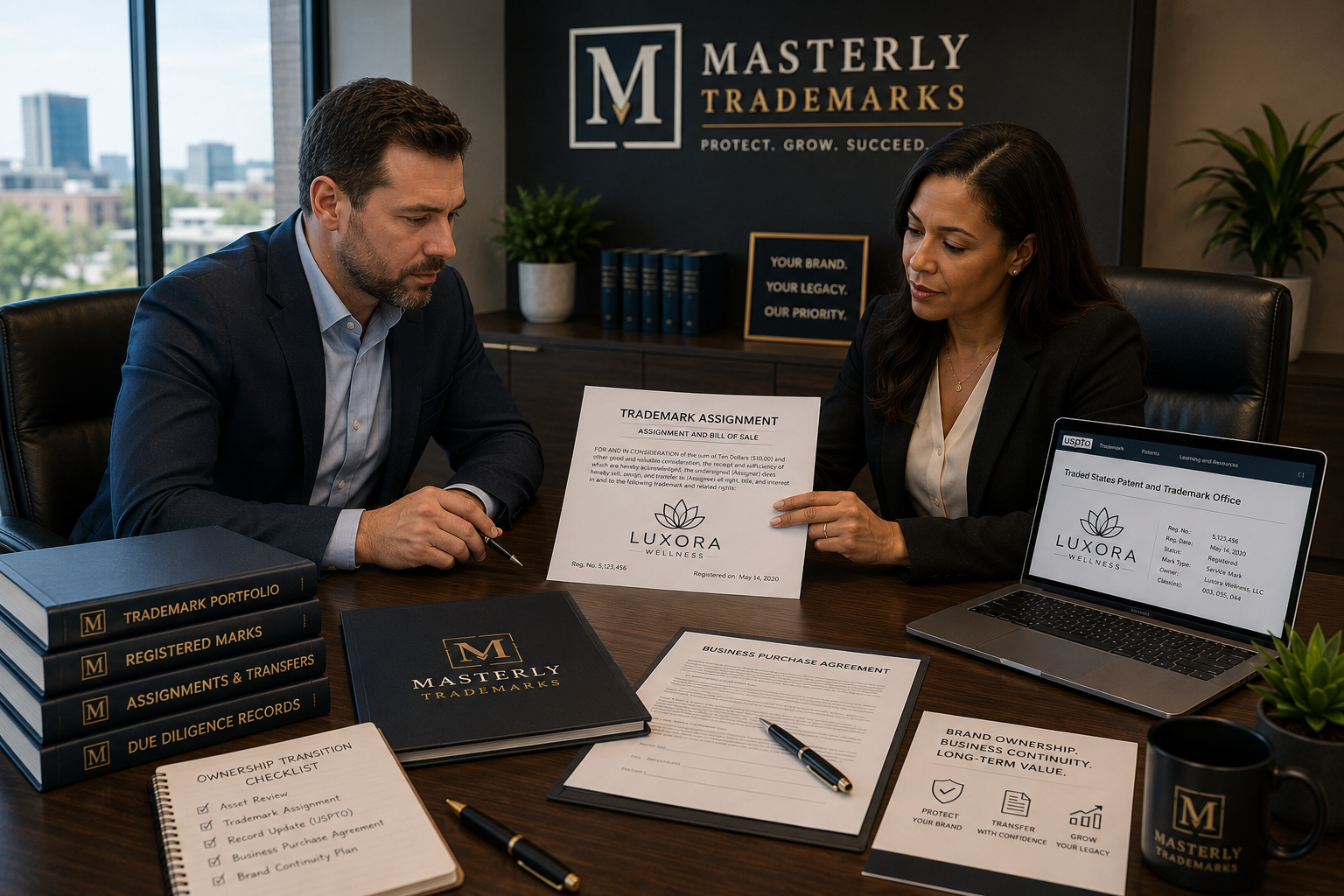
A trademark assignment agreement is the written legal document used to transfer ownership of trademark rights from one party to another. An assigned trademark may transfer all rights or only certain rights, depending on whether the deal is full or partial. To be valid, the transfer must include the goodwill connected to the mark, since transferring the mark by itself can be invalid.
Depending on the transaction, the assignment may involve:
Complete Business Sales
Transferring trademark ownership as part of the sale of the business.
Asset Purchase Transactions
Including trademark rights within an asset purchase agreement.
Internal Business Changes
Moving ownership after an entity conversion or organizational restructuring.
Every transfer should accurately reflect the specific business transaction involved, whether it includes a registration or a trademark application, and pending applications may have specific transfer restrictions.
Why Recording Trademark Assignments Is Important
After completing a transfer, businesses often need to record trademark assignment documents with the United States Patent and Trademark Office, the relevant trademark office.
As a best practice, recording trademark assignments with the patent and trademark office should generally be completed within three months of the assignment date.
Missing that three-month window can affect priority against later purchasers, while timely recordation helps provide public notice and place the transfer in the public record.
Businesses may submit recordation through the electronic trademark assignment system, also called the trademark assignment system ETAS; electronic filings may avoid filing fees, while paper filings can require fees, and the united states patent authority may charge $40 for the first filing.
Maintaining accurate public ownership records may help:
- Reflect current ownership
- Support future transactions
- Reduce ownership disputes
- Clarify intellectual property rights
- Strengthen business records
Recording ownership changes helps maintain consistency between business documents and trademark records. After processing by the states patent and trademark agency, which is often automatically updated in the trademark database within one to two months, the USPTO typically issues a notice.
USPTO Ownership Change Records Should Be Accurate
When ownership changes involve federally registered trademarks, businesses often need to address the USPTO ownership change process tied to a trademark registration.
Accurate documentation helps ensure public records properly identify the current trademark owner.
Legal review may include confirming owner information and checking that the assignment documents use the correct identifiers for the file.
- Assignment documents
- Ownership information
- Registration details, including the registration number and serial number where applicable
- Supporting transaction records
Careful preparation helps reduce avoidable filing issues.
Chain of Title Protects Future Transactions
A clear chain of title documents the history of trademark ownership over time.
This becomes especially important when businesses:
- Sell trademarks
- License trademarks
- Seek financing
- Expand operations
- Transfer ownership multiple times
Incomplete ownership records may create questions during future business transactions.
Maintaining an accurate chain of title helps establish continuity of ownership.
Asset Purchase Agreements Often Include Trademark Rights
Many business acquisitions involve an asset purchase rather than the sale of an entire company.
In these situations, trademarks should be specifically addressed within the transaction documents.
As part of acquisition planning, due diligence should confirm the trademarks being acquired are not affected by ownership disputes or similar issues before closing.
Careful legal review helps determine:
Which Trademarks Are Included
Identifying every trademark involved in the transaction.
Ownership Documentation
Ensuring assignments accurately reflect the transfer. The assignment document should clearly identify the parties involved and the mark being transferred. A properly executed and duly executed assignment should be signed by both parties and include key identifiers such as registration numbers.
Supporting Records
Maintaining documentation that supports future ownership verification.
Proper planning helps reduce uncertainty after closing.
Entity Conversion Can Require Trademark Updates
Businesses frequently reorganize by changing legal entity structures.
An entity conversion may involve:
- Sole proprietorship to LLC
- Partnership to corporation
- LLC restructuring
- Corporate reorganizations
Although business operations may continue uninterrupted, trademark ownership records often require corresponding updates.
Keeping ownership records consistent helps support future legal and business activities.
How Masterly Trademarks Helps Business Owners
Masterly Trademarks assists clients throughout the trademark ownership transfer process.
Our legal services may include:
Reviewing Ownership Documents
Evaluating existing trademark records and transaction documents.
Preparing Trademark Assignments
Drafting documentation appropriate for the transaction, including checking the minimum requirements for a valid transfer, identifying the relevant goods or services tied to the mark, and, where helpful, clarifying that licensing agreements allow use without transferring ownership.
Recording Ownership Changes
Helping clients record trademark assignment documents when appropriate, including submitting recordation materials through the Electronic Trademark Assignment System or with the required recordation form cover sheet for paper filing.
Reviewing Chain of Title
Confirming ownership history supports current business objectives.
Ongoing Trademark Guidance
Providing practical legal advice that supports long-term intellectual property management.
Every ownership transfer deserves careful legal review based on the specific transaction, and international transfers may also require compliance with local rules and separate recordation because trademark rights are territorial, much like broader patent portfolios.
Why Business Owners Choose Masterly Trademarks
Trademark ownership often affects the long-term value of a business.
Masterly Trademarks works with:
- Founders
- Entrepreneurs
- Buyers
- Sellers
- Growing companies
- Established businesses
Our goal is to help clients protect valuable trademark assets while supporting smooth ownership transitions.
We understand that every transaction is unique and deserves thoughtful legal guidance.
Documenting Ownership Changes Correctly Protects Your Trademark Rights
Every trademark ownership transfer should clearly identify the new trademark owner and establish how ownership moved from the original owner to the current rights holder. Whether the transfer results from a name change, a merger, a business successor, or the continuation of the same entity under a different legal structure, the supporting documents should accurately reflect the transaction. A properly prepared assignment in writing should also address the transfer of the trademark's associated good will, since trademark rights are generally tied to the reputation and recognition built by the brand. Updating the registration certificate and related ownership records may require filing the appropriate documents and paying applicable government filing fees. Careful legal review helps ensure ownership records accurately support future licensing, enforcement, financing, and business transactions.
Frequently Asked Questions
What is a trademark ownership transfer?
A trademark ownership transfer is the legal process of transferring ownership of trademark rights from one party to another through appropriate documentation.
What is a trademark assignment?
A trademark assignment is a legal agreement that transfers ownership of a trademark from one owner to another.
Should I record trademark assignment documents?
Many ownership transfers involve the need to record trademark assignment documents with the USPTO to transfer trademark ownership so the change appears in the public record. This can apply whether the mark is a trademark registration or a pending application.
What is a chain of title?
A chain of title is the documented history of trademark ownership over time, showing how ownership has transferred from one party to another.
Does an entity conversion affect trademark ownership?
An entity conversion may require updates to trademark ownership records to ensure they accurately reflect the current legal owner.
Can Masterly Trademarks help with USPTO ownership changes?
Yes. Masterly Trademarks assists businesses with USPTO ownership change matters, trademark assignments, ownership documentation, and related intellectual property transactions. Some ownership updates may also involve rules in the Trademark Manual and related examining procedure guidance.
Request a trademark ownership review
Whether your business is being sold, reorganized, merged, or transferred to a new owner, protecting your intellectual property should remain a priority. A properly documented trademark ownership transfer helps preserve ownership rights, maintain an accurate chain of title, and support future business opportunities.
Contact Masterly Trademarks to request a trademark ownership review and discuss your transaction with experienced trademark counsel.
Masterly Trademarks
Website:
https://www.masterlytrademarks.com/
Phone:
(972) 236-5051
You might also like