Why the USPTO Rejects Trademark Specimens and What Comes Next
Receiving a trademark specimen refusal from the United States Patent and Trademark Office (USPTO) can be frustrating, especially when you believed your trademark application was moving toward registration. A refusal does not necessarily mean your application is over, but it does mean the USPTO believes the evidence submitted does not properly show how your trademark is being used in commerce. Responding correctly and on time is important because the next steps may affect the future of your brand.
Masterly Trademarks helps business owners, entrepreneurs, startups, and organizations protect their brands and respond to specimen-related refusals with experienced legal guidance, including comprehensive trademark registration services. Whether you received a USPTO specimen refusal or a trademark specimen office action, our attorneys review the application, evaluate the supporting evidence, and prepare a response strategy designed to address the USPTO's concerns.
When your trademark application reaches an unexpected obstacle, experienced legal guidance can help you move forward with confidence.
Why a Trademark Specimen Refusal Happens
A trademark specimen refusal usually means the USPTO believes the specimen submitted does not properly demonstrate how the trademark is actually used with the identified goods or services.
Many applicants are surprised to receive this type of refusal because the specimen may appear acceptable from a business perspective. However, the USPTO applies specific legal standards when reviewing evidence of trademark use.
Understanding the reason for the refusal is the first step toward preparing an effective response.
Why the Right Response Matters
A specimen refusal is more than a request for additional paperwork.
If the response does not adequately address the issues raised by the examining attorney, the application may remain refused or face additional delays.
Masterly Trademarks carefully evaluates every refusal to identify the strongest legal response based on the facts of the application and the available evidence.
Early legal review often helps applicants avoid unnecessary complications.
Understanding a USPTO Specimen Refusal
A USPTO specimen refusal may involve questions about whether the submitted evidence properly shows the trademark being used in connection with the goods or services identified in the application.
The examining attorney may determine that the specimen does not satisfy the legal requirements for trademark use, even if the applicant has been using the brand in business.
Our attorneys explain the reasons for the refusal in clear language and develop a response strategy based on the specific issues identified by the USPTO.
Responding to a Trademark Specimen Office Action
A trademark specimen office action outlines the examining attorney's concerns and provides an opportunity to respond within the applicable deadline.
Each Office Action should be reviewed carefully because the response requirements depend on the specific refusal.
Masterly Trademarks reviews every Office Action, identifies the supporting evidence available, and prepares professionally drafted responses that directly address the USPTO's concerns.
Careful preparation helps ensure that every submission is complete and well supported.
Demonstrating Proper Use in Commerce
One of the most important issues in a specimen refusal is proving use in commerce.
Federal trademark registration generally requires evidence showing actual use of the mark with the specified goods or services identified in the application, not just general promotion.
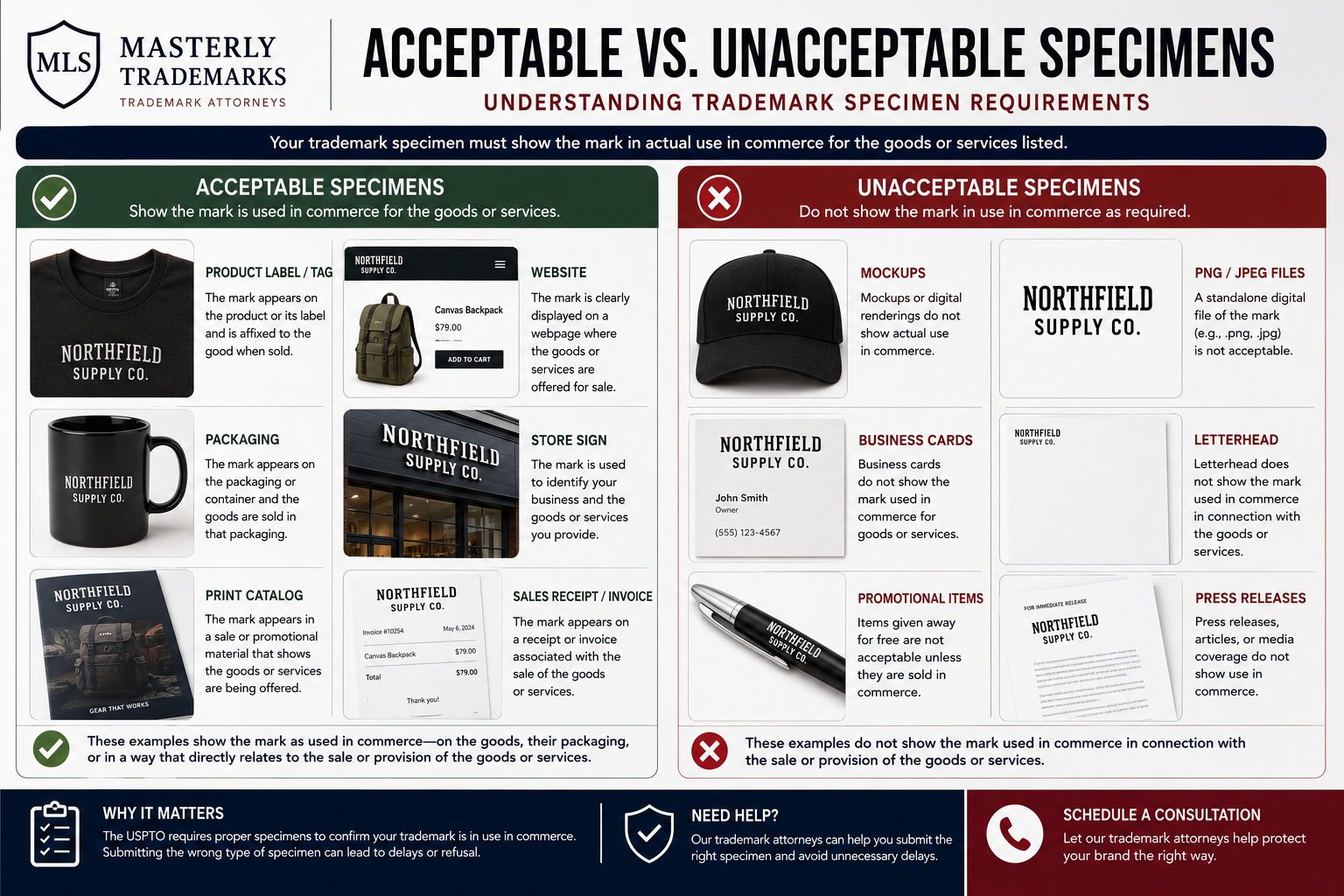
For goods, submitting advertising materials alone generally is not enough, and acceptable specimens often include product labels and packaging or photographs of labels or tags attached to the product.
Our attorneys evaluate whether the available evidence demonstrates qualifying commercial use and determine the most appropriate strategy for responding to the refusal.
Tags must show the trademark together with relevant product information, and labels may include informational matter such as UPC bar codes or other product details.
Every application deserves an individualized legal review.
Evaluating a Webpage Specimen
Many applicants submit a webpage specimen when applying for trademark registration.
While websites may qualify as acceptable specimens in many situations, they must satisfy specific USPTO requirements.
Masterly Trademarks carefully reviews website evidence to determine whether it shows a direct association between the trademark and the goods or services offered, and whether additional supporting evidence should be provided.
A webpage specimen should include the url and access date; the USPTO also expects an access date or print date, and for goods the page should show ordering details.
For service marks, brochures or website screenshots may also work as specimens when they clearly describe the services offered.
A detailed legal review helps reduce avoidable issues.
When a Mockup Is Not Enough
One common reason for refusal is the submission of a mockup rather than evidence showing actual commercial use.
Advertising concepts, digitally created images, product renderings, or promotional graphics may not satisfy USPTO requirements if they do not reflect real marketplace use.
Our attorneys evaluate whether the submitted materials meet federal trademark standards and recommend the strongest available response based on the application.
Determining Whether a Substitute Specimen Is Appropriate
In some situations, submitting a substitute specimen may resolve the refusal.
Whether this option is available depends on the facts of the application, the filing basis, and whether the replacement specimens show trademark use by the relevant filing date.
Any substitute specimen must be properly verified and, where required, must show use before the application filing date.
Masterly Trademarks reviews the available documentation, evaluates whether substitute evidence is appropriate, and prepares the necessary response when supported by the facts.
Every decision should be based on careful legal analysis.
Preparing the Required Declaration
Certain responses may require a signed declaration confirming facts regarding the specimen or trademark use.
Because these statements become part of the official USPTO record, they should accurately reflect the underlying facts.
Our attorneys prepare supporting documentation, review declarations with clients, and ensure that filings are completed carefully before submission.
Accuracy remains essential throughout the trademark process.
Protecting Your Brand During the Registration Process
A specimen refusal does not define the strength of your brand.
Many successful trademark registrations require additional communication with the USPTO before registration is completed.
Masterly Trademarks helps applicants navigate these issues while protecting the long-term value of their trademarks and business identity, supported by the broader legal resources of Masterly Legal Solutions.
Professional legal guidance helps business owners make informed decisions throughout the registration process.
Why Business Owners Choose Masterly Trademarks
Trademark applicants choose Masterly Trademarks because we provide experienced legal guidance tailored to federal trademark matters, backed by a full-service law firm offering diverse legal support.
Our attorneys assist with:
- Responses to a trademark specimen refusal
- Review of a USPTO specimen refusal
- Legal analysis of a trademark specimen office action
- Evaluating evidence of use in commerce
- Reviewing a webpage specimen
- Determining whether a mockup satisfies USPTO requirements
- Preparing and reviewing a substitute specimen
- Drafting and reviewing a required declaration
- Strategic guidance throughout the federal trademark application process, complemented by ongoing general counsel services for businesses
Every application receives personalized legal attention based on its unique facts and the issues identified by the USPTO.
Our Process
Every trademark matter begins with a careful review of the application and the USPTO correspondence.
Initial Consultation
We discuss your trademark application, review the refusal, and explain the issues identified by the USPTO.
Legal Review
Our attorneys evaluate the application, supporting evidence, and available response options, which may be coordinated with business consulting to support overall company strategy.
Response Strategy
We prepare a customized legal response designed to address the specific specimen issues identified in the Office Action, which may include submitting new specimens before the expiration date of the statement of use or, when available, requesting an extension within the applicable six month period before the deadline expires.
Ongoing Trademark Guidance
We continue assisting clients throughout the USPTO review process while responding to additional requests when necessary, and can also provide legal business consulting to support broader organizational goals.
Overcoming a Specimen Refusal With the Right Evidence
A trademark specimen refusal does not always end the trademark registration process, but it does require a careful and timely response. In many cases, applicants can submit substitute specimens when the originally submitted specimen is found to be specimen unacceptable, provided the replacement qualifies as a proper specimen showing the same trademark used in commerce prior to the applicable filing deadline.
Depending on the application, this may involve a verified substitute specimen, a verified specimen, or an amendment to allege use filed through the Trademark Electronic Application System using the appropriate TEAS forms. Success often depends on understanding trademark specimens, providing proper verification, and supplying ample evidence that accurately reflects how the mark is used with the services listed or goods.
A qualifying specimen file may include website pages with a clear point of sale, product labels, intended packaging, or other acceptable materials, while items such as a printer's proof, standalone print advertising material, or a general press release may be insufficient unless they meet USPTO requirements.
Applicants should also ensure they attach specimen documentation correctly, recognize that some applications require specimens, avoid materials that were initially omitted, and understand that in many situations one specimen may be enough when it properly demonstrates use in commerce, while broader workplace and compliance issues may benefit from specialized legal services and training. Professional guidance can make overcoming a specimen refusal more efficient while helping ensure compliance with trademark law and USPTO requirements, and clients with additional legal needs can turn to a Texas-based firm providing wide-ranging legal and business services.
Addressing Common Specimen Issues Before Responding to the USPTO
A successful response to a specimen refusal depends on submitting evidence that accurately reflects how the trademark was used at the relevant time. Materials showing pre sale orders alone may not satisfy the USPTO if they do not demonstrate actual use in commerce. Acceptable evidence often includes packaging showing the trademark as customers encounter it, such as a coffee mug, t shirt, or other product offered for sale with a label sewn into the goods or attached packaging when appropriate. A real example of marketplace use is generally more persuasive than a digital mockup, and applicants should pay close attention to different dates appearing on screenshots, invoices, or supporting materials to ensure they are consistent with the application record.
In some situations, the response may require a new statement or declaration confirming when the mark was in use. During our review, we also discuss every relevant issue with clients, including any USPTO filing questions or procedural concerns, so that no important detail is overlooked before submission. Masterly Trademarks helps applicants evaluate their evidence, prepare a complete response, and address specimen refusals with a strategy tailored to the specific Office Action.
Frequently Asked Questions
What is a trademark specimen refusal?
A trademark specimen refusal occurs when the USPTO determines that the submitted specimen does not adequately demonstrate trademark use for the identified goods or services.
What is a USPTO specimen refusal?
A USPTO specimen refusal is an Office Action explaining why the examining attorney believes the submitted specimen does not satisfy federal trademark requirements.
What is a trademark specimen office action?
A trademark specimen office action is the official USPTO communication describing the specimen-related issues that must be addressed before the application can continue. In an intent to use application, this often comes up when the statement of use is filed after a Notice of Allowance. The filing is due within six months, and if more time remaining is needed, applicants may request up to five six-month extensions.
What does use in commerce mean?
Use in commerce generally refers to the actual commercial use of a trademark with the goods or services identified in the federal trademark application.
Can I submit a substitute specimen?
In some situations, a substitute specimen may be accepted if it satisfies USPTO requirements and complies with the applicable filing rules.
Why might a webpage specimen be refused?
A webpage specimen may be refused if it does not adequately demonstrate trademark use or fails to satisfy applicable USPTO specimen requirements.
Schedule a Trademark Specimen and Response Review
A specimen refusal should be addressed carefully and promptly. Every response submitted to the USPTO becomes part of the official application record and may influence the progress of your federal trademark registration.
Masterly Trademarks helps business owners respond to a trademark specimen refusal, evaluate a USPTO specimen refusal, and prepare a thorough response to a trademark specimen office action. Our attorneys review evidence of use in commerce, evaluate every webpage specimen, determine whether a mockup or substitute specimen is appropriate, and prepare any required declaration to support your response. For broader operational challenges, clients may also benefit from business consulting and support services, and they can connect with our firm locations through Masterly Legal Solutions contact information.
Masterly Trademarks
Website:
https://www.masterlytrademarks.com/
Phone:
(972) 236-5051
You might also like