Stolen Work, Silent Damage: How Copyright Infringement Hurts Creators Every Day

In today's digital economy, creators are more vulnerable than ever. Whether you're a photographer, musician, software developer, or writer, your work can be copied and distributed in seconds without your knowledge or consent. The result is often silent and invisible damage that chips away at your income, reputation, and intellectual property rights. Many creators don’t realize how serious copyright infringement is until it’s too late.


What Counts as Copyright Infringement?

Copyright infringement occurs when someone uses your original works without permission. This can include:

  • Reposting copyrighted material on websites or social media
  • Copying and selling audio recordings, music, or photos
  • Distributing computer software or source code
  • Using your designs in commercial media campaigns without a license


Even if the offender doesn't profit directly, it still violates the exclusive rights of the copyright owner.


The Real Cost of Stolen Work

While it might seem like a small offense, infringement has a ripple effect. Every time someone uses your copyrighted work without a license, they undermine your ability to earn from your own creative works. This is especially devastating for small businesses, artists, and independent publishers who rely on fair licensing models.


Willful vs. Accidental Infringement

There are two main types of violations under copyright law:

  • Willful copyright infringement: Deliberate theft for profit or exposure.
  • Accidental infringement: Misuse due to lack of understanding, often still punishable.


In both cases, the damage is real. Victims are often entitled to actual damages, statutory damages, and in some cases, attorneys fees.


How Copyright Law Protects You

The Copyright Act provides protection for your work the moment it's created and fixed in a tangible form. You don’t need to register with the Copyright Office to have a valid copyright, but registration is necessary if you plan to pursue litigation. It strengthens your case in courts and allows access to statutory damages and civil penalties.


Understanding the Scope of Copyright

Copyright protection covers a wide scope of materials, including:

  • Artistic works (paintings, photography, illustrations)
  • Music (compositions, lyrics, recordings)
  • Literary works (books, blog content, articles)
  • Software (apps, tools, and web platforms)
  • Audio recordings and podcasts


Your ip rights apply globally through international agreements such as the Berne Convention, offering protection in over 180 countries.


Civil and Criminal Penalties for Infringement

While some may view copyright theft as minor, federal law takes it seriously. Criminal copyright infringement can result in fines, jail time, and asset seizures. Civil penalties can reach tens or hundreds of thousands of dollars depending on the extent of the violation. Companies found guilty may be ordered to pay attorneys fees, halt production, and destroy all infringing copies.


The Damage to Your Brand and Business

When someone steals your work, it's not just about money. It impacts your brand’s credibility and your clients' trust. Unauthorized use can lead to inconsistent messaging, disputes, or negative associations that can hurt future licensing deals. For entrepreneurs, this can cripple business development and slow down creation.


Common Industries Targeted for Copyright Theft

Some industries are more prone to violations, including:

  • Publishing
  • Music and audio production
  • Fashion and apparel design
  • Film and digital content creation
  • Software development and technology


These sectors rely heavily on the value of original works and creative content, making copyright protection crucial.


The Role of Internet Service Providers

Internet service providers (ISPs) are often the middlemen in distribution. Under the DMCA, they must act when notified of copyright infringement, but they aren’t liable unless they knowingly allow it. Still, you must be proactive in sending takedown requests and securing your rights.


Fair Use: A Common Defense That Often Fails

Many infringers claim fair use, arguing the copyrighted work is used for education, commentary, or parody. But fair use is not a guaranteed defense. It depends on:

  • Purpose and character of use
  • Nature of the work infringed
  • Amount and substantiality of the use
  • Effect on the market for the original work


Without lawyers for copyright infringement, many rights holders fail to make their case.


How Lawyers for Copyright Infringement Help

At Masterly Trademarks, our team of dedicated copyright attorneys guides you through every step. We help:

  • Investigate and verify misuse of your creative works
  • Send cease and desist letters
  • File claims in federal courts
  • Negotiate settlements or pursue litigation
  • Work with global partners in the Asia Pacific region and beyond


Our full-spectrum approach offers tailored solutions whether you’re protecting a single song or a multimedia copyrighted work portfolio.
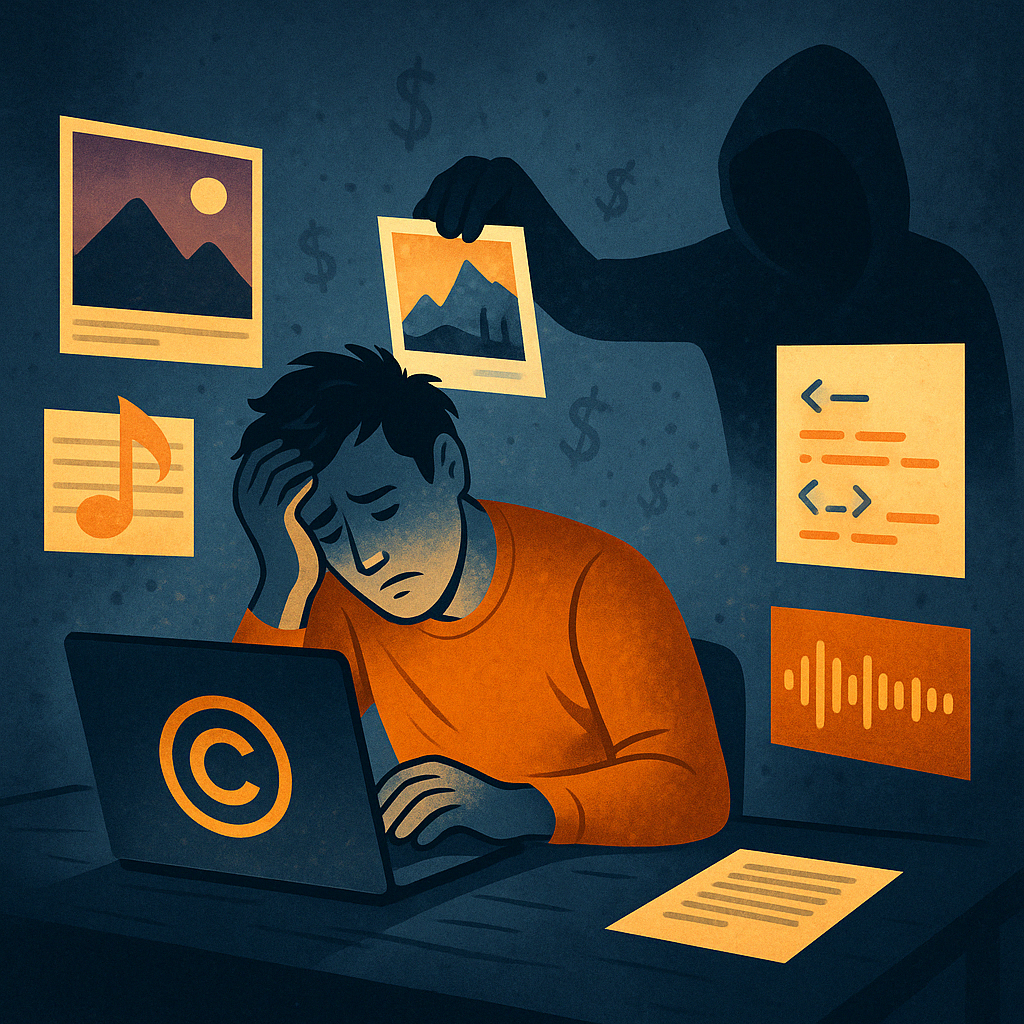
A frustrated artist sits at a desk with his head in his hand, surrounded by images of his creative work—photographs, music notes, code snippets, and audio waves. A hooded figure in the background secretly steals one of the images, symbolizing copyright infringement. Dollar signs fade into the dark blue background, representing financial loss and silent damage.


Time Is Critical in Copyright Cases

The longer you wait to act, the more difficult it becomes to defend your rights. Evidence may vanish. Offenders may disappear. Licensing opportunities may be lost. Immediate action gives you the best chance to minimize damage and secure your exclusive rights.


Copyright Infringement in the Digital Age

Digital platforms and social media have made infringement easier to commit and harder to trace. Whether someone shares your ebook without a license or reposts your artwork without credit, you need to act quickly. Legal support helps you monitor these activities and respond effectively.


Defend Your Creative Legacy

Your creative works represent years of hard work, talent, and passion. Letting someone steal them without accountability isn’t just a loss of revenue—it’s a loss of control. With legal representation, you can fight back, defend your legacy, and regain your position in the industry.


Don’t Let Infringers Profit from Your Talent

Lawyers for copyright infringement help you calculate actual damages, establish ownership, and hold violators accountable. These actions can prevent further violations and discourage others from targeting your work. Masterly Trademarks offers legal services designed to deliver fast results without excessive cost.


Publishing and Licensing: Take Back Control

If your work has been copied or misused, it may also violate licensing agreements. Publishers and distributors must respect your terms or face penalties. We help enforce contracts and remove unauthorized listings across media outlets.


When Copyright Theft Crosses Borders

Through international networks and trade treaties, we help enforce U.S. copyright protection abroad. Our legal team understands how to act in global copyright cases, especially in high-risk markets like the Asia Pacific region.


The Masterly Trademarks Difference

We don't just defend your copyright. We protect your entire creative business. From trade secrets to copyrighted material, we monitor, enforce, and litigate with one goal in mind: restoring what’s rightfully yours.


Fighting Copyright Theft Around the World Takes More Than Just Talent. It Takes the Best Lawyers

When your creative work is stolen and distributed without consent, the impact isn't limited to one platform or country; it can spread across the world in minutes. Whether you're a musician, software developer, or visual artist, you need more than just rights; you need legal strength. The best lawyers for copyright infringement don’t just understand the law; they know how to apply it strategically through litigation and prosecution when necessary. At Masterly Trademarks, we equip creators with the legal tools and courtroom-ready representation to stop theft and reclaim ownership, no matter where the violation occurs.


Contact Us Today for a Free Consultation

If someone has stolen your work, don’t wait for the damage to grow. At Masterly Trademarks, our team of skilled lawyers for copyright infringement is here to defend your rights, stop unauthorized use, and guide you through the full enforcement process. We serve artists, developers, businesses, and creators who deserve strong, experienced legal protection.


Contact us at (972) 236-5051 to book your free consultation. Let us help you understand your rights, assess the copyright infringement, and take swift action to protect your creative future.

(972) 236-5051

You might also like

Copyright notice guidance for protecting original creative work.
By Amber Aniston August 14, 2026
A copyright notice is one of the simplest tools a business can use to protect original content, yet many creators skip it entirely. Here is how to write one, where to place it, and why it still matters. Why Copyright Notices Still Matter in 2026 Copyright protection is automatic upon creation of a work. The moment you write a blog post, design a logo, or record a video, that work is protected by copyright under US law. No filing, no fee, no stamp required. But "protected" and "easy to enforce" are two different things, and a visible copyright notice closes the gap between them. Consider a concrete scenario. A small consulting firm publishes a 3,000-word guide on its website in 2026. A competitor copies it verbatim and posts it on their own site. If the original page carries a clear notice in the website footer ("© 2022–2026 Horizon Analytics LLC. All Rights Reserved."), the firm has immediate evidence that the copyright infringer had notice of ownership. Under Section 401(d) of the Copyright Act, that notice blocks the "innocent infringement" defense, which could otherwise reduce damages. Without the notice, the competitor might argue they were unaware the content had an owner. A copyright notice is not the same as copyright registration with the US Copyright Office, and it is not a takedown request or a lawsuit. It is a signal and a piece of evidence, not a remedy. This article focuses on US copyright law after the Berne Convention implementation (March 1, 1989), while noting where international practice runs parallel. By the end, you will be able to write and place a professional copyright notice on your site, app, or publication. What Is a Copyright Notice? (And What It Is Not) A copyright notice is a short copyright statement placed on or near a work that informs users the work is protected and identifies who owns it. A complete copyright notice typically contains three core elements: the copyright symbol (©), the year of first publication, and the copyright owner's name. An optional rights statement like "All Rights Reserved" can follow. A notice is not copyright registration, not a license defining how others may reuse your work, and not a legal agreement. It informs the public of your ownership rights, but it does not substitute for the formal registration process or enforcement action. Copyright protection does not require the inclusion of a notice in the US after March 1, 1989, when the United States joined the Berne Convention. Before that date, omitting a notice on works published could push content into the public domain. Today, notice is optional. Yet businesses, publishers, and software companies worldwide still use notices on websites, mobile apps, books, and software because the practical benefits remain strong. Copyright Law Basics Behind a Copyright Notice To understand why notices carry weight, start with how copyright protection arises. Under US copyright law, protection begins automatically when an original work is fixed in a tangible form, whether that is a written page, a digital file, or a sound recording. Copyright protects original works like music and literature, covers artistic works including paintings and photographs, and extends to architectural works, literary works, and even sculptural work. Copyright does not protect ideas, only their expression. The copyright owner may be the individual author, a company (for works made for hire), or an assignee. The Copyright Act grants exclusive rights to reproduce, distribute, display, perform, and create derivative works. A notice helps signal these rights to the public and removes ambiguity about ownership. Copyright lasts for the author's life plus 70 years after the author's death. Works made for hire have copyright for 95 years from publication. Copyright for works created before 1978 varies in duration. Copyright law allows owners to enforce their rights against infringers, but enforcement requires monitoring, registration, and sometimes litigation. The US Copyright Office handles copyright registration and recordation, which is separate from simply adding a copyright symbol or statement. Key Elements of an Effective Copyright Notice Most modern copyright notices follow a simple pattern. A notice includes the © symbol, year, and owner's name. For example: "© 2026 Masterly Trademarks. All rights reserved." The sections below break down each element with specific formatting and examples for websites, documents, and other publications. Copyright Symbol or Word A copyright notice must include the copyright symbol ©. The symbol is universally recognized and recommended for use across all formats. Alternatively, the word "Copyright" or the abbreviation "Copr." satisfies the statute. Most practitioners use © because it is compact and one of the most familiar symbols in publishing. Typing tips: on Windows, press Alt+0169 on the numeric keypad. On macOS, press Option+G. The shorthand "(c)" (a letter c in parentheses) is not the same Unicode character and is not a legal substitute, though some software auto-replaces it. For sound recordings, use the ℗ symbol instead of ©. That symbol designates rights in the phonorecord itself, separate from any underlying musical composition, and is defined in Section 402 of the Copyright Act. Copyright Year (or Range of Years) The copyright date should only state the year of publication. The year of first publication indicates when the work was first published or made publicly available. For a website, this is typically the year the site or its key content went live. When to use a range: if your website or app receives continuous updates, a date range like "© 2018–2026" signals active maintenance. For static works (a printed report, a one-time PDF), the original publication year alone is sufficient. An inaccurate or obviously outdated year does not automatically forfeit copyright protection, but it can undermine professionalism and weaken deterrence. Copyright Owner's Name A copyright notice should include the copyright owner's name, specifically the legal name of the individual or entity that holds the rights. Use the full registered business name that appears in contracts and on invoices. Concrete examples: © 2026 Olivia Chen © 2022–2026 Horizon Analytics LLC © 2026 City of Dallas For joint authorship, list all owners. For works made for hire, the employer or commissioning party is the copyright owner, not the individual who created the work. Pen names are acceptable if they are reasonably connected to the real owner. Optional Rights Statement A copyright notice can include a statement of rights like "All Rights Reserved." Under US copyright law, all rights are reserved by default, even without the phrase, but including it reduces confusion about what is permitted. Variations by business goal: "All rights reserved. No part of this publication may be reproduced without prior written permission." "Some rights reserved; see license page." "Licensed under CC BY-NC 4.0." Avoid overbroad claims that conflict with fair use or other limitations in the Copyright Act. A rights statement that overreaches does not expand your legal rights and may invite scrutiny. How to Write a Copyright Notice Step by Step Follow this sequence: Identify the owner. Determine who legally owns the work. Use their full legal name. Pick the year. Use the year of first publication. For continuously updated content, use a range ending in the current year. Choose a rights statement. Decide whether to include "All Rights Reserved" or reference a specific license. Assemble. Place them in order: symbol, year, owner, rights statement.
Work for hire agreement outlining ownership of contractor creative work.
By Amber Aniston August 14, 2026
Protect your business by understanding work for hire agreements. Learn how to secure copyright ownership of contractor creative work, avoid common mistakes, and ensure your intellectual property rights before payment.
DMCA takedown documentation and evidence preparation for content removal.
By Amber Aniston August 13, 2026
Learn what businesses and creators should document before sending a DMCA takedown notice. Covers copyright ownership evidence, infringement documentation, platform rules, and when to get attorney-guided support.

Book a Service Today