Trademark Classes: How to Choose the Right Goods and Services Before You File
Filing a trademark application without understanding trademark classes is like signing a lease without reading the address. You might end up paying for protection that doesn't actually cover your business. This guide breaks down how the 45 international classes work, how to pick the right ones, and what happens when you get it wrong.
Quick Answer: How Many Trademark Classes Are There and Why They Matter
So how many trademark classes exist? There are 45 trademark classes under the Nice Classification system: 34 for goods (Classes 1–34) and 11 for services (Classes 35–45). The U.S. Patent and Trademark Office and most other countries use this same classification system. Trademark classes are categories used to classify goods and services, and they touch almost every decision in the filing process.
Here is why they matter to your business:
- They define your legal scope. Trademark registration only protects a brand within its registered classes. If you sell software but only register in a clothing class, your mark has no legal weight where it counts.
- They control your filing cost. The base fee for trademark registration is $350 per class. Each additional class costs an extra $350, meaning registering in two classes costs $700 in total. Filing fees are calculated per class for trademark applications, and total costs increase with each additional class filed.
- They shape conflict searches. The USPTO uses trademark classifications for reviewing applications and calculating fees, and examiners search within the filed class and related groupings to flag confusingly similar marks.
Can you file in multiple classes? Absolutely. A 2026 skincare brand, for example, might file in Class 3 for non-medicated cosmetics, Class 35 for online retail services, and Class 44 for spa and beauty services. Filing in multiple classes requires separate fees and descriptions for each.
Choosing the wrong class can force a refiling, delay your launch, and increase costs. Selecting the wrong trademark class can lead to application rejection, making it critical to get this decision right before you submit.
What Are Trademark Classes and How the Classification System Works
Trademark classes explained simply: they are an international system for grouping goods or services into 45 Nice Classification categories, used by USPTO classes and most trademark offices worldwide. The Nice Classification system was established in 1957 and has been regularly updated since. The USPTO adopted the Nice Classification in the 1970s, replacing an older domestic system.
- There are 45 trademark classes under the Nice Classification system. It categorizes trademarks into 45 classes that help differentiate thousands of registered trademarks across every industry.
- Modern USPTO registrations display the international class number (1–45). Older U.S. domestic classes (like Class A, B, or 200) are now used only in limited contexts such as certification marks.
- Goods and services cannot be placed in the same trademark class. Classes 1–34 cover goods, while classes 35–45 cover services. For example, musical instruments fall in Class 15 (goods), while legal services belong in Class 45 (services).
- The system helps prevent consumer confusion by compartmentalizing brands. Trademark classes help prevent trademark conflicts across industries by allowing similar trademarks to coexist in different categories.
- The classification system is updated regularly. The current edition (NCL 13-2026) took effect January 1, 2026, and descriptions of goods or services may shift with each update.
Goods vs. Services: How Your Business Fits into the 45 Trademark Classes
Every trademark application must tie the mark to specific goods and services. You cannot register just a company name or logo in the abstract. Each trademark class requires a specific identification of goods or services.
Goods (Classes 1–34) cover physical or tangible products:
- Class 1 includes chemicals for industry and agriculture, along with fire prevention compositions, tempering and soldering preparations, raw natural resins, and industrial oils and greases.
- Class 3 includes non-medicated cosmetics and cleaning products, as well as essential oils.
- Class 5 encompasses pharmaceuticals and medical preparations, including medical and veterinary preparations, sanitary preparations, and substances adapted for medical purposes.
- Class 12 focuses on vehicles for land, air, or water transport, including land vehicles and transmission components (except for land vehicles, those components appear under Class 7 in certain contexts).
- Class 29 includes meat, fish, and processed food products. Class 30 covers coffee, tea, and other staple foods.
Services (Classes 35–45) cover activities performed for others:
- Class 35 handles advertising, business management, and retail services.
- Class 42 covers scientific research and technological services like software development.
- Class 45 addresses legal services, personal and social services, and security services.
Many modern brands straddle both sides. A fitness company might sell apparel (Class 25 goods) and deliver online training programs (Class 41 services). The trademark application scope must reflect every category your brand actually occupies.
How to Decide Which Trademark Classes You Need
Picking the correct class starts with a straightforward framework:
- Step 1: List your current goods and services. Write down everything your business sells or delivers today.
- Step 2: List realistic expansion within 3–5 years. New product lines, service launches, and geographic growth all factor in.
- Step 3: Map each item to a likely class. Use the USPTO Trademark ID Manual to match your offerings to pre-approved descriptions in the appropriate class.
- Step 4: Confirm and finalize filing classes. Cross-reference the latest trademark class list before submitting.
You cannot later add new classes to a pending application at the patent and trademark office. Adding classes requires filing a new application entirely, so trademark applications must be filed separately for each class you need.
Consider these mini-scenarios:
- A 2026 eco-home brand might cover mainly environmental control apparatus (Class 11 - the environmental control apparatus class for air purifiers, smart thermostats, and steam producing apparatus) plus online retail services in Class 35.
- A music startup might register musical instruments in Class 15 alongside streaming services in Class 38 or Class 41, and possibly downloadable electronic sheet music in Class 9.
Every additional class means a separate per-class fee, so budget accordingly. Verify current USPTO fee schedules before filing.
One Brand, Multiple Classes: When to File Across Multiple Classes
Many businesses naturally require multiple classes because they offer related goods and services under one brand, expanding the trademark application scope.
- A restaurant brand with packaged sauces (Class 30), non-alcoholic beverages (Class 32), and restaurant services (Class 43).
- A professional firm name used for legal services (Class 45) and downloadable compliance tools or computer software (Class 9).
Strategic reasons to add classes:
- Protect core revenue lines. Cover every goods or services category that generates income.
- Block competitors. Registering in closely related areas discourages similar marks from appearing in your market space.
- Support long-term brand extensions. Rights do not automatically extend into adjacent trademark classes, so proactive registration keeps options open.
Downsides to watch:
- Higher filing cost and additional maintenance requirements per class, including proof-of-use specimens.
- Risk of overreaching beyond genuine use or bona fide intent, which can invite challenges or abandonment.
Coordinated Trademark Classes and Overlapping Goods and Services
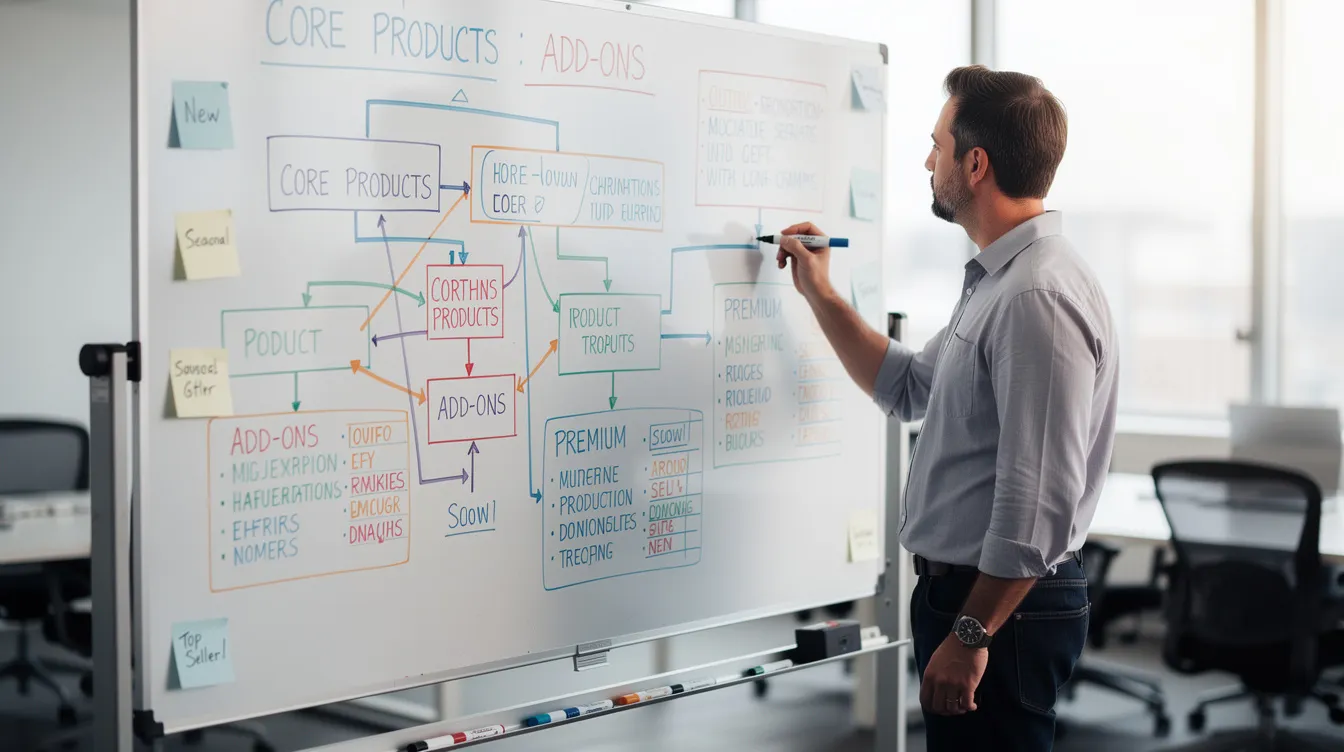
Coordinated trademark classes are USPTO groupings of international classes that frequently overlap in trade channels or consumer perception. Trademark conflicts can exist even if two marks are in different classes, which is why coordinated classes matter.
- Class 25 (clothing) is coordinated with Class 14 (jewelry, precious metals, and horological and chronometric instruments), Class 18 (leather goods), and Class 35 (retail services).
- Environmental control apparatus in Class 11 is coordinated with repair and installation services in Class 37 and scientific design services in Class 42.
- Musical instruments in Class 15 are coordinated with education and entertainment services in Class 41.
Coordinated classes come into play during clearance and examination. Even where marks sit in different international classes, examiners evaluate likelihood of confusion if the goods and services travel through the same marketplace channels. When planning your filing strategy, counsel often searches both the primary class and its coordinated classes to assess risk from existing registrations.
Key Examples of International Classes for Common Business Types
Below is a non-exhaustive trademark class list organized by common business types. This should help you quickly match your own goods and services to likely classes, but always confirm against the latest Nice Classification or USPTO class list.
- Consumer products: Class 3 (cosmetics, essential oils), Class 9 (computer software, computer peripheral devices, apparatus and instruments, coin operated apparatus, automatic vending machines, teaching apparatus, material testing instruments), Class 25 (clothing, footwear), Class 28 (toys, gymnastic and sporting articles). Example: a wearable fitness tracker brand files in Class 9 for the device and Class 28 for sporting accessories.
- Industrial and environmental goods: Class 1 (chemicals in foil and powder form or foil or powder form, industrial oils and greases), Class 6 (metal building materials, metal hardware, metal materials), Class 7 (machine tools, motors and engines, power operated tools), Class 11 (environmental control apparatus like air conditioners, ovens, water heaters, and fire extinguishing apparatus). Class 17 covers rubber gutta percha gum, gutta percha gum asbestos, percha gum asbestos mica, insulating materials, flexible pipes, pipes tubes and hoses, and artificial or synthetic materials. All these materials fall under a single class. Class 19 covers non-metallic building materials, including products for covering existing floors.
- Creative and cultural: Class 15 (musical instruments, stands, accessories), Class 16 (printed matter, stationery and office requisites, bookbinding material, instructional and teaching materials), Class 22 (raw fibrous textile materials, stuffing materials, threads for textile use), Class 24 (textile or synthetic materials and fabrics), Class 41 (education, streaming, entertainment). For a 2026 indie label, this might mean filing for instruments, sheet music, and streaming distribution under different classes. Class 10 covers therapeutic and assistive devices, therapeutic and prosthetic articles, and assistive devices adapted for specific medical uses. Class 23 handles yarns, while synthetic materials for textile use appear across several classes.
- Professional and legal: Class 35 (advertising, business management, e-commerce), Class 42 (scientific research, technological services, SaaS platforms), Class 45 (legal services, personal and social services, security services). A compliance tech firm in 2026 might register its AI-powered software tool in Class 42 and its advisory consulting in Class 35. Class 21 includes brush making materials among household items. Class 44 covers agriculture horticulture and forestry services alongside medical services.
Trademark classes help differentiate thousands of registered trademarks, so landing in the same class as a competitor with a similar name creates immediate conflict.
International Trademark Classes, Nice Classification, and Filing Outside the U.S.
International trademark classes refer to the Nice Classification adopted in 1957 and updated through regular editions, now used by the USPTO and most major offices worldwide.
- While many countries follow Nice, each office (EUIPO, UKIPO, Canada's CIPO) may apply the classification system differently. Some require more detailed goods and services descriptions than others.
- Common international filing paths include the Madrid Protocol and direct national filings. Class choices made in a home application usually carry through to international designations.
- Verify classification practice for each jurisdiction before filing abroad, especially for emerging technologies and hybrid business models where class boundaries are less settled.
Common Mistakes with Trademark Classes and How to Avoid Them
- Choosing by "industry" instead of specific goods and services. A fashion brand isn't just Class 25 - it may need Class 18 (bags), Class 35 (retail), and Class 14 (jewelry). Filing in the wrong class leaves core offerings unprotected.
- Using vague terms. Descriptions like "miscellaneous goods" or broad class headings will draw office action refusals. Use the USPTO ID Manual for pre-approved wording whenever possible.
- Ignoring future product lines. You cannot add classes later without a new application. Under-inclusive filings miss important revenue-generating goods.
- Overreaching. Claiming classes where you have no genuine use or bona fide intent can lead to cancellation for non-use.
Practical safeguards: review coordinated classes during clearance, stick to pre-approved ID Manual descriptions, and consult a trademark attorney before submitting - particularly for newer categories where the correct class is less obvious.

When to Get Attorney Help on Trademark Classes
- Classification issues become especially important when:
- The brand will be used for both goods and services across multiple classes.
- The business operates or plans to operate in multiple countries.
- The offering spans newer categories (e.g., AI tools, Web3 platforms, digital goods) that don't fit obvious legacy labels.
- An attorney can map your real-world business model to the right goods and services wording and filing classes, accounting for coordinated trademark classes and future expansion. This is far cheaper than refiling after a rejection.
Ready to protect your brand in the right classes? Request an attorney-guided trademark registration consultation to get personalized class mapping, accurate goods and services wording, and a filing strategy built around your business - not a generic checklist.
Contact Masterly Trademarks at masterlytrademarks.com or call (972) 236-5051 to get started today.
FAQs About Trademark Classes, Goods and Services, and Filing Strategy
- How many trademark classes can I file in? There is no legal maximum. However, costs and proof-of-use requirements scale with each class. A typical small business files in one to three classes. A bakery selling packaged goods (Class 30) and operating a café (Class 43) would file in two classes for a total of $700 in base fees.
- Can I change my trademark classes after filing? You generally cannot add new classes to a pending U.S. application. Adding classes normally requires filing an entirely new application with separate fees.
- What is the environmental control apparatus class? That is Class 11, which covers lighting, heating, cooling, water supply, and sanitary installations. An HVAC or smart-home business would typically file here for products like air purifiers, water heaters, and climate-control devices.
- Where do musical instruments belong? Musical instruments and many accessories fall under Class 15. However, streaming apps or online music lessons would use different services classes - typically Class 41 for education and entertainment, or possibly Class 38 for telecommunications.
- Do trademark classes affect whether my mark is available? Yes. USPTO examiners look within the same class and coordinated classes for confusingly similar marks. Two identical names can coexist if they occupy unrelated classes, but marks in coordinated or overlapping classes face scrutiny. This makes class selection central to any clearance strategy.

You might also like